
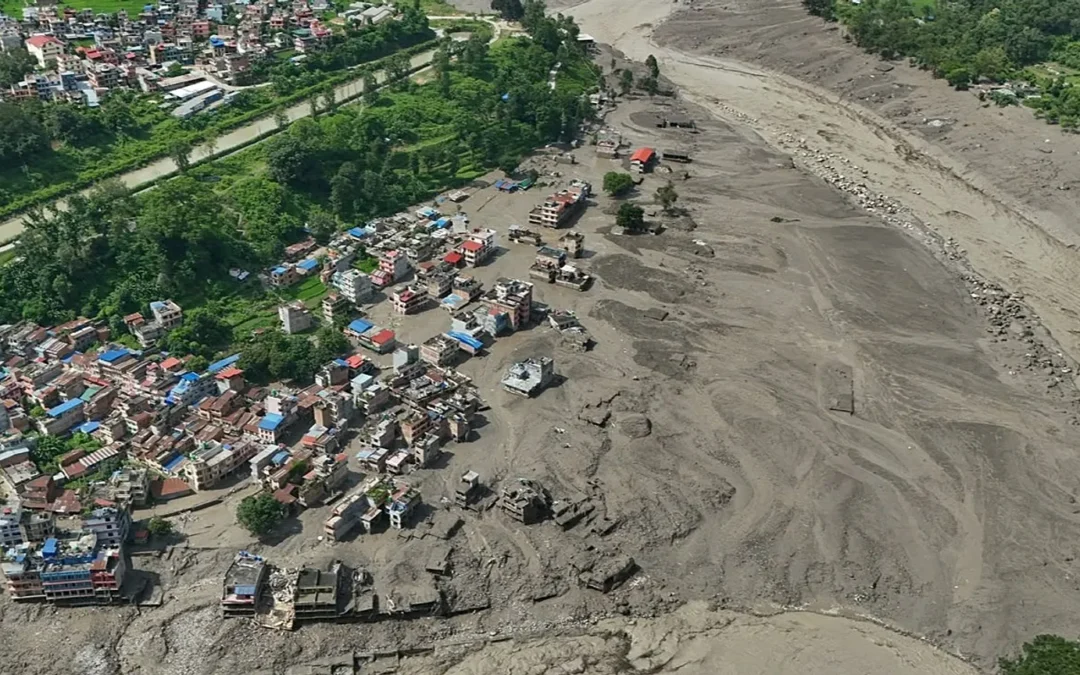
The scale of the claims is being driven primarily by engineering and construction exposures, highlighting the concentration of insured losses in large infrastructure projects following the August 26 disaster.
Kathmandu:Insurance claims arising from the devastating Bhote Koshi flood in Nepal have surged to Rs25.87 billion, with 15 non-life insurers reporting losses as of August 31, according to the Nepal Insurance Authority.
One Nepalese rupee is USD00.0066
The scale of the claims is being driven primarily by engineering and construction exposures, highlighting the concentration of insured losses in large infrastructure projects following the August 26 disaster.
Property, housing and infrastructure worth at least $2.56 billion (387.5 billion Nepalese rupees) was damaged in the Nepal’s catastrophic floods last week, said the country’s disaster authority chief .
The estimated cost of early recovery in the first four months to build roads, temporary shelters, provide drinking water and electricity would be around $52.6 million (7.95 billion Nepalese rupees), Dharma Raj Upreti, chief of the National Disaster Risk Reduction and Management Authority said.
Oriental Insurance has reported the largest exposure, with eight policyholders submitting preliminary claims estimated at Rs13 billion. United Ajod follows with claims of Rs4.97 billion, while Sanima GIC has reported Rs2.10 billion.
Siddharth Premier and Shikhar Insurance have recorded claims of Rs1.88 billion and Rs1.87 billion, respectively.
Engineering and construction policies account for the bulk of the reported losses, with 52 claims exceeding Rs20 billion. The concentration underscores the potentially significant reinsurance implications of damage to major infrastructure and construction projects in a relatively small insurance market.
Property insurance has generated a further Rs2.34 billion from 113 claims, while 313 motor insurance claims have reached Rs1.55 billion.
Other reported losses include Rs890 million from transit cargo, Rs520 million from miscellaneous risks and Rs41.6 million from health insurance.
Among the other insurers reporting claims are Himalayan Everest at Rs640 million, Neco at Rs510 million, Sagarmatha Lumbini at Rs240 million, Nepal Insurance at Rs230 million and IGI Prudential at Rs180 million. NLG has reported Rs110 million, followed by Prabhu at Rs30 million, Rastriya Beema at Rs7.6 million, National Insurance at Rs5.3 million and Nepal Micro Insurance at Rs500,000.
The figures remain preliminary and could rise as insurers complete loss assessments and receive detailed claims documentation.
For reinsurers with exposure to Nepal’s engineering, property and infrastructure portfolios, the event is likely to provide another test of catastrophe accumulation management in a market increasingly exposed to climate-related floods and other natural hazards.
The concentration of losses in engineering and construction risks also highlights the importance of robust underwriting, project-level risk assessment and adequate reinsurance protection for large infrastructure developments in flood-prone regions.