
PB Fintech, which owns Policybazaar, plunged as much as 34%, while Turtlemint dropped 20%. Shares of HDFC Life, Bajaj Finserv, the holding company for Bajaj Life and Bajaj General Insurance and Max Financial Services, the holding company of Axis Max Life Insurance were also hit in big way as investors weighed the possible implications of the proposed changes for insurers and intermediaries.
Mumbai: Insurance stocks and digital distribution platforms came under intense selling pressure on Thursday after regulator IRDAI unveiled a far-reaching blueprint to overhaul the economics of insurance distribution, proposing lower expense ceilings, a more differentiated commission regime and a ban on practices it classifies as “dark patterns” on digital platforms.
The IRDAI proposed measures that could slash insurance fee income for banks and digital brokers by as much as 90% in high-margin categories, according to analysts. The proposals aim to enforce long-term industry discipline and rationalize distribution cost.
PB Fintech shares hit the 34% lower circuit at ₹1,247.40 during the session and ended the session on Thursday down 34.03%, trading at ₹1,244.50 a piece on the National Stock Exchange (NSE). The stock was on course for its sharpest single-day decline since its November 2021 listing, with the sell-off wiping out more than ₹27,950 crore from its market capitalisation.
PB Fintech expects India’s proposed caps on insurance commissions to severely affect its non-life insurance business, which may lead to spending cuts and a slowdown in hiring, co-founder and group CEO Yashish Dahiya told analysts on Thursday.PB Fintech said it would respond by managing costs more closely and focusing on profitability.
“In terms of general insurance, it is between one-third to 40% of what we have today. So that’s a very serious impact on revenue,” Dahiya said, adding that the company would reassess spending.
“There may be opportunities for rationalisation in digital marketing, brand spending, sales and customer support.”
The company may also explore new revenue streams and, over the longer term, consider entering insurance manufacturing, Dahiya said.
“It becomes a little harder for me to justify not having a manufacturing entity of my own because this somewhat takes away the trust in the fact that distributors would be rewarded for the quality of business they create.”
PB Fintech said it would not resort to mass layoffs but could slow hiring. The company hired about 6,000 people in the first half of the year, Dahiya said, adding that it might have hired closer to 2,000 had the rules been known earlier.
The decline also affected Info Edge, which owns a 6.5% stake in PB Fintech.
Turtlemint and Max Financial Services,the holding company of Axis Max Life Insurance, settled 20% and 9.8% lower, respectively. HDFC Bank, Axis Bank, IDFC First Bank and IndusInd Bank fell 1.1%, 4.6%, 4.7% and 4.2%, respectively.
HDFC Life Insurance plunged 6.13 per cent, The New India Assurance Company fell 5.36 per cent, Niva Bupa Health Insurance declined 4.98 per cent, Medi Assist Healthcare Services 4.79 per cent and ICICI Prudential Life Insurance Company 4.23 per cent on the BSE.
Shares of Bajaj Finserv, the holding company for Bajaj Life and Bajaj General Insurance and Max Financial Services were also hit in a big way as investors weighed the possible implications of the proposed changes for insurers and intermediaries.
However, share of ICICI Lombard General Insurance rose over five per cent,while Life Insurance Corporation, SBI Life and Star Health saw their shares impacted marginally on Thursday.
“The domestic decline was amplified by the Irdai consultation paper proposing tighter limits on insurance commissions, distribution expenses and loan-linked insurance practices. The potential pressure on bancassurance fees triggered heavy selling across insurers, distribution platforms and exposed banks and NBFCs, pushing Bank Nifty below 56,000 and extending the damage to the broader benchmarks,” Hariselvan Radhakrishnan, Founder & CEO of HST Wealth, a Research Analyst firm, said.
Axis Bank fell 4.67 %, IndusInd Bank edged lower by 4.15 %, Yes Bank 3.44 %, Kotak Mahindra Bank 1.86 %, SBI 1.51 %, HDFC Bank 1.16 %, Bank of Baroda 1.03 %, PNB 1.01 % and ICICI Bank 0.41 %.
The BSE Bankex index fell by 1.88 per cent to 62,717.21.
“This proposal pushes the sector in uncharted waters by almost cutting the oxygen (commission) supply,” Avinash Singh, an analyst at Emkay Global Financial Services Ltd., wrote in a note. However, final regulations are likely to be less strict, he said.
“Multiple changes in the proposed regulations will call for significant overall changes in the way businesses are carried out across products and channels,” Prayesh Jain, an analyst at Motilal Oswal Financial Services Ltd., wrote in a note.
The sell-off came a day after IRDAI released its discussion paper, “Recalibrating Economics of Insurance Distribution,” setting out proposals aimed at reshaping the distribution architecture and addressing expenses, commissions, market conduct, transparency and digital practices.
“On the sectoral front, banking and financials came under significant pressure after Irdai proposed changes to the insurance distribution framework, including lower EoM limits and tighter controls on commissions. The proposals raised concerns about the earnings and distribution economics of insurers and other related financial intermediaries,” Ajit Mishra, SVP, research, Religare Broking, said.
Sharp selling in these stocks dragged the equity markets lower. The 30-share BSE Sensex tanked 1,247.71 points, or 1.67 per cent, to settle at 73,580.54. The 50-share NSE Nifty dropped 383.70 points, or 1.64 per cent, to end at 23,063.10.
“On the domestic front, the insurance and banking sectors remained weak following concerns regarding regulatory reviews of commission structures and their implications for profitability,” Vinod Nair, Head of Research, Geojit Investments Ltd, said.
A central element of the proposed framework is a phased reduction and recalibration of Expense of Management (EoM) limits.
For life insurers, the IRDAI has proposed moving to a company-level EoM framework linked to Gross Direct Premium Income (GDPI), with the ceiling targeted at 15% within two years and 12.5% within five years.
For general insurers, the regulator proposes replacing gross written premium with domestic GDPI as the basis for calculating EoM. The ceiling would be progressively reduced from the existing 30% of GWP to 20% of GDPI over five years.
The IRDAI said the proposed changes are intended to reduce the cost of insurance, deepen insurance penetration and improve value for policyholders, particularly in life savings products.
“Banks and financials declined around 2% after Irdai proposed tighter insurance commission caps, lower expense limits and restrictions on compulsory insurance bundling with loans. The proposals could pressure insurance distribution income for banks, NBFCs and distributors,” Siddhartha Khemka – Head of Research, Wealth Management, Motilal Oswal Financial Services Ltd, said.
The commission regime is also set for a significant rethink. Rather than applying a common framework, commission limits would be calibrated according to the insurance segment, line of business, distribution channel, product complexity and the level of effort required for sales and servicing.
Insurers and large distribution entities would also be required to make their commission structures and policies transparent and easily accessible.
The proposed crackdown on “dark patterns” could have a particularly direct bearing on digital insurance platforms. IRDAI wants customers to be able to access information on product features, prices and quality without having to surrender personal details upfront.
The regulator has specifically flagged practices that require consumers to submit their name, mobile number or email address merely to view product or pricing information. Such mechanisms, it said, can convert an information-seeking exercise into a lead-generation process.
The paper also seeks to strengthen safeguards against mis-selling by making suitability an enforceable obligation. Insurers would have to document customer needs and suitability for specified life insurance sales and maintain an audit trail.
IRDAI has proposed reorganising the distribution ecosystem into three broad categories — Insurance Distribution Entities, Insurance Distribution Persons and Market Infrastructure Institutions.
Stakeholders have until October 25 to submit comments on the proposals.
The proposed reforms could have significant implications for the industry’s distribution economics, particularly for insurers, brokers, agents and digital platforms that depend heavily on commissions, customer acquisition and distribution expenditure.
Earnings risk for banks
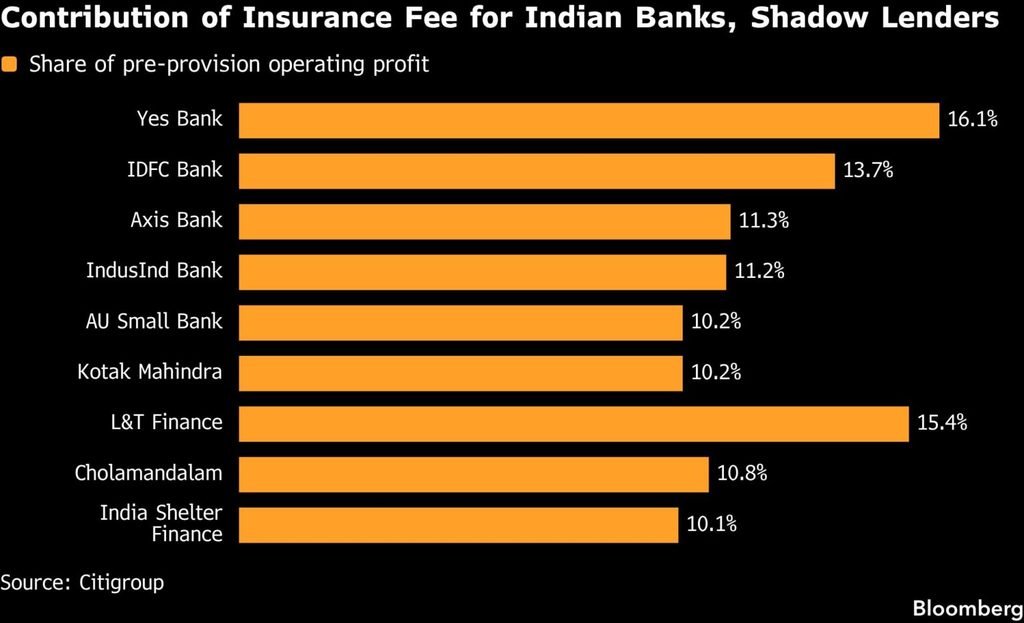
Meanwhile, Jefferies said in a research report.said proposed tighter caps on insurance commissions could pose a slight earnings risk for banks, particularly through bancassurance fees from credit-protection products, as the insurance regulator seeks to recalibrate distribution costs and commission structures from FY28.
“Insurance regulator proposes to tighten caps on insurance commissions from FY28,” Jefferies said, adding that the proposed rules would be applicable prospectively and that the regulator has sought public opinion on the draft norms over the next month.
The brokerage said the changes would be “tad negative” for banks’ bancassurance fees, especially credit-protection premiums, which are largely single-premium products carrying relatively high commissions.
Analysts at JPMorgan said in a note that the impact of the proposed reforms could be “topline negative” in the near term for insurers, though medium term impact could be “constructive” as it may lead to better product propositions for customers.
Macquarie described the proposed commission cuts as “steep” and likely to hurt near-term growth as insurers and distributors recalibrate business models.
The brokerage said PB Fintech appears the most exposed given its sensitivity to commission rates, while Axis Bank and HDFC Bank face greater risk than peers from a potential hit to insurance fee income.
For banks and NBFCs, the proposals include tighter safeguards against incentives linked to volumes or rewards for employees selling insurance, alongside measures to bring direct and indirect remuneration within the regulatory definition of commission.
Jefferies’ assessment suggests that the commission changes could affect banks’ fee income from bancassurance, with the impact more pronounced in credit-protection products because of their high upfront commission structures.
Agencies