
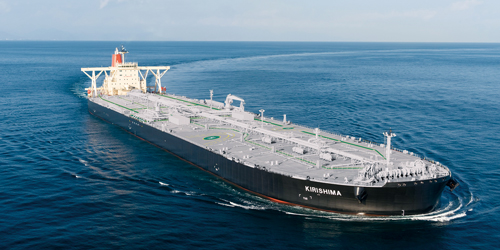
Quoted war risk premiums for Saudi-linked tankers calling at Yanbu have risen to around 3% of a vessel’s value, four industry sources told Reuters. They were less than 1% in early July, before London’s marine insurance market designated that stretch of water as high-risk in response to Yemen’s Iran-aligned Houthis attacking shipping near the Bab el-Mandeb strait.
LONDON: The cost of insuring an oil tanker loaded from Saudi Arabia’s main Red Sea port has tripled in recent weeks, industry sources told Reuters, adding to the major crude producer’s struggles to find a viable channel for its exports.
Saudi Arabia used its East-West pipeline to divert around 4 million barrels per day – 4% of global supply – to the Red Sea after Iran constrained Gulf exports via the Strait of Hormuz from March in response to US and Israeli air strikes.
The kingdom shut the pipeline on September 11 after drone attacks that it said came from Iraq, where Iran backs some militia groups. It is now building volumes back but loadings at the major port of Yanbu have yet to resume, according to industry sources, satellite images and shipping data.
Quoted war risk premiums for Saudi-linked tankers calling at Yanbu have risen to around 3% of a vessel’s value, four industry sources told Reuters. They were less than 1% in early July, before London’s marine insurance market designated that stretch of water as high-risk in response to Yemen’s Iran-aligned Houthis attacking shipping near the Bab el-Mandeb strait.
For ports south of Yanbu, including Jizan, around 50 miles (80 km) from the border with Yemen, quoted premiums – around 1% in early July – can rise as high as 7%, almost as much as transits through Hormuz, which range between 6% and 9%, the sources said, declining to be named due to data sensitivity.
Hike in quoted premuim highlights Saudi Dilemma
“It’s easier to do the Strait of Hormuz right now … because at least in the Strait of Hormuz, the US is providing some cover. In the Red Sea, there’s nothing,” Pankaj Khanna, CEO of shipping group Heidmar Maritime Holdings Corp, told Reuters.
“If you have a Saudi connection, then you have a problem.”
The Iran-aligned militants who seized swathes of the Yemeni coast and captured Perim Island in the middle of the Bab el-Mandeb strait this month have vowed to target only vessels linked to Saudi Arabia due to its backing of Yemen’s government.
Tankers transiting the Red Sea without any Saudi connection typically pay between 0.2% and 0.3%, with additional discounts often available, the four industry sources said.
Khanna said any tanker docking at Yanbu will have a Saudi connection and hence be at risk of being hit. Heidmar is avoiding Saudi ports while remaining active in both Hormuz and the Red Sea, he said.
The Houthis have also targeted Saudi Arabia itself. The kingdom intercepted six ballistic missiles fired by Yemen’s Iran-backed Houthis on Thursday, including towards the Yanbu area, the Saudi-led coalition in Yemen said.
Earlier this week, two trading sources said traders were getting ready for Saudi oil loadings in the Red Sea by moving tankers to Egypt’s Mediterranean Port Said for ship-to-ship transfers.
That could allow them to sail south out of the Red Sea via Bab el-Mandeb instead of heading north through the Suez Canal and then – for Asia-bound cargoes – via southern Africa, a much longer and more costly route.
,,