
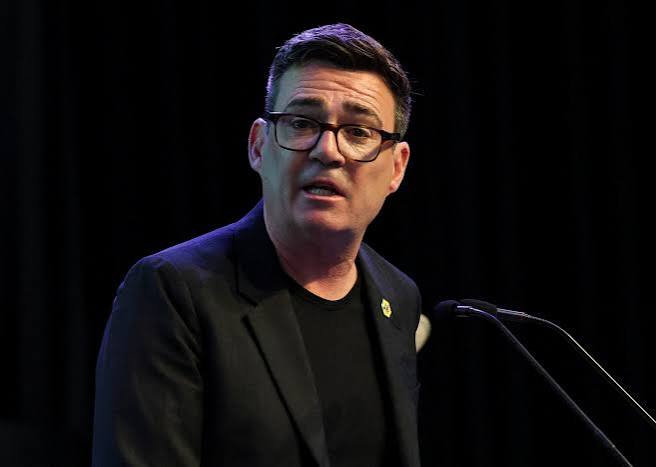
Andy Burnham,Prime Minister,UK
As Britain assumes the presidency of the G20 next year, UK government will seek to put climate resilience back on the international agenda, with debt, development and insurance among the key priorities.
Antalya, Turkey: UK Prime Minister Andy Burnham has reaffirmed Britain’s commitment to achieving net-zero emissions by 2050, announcing support for a global initiative aimed at mobilising £5 billion in private investment for clean energy projects worldwide.
Addressing the COP31 climate summit in Antalya, Turkey, Burnham said the climate crisis was no longer a distant threat but was already devastating lives and livelihoods across the world.
“This is my message at my first COP as UK Prime Minister: we’re committed to meeting our 2050 net zero target and committed to working with all our partners to reach theirs,” he said.
He linked the growing climate emergency to the world’s continued dependence on fossil fuels, warning that geopolitical conflicts and volatile energy prices had exposed the risks of relying on imported energy.
“The climate crisis is not a distant threat. It is upon us all now, devastating lives and livelihoods everywhere,” Burnham said.
“Meanwhile, two wars across two continents have sent fuel prices and gas bills soaring for families and businesses across the world. The common thread running through all of this, our dependence on fossil fuels.”
Backing the summit’s focus on electrification, Burnham identified energy security, employment generation and lower energy bills as three major benefits of accelerating the transition to clean energy.
“If we depend on energy we do not control, then we leave ourselves exposed to prices we cannot control,” he said, adding that the shift to clean energy was the only route to energy security.
He said electrification of transport, heating and industry would help protect households and businesses from global fossil fuel price shocks.
Highlighting Britain’s investments in the sector, Burnham said the government had given the green light to two major offshore wind projects that would bring billions of pounds in investment, power millions of homes and support thousands of jobs.
He also cited a government-funded electric arc furnace project in South Wales, which would secure 5,000 steelworkers’ jobs, and Rolls-Royce’s efforts to take small modular nuclear reactor technology to international markets.
On the cost of the green transition, Burnham said electric vehicles and heat pumps were increasingly becoming cheaper alternatives to conventional technologies. However, he acknowledged that their upfront costs remained beyond the reach of many households.
“Electrification in transport, heat and industry is how we make clean power cheap power,” he said.
The government, he added, was investing in innovation and subsidising upfront costs, while urging industry to ensure that the green transition was affordable for people across all income groups.
Burnham acknowledged that global climate action had not progressed as quickly as he had hoped since COP26, which he attended as Mayor of Greater Manchester five years ago.
“The consensus we once enjoyed on science and climate has gone, and the reality is now the world will reach 1.5 degrees,” he said, stressing that climate leadership and action had become more urgent.
Describing climate change as a national security issue, he announced the appointment of Dame Madeline Alessandri as Britain’s first special representative for climate security.
He also announced UK support for the Amplify programme, which aims to mobilise £5 billion in new private finance for clean energy projects worldwide.
Burnham said the City of London had developed the ability to leverage relatively modest amounts of public funding to attract substantial private investment, a model that could help finance the global energy transition.
Referring to the growing burden of climate change on developing countries, he said poorer nations were bearing the brunt of the crisis despite having fewer resources to respond.
`As Britain assumes the presidency of the G20 next year, his government will seek to put climate resilience back on the international agenda, with debt, development and insurance among the key priorities,” he said.
He also reaffirmed Britain’s commitment to supporting the protection of tropical forests and oceans.
“Britain will live up to its commitments. We will help our friends as they live up to theirs,” Burnham said