
”While correction was overdue for sometime after the recent upsurge, fresh concerns of a likely hawkish stance by the US Fed in its September meet and strengthening dollar index turned investors jittery and triggered a massive fall in banking, IT, metal and realty stocks,” Shrikant Chouhan, Head of Equity Research (Retail) at Kotak Securities Ltd, said
New Delhi:
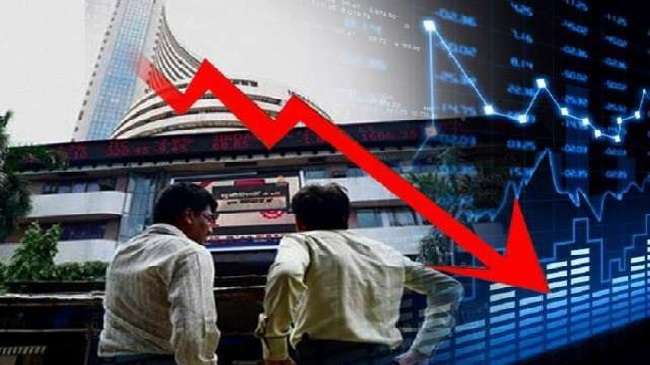
A decline in equities for two sessions has eroded investors’ wealth by more than Rs 6.57 lakh crore.
The 30-share BSE Sensex tumbled 872.28 points or 1.46 per cent to settle at 58,773.87 points on Monday.
In two straight sessions, the benchmark index has tanked 1,524.13 points or 2.52 per cent.
The weak trend in the broader market have pulled down the market capitalisation of BSE-listed firms by Rs 6,57,758.04 crore to Rs 2,73,95,002.87 crore (over Rs 273.95 lakh crore) in two days.
”While correction was overdue for sometime after the recent upsurge, fresh concerns of a likely hawkish stance by the US Fed in its September meet and strengthening dollar index turned investors jittery and triggered a massive fall in banking, IT, metal and realty stocks,” Shrikant Chouhan, Head of Equity Research (Retail) at Kotak Securities Ltd, said.
According to analysts, fresh concerns related to the global economic growth have dampened investor sentiments.
”Negative global cues weighed on indices at the Dalal Street as Nifty ended below the psychological 17,500-mark and Sensex too fell way below its recently reclaimed psychological 60,000-mark.
”Blame the negativity to last week’s Fed meeting minutes which pointed towards more aggressive rate hikes to curb inflation. If the last two days’ trade is any indication, then expect investors to stay on the sidelines in the coming session,” Prashanth Tapse – Research Analyst, Senior VP (Research) at Mehta Equities Ltd, said.
The NSE Nifty 50 Index had surged more than 14 per cent from a mid-June low as overseas investors turned buyers after months of withdrawals. That drove the benchmark from levels described by traders as oversold to strongly overbought territory in just 39 sessions, the quickest pace since 2003.
The fastest rebound in Indian stocks in nearly two decades has some investors wondering whether the foreign-buying powered momentum can continue amid global volatility.
“The current turnaround in the stance of foreign investors with regard to India is yet to be confirmed,” said Kunal Valia, chief investment officer for listed investments at Waterfield Advisors Pvt. He said the country faces both fiscal and current account deficits, “worrisome macro” for foreign traders.
The shift from record outflows from Indian stocks to net buying by overseas investors came amid a weakening of the dollar and faster-than-expected cooling of commodity prices. Commodities including oil and base metals have dropped 10%-20% from peak levels in June, providing major relief for net importers like India.
“We didn’t anticipate global factors to improve so soon,” said Bank of America Corp. analyst Amish Shah. “Low positioning” and few investment options in other emerging markets led to the resumption of inflows from global investors, he said.
Like Waterfield’s Valia, Shah is skeptical about the sustainability of foreign buying. Risks include possible changes in China’s economic policy to focus on growth, which could lead to reacceleration in crude and other commodity prices, he said.
The Nifty 50 was down about 1.5% on close of trading on Monday.
On Monday, Tata Steel was the biggest laggard in the Sensex pack falling 4.50 per cent, followed by Asian Paints, Wipro, Sun Pharma, Larsen & Toubro, Bajaj Finance, UltraTech Cement and Bajaj Finserv.
ITC and Nestle India ended higher.
All the BSE sectoral indices ended lower, with metal falling 2.69 per cent, followed by realty (2.47 per cent), basic materials (2.44 per cent), consumer discretionary goods & services (2.01 per cent), finance (1.88 per cent) and bank (1.88 per cent).
In the broader market, the BSE midcap gauge fell 1.80 per cent and the smallcap index declined 1.17 per cent.
”Consolidation was triggered in the market in anticipation of tighter monetary policy by the Fed and worries over a slowdown in global economic activity,” Vinod Nair, Head of Research at Geojit Financial Services, said.