
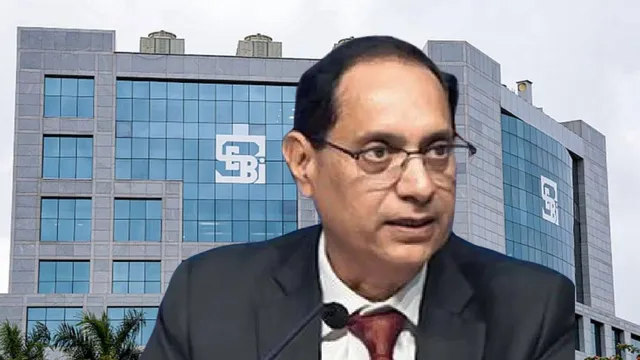
Tuhin Kanta Pandey,chairman, Sebi
“For AI-driven trading, we are actually going for guidelines on that. On how AIs will, in future, do that. Now AI has an opportunity as well as a risk. The opportunity is that you can use the AI for several of your things which can be automated, but risks will come with the cyber risk. Cyber risk from AI has increased and we are now issuing an advisory on how the SEBI ecosystem, the regulated entities can be protected from that enhanced risk,” Pandey told
Bhubaneswar:Securities and Exchange Board of India (SEBI) Chairman Tuhin Kanta Pandey on Monday said the market regulator will soon come out with guidelines for AI-driven trading, while cautioning that artificial intelligence presents both opportunities and heightened cyber risks for the financial ecosystem.
Speaking to ANI on the sidelines of an event organised by the Association of Mutual Funds in India in Odisha, Pandey said SEBI was working on a framework to regulate the growing use of AI in trading activities.
“For AI-driven trading, we are actually going for guidelines on that. On how AIs will, in future, do that. Now AI has an opportunity as well as a risk. The opportunity is that you can use the AI for several of your things which can be automated, but risks will come with the cyber risk. Cyber risk from AI has increased and we are now issuing an advisory on how the SEBI ecosystem, the regulated entities can be protected from that enhanced risk,” Pandey told ANI.
He said AI was helping financial entities automate processes and expand multilingual investor outreach, but warned that increasing dependence on technology had also amplified vulnerabilities that could threaten market integrity.
“So as you know, everyone has a software and if certain cyber security is threatened, that means if vulnerabilities are found in the software, very, very quickly, there is a problem that we will be attacked and those attacks may be successful. Then that is bringing risk to the market integrity,” Pandey told the media.
The SEBI Chairman also spoke about “Project Jagrook”, an AI-enabled investor awareness initiative aimed at expanding investor engagement through a 360-degree, multi-agency and multimedia campaign. He stressed the need for aggressive patch management and stronger verification systems to secure software, including applications deployed through third-party vendors.
On foreign portfolio investor (FPI) outflows, Pandey termed such movements part of the normal global investment cycle and said overseas investors continuously assessed returns and macroeconomic conditions across markets.
“The FPI’s come and go depending upon what they think about the relative situation between one country vis-a-vis another global jurisdiction. There are a number of factors which are contingent. ‘What are the returns that the FPI’s are getting in a particular market post?’ It’s a dollar return, not a rupee return, in a market, depending upon various factors like interest rates, arbitrage, the stance of the central banks,” Pandey said.
Pandey also spoke about unauthorised deposit schemes, saying state governments had legislative powers to act against illegal collections through laws such as the Chit Fund Act, the Banning of Unauthorised Deposits Act and state-level legislations like the OPID Act in Odisha.
He urged asset management companies and local administrations to steer investors towards regulated financial products such as mutual funds, Portfolio Management Services and Alternative Investment Funds.
Meanwhile,Pandey highlighted that the securities market provides an alternative channel, alongside banks, for directing savings into development projects. He emphasized that the capital market has diversified financing avenues through instruments such as equity, debt, REITs, InvITs, and notably, municipal bonds.
Pointing to states like Uttar Pradesh, Maharashtra, and Madhya Pradesh, which have successfully leveraged municipal bonds for city-level infrastructure and urban development, Pandey said Odisha too can position municipal bonds as a key pillar of its development financing strategy.
Speaking at the Association of Mutual Funds Program in Odisha, Pandey stated, “With wider participation, municipal bonds can evolve into a key pillar of funding for urban infrastructure in Odisha as well. So, as an investor, when you invest, you are not just earning returns. You are participating in the growth of your city when you are investing in municipal bonds, the state and the country. And indirectly also, when you invest in mutual funds, mutual funds in turn invest in debt, in corporate bonds, in municipal bonds for their debt mutual funds.”
The SEBI Chairman mentioned that while the domestic municipal bond market remained nascent, 22 urban local bodies across India raised over Rs 4,500 crore through 31 issuances by the end of FY26.
The broader domestic securities market expanded over the last decade, with total market capitalization increasing from Rs 95 lakh crore in FY16 to about Rs 463 lakh crore in April 2026, Pandey said.
He noted that unique retail investors grew to 145 million from 38 million in FY19. During the last financial year, the primary market recorded 366 initial public offerings, which raised Rs 1.9 lakh crore and ranked first globally in numbers. Total equity and debt market mobilization reached Rs 13.6 lakh crore despite geopolitical tensions and war.
Pandey highlighted that mutual fund assets under management increased from Rs 12 lakh crore in FY16 to nearly Rs 82 lakh crore by the end of April 2026. Monthly systematic investment plan (SIP) flows crossed Rs 31,000 crore in April 2026 from nearly Rs 3,000 crore earlier in April 2026.
However, citing the SEBI Investor Survey 2025, Pandey mentioned that while 63 per cent of households maintained awareness of market products, only 9.5 per cent actually invested, with urban participation at 15 per cent and rural participation at 6 per cent.
The SEBI Chairman also hailed the securities market as a bridge between savings and investments, connecting one side to the other.
“A securities market is nothing but a bridge between savings and investments. On one side, we have individuals like all of us who save money. On the other side we have businesses who need capital to grow. The market connects the two. When a company builds a factory or a startup expands or infrastructure is created, funding is required. Very often this funding comes to the securities market. It is one of the most efficient channels alongside banks, government support and internal accruals,” Pandey emphasized.