
“We’ve seen repeatedly how climate change increases hot, dry, flammable conditions that are extremely conducive to wildfires,” said Clair Barnes, a research associate in extreme weather at Imperial College London, who co-authored the WWA analysis.
BRUSSELS: Human-caused climate change made the extreme weather fuelling wildfires in southwestern France twice as likely, and made the conditions driving blazes in central Spain 20 times more likely, scientists said on Friday.::
The World Weather Attribution group of scientists used historical weather observations to assess how “fire-prone” hot, dry and windy conditions, which indicate how difficult it is to suppress a fire once it starts, have changed over time.
Greenhouse gas emissions, mostly from burning coal, oil and gas, have increased the planet’s average temperature to around 1.4 Celsius above pre-industrial times, according to the World Meteorological Organization.
In today’s climate, extreme fires of this intensity are likely to occur once every 20 years in southwestern France, and once every six years in central Spain, the analysis said.
“We’ve seen repeatedly how climate change increases hot, dry, flammable conditions that are extremely conducive to wildfires,” said Clair Barnes, a research associate in extreme weather at Imperial College London, who co-authored the WWA analysis.
“What’s unique about this case is that it’s still early in the season — and with another heatwave looming, these findings are extremely scary,” Barnes added.
An increasingly important driver of Europe’s wildfire risk is the pattern of a wet winter — which supports vegetation growth — followed by a dry spring and summer, which dries out this vegetation, leaving forests stocked with large volumes of highly flammable fuel for fires.
“Climate change means that the right combination of weather conditions that create a tinderbox and turn it into a disaster happens much more often,” said Friederike Otto, professor of climate science at the Centre for Environmental Policy at Imperial College London and a co-author of the study.
The severity of the fires was also exacerbated by a wet winter, the study found, meaning that shrubs and other vegetation grew considerably and then dried out during heat waves in June and July. That provided lots of fuel for the fires, which have proved very difficult to contain.
Reducing wildfire risk therefore requires not only an emergency firefighting response, but more work to prevent fires “through risk-sensitive landscape planning and management,” the WWA analysis said. That could include clearing forests of dried-out vegetation ahead of the wildfire season.
Spain had its wettest January for 25 years this year, followed by a summer that the country’s meteorological agency has said is the hottest on record. France, too, is currently suffering its fourth heatwave of the year.
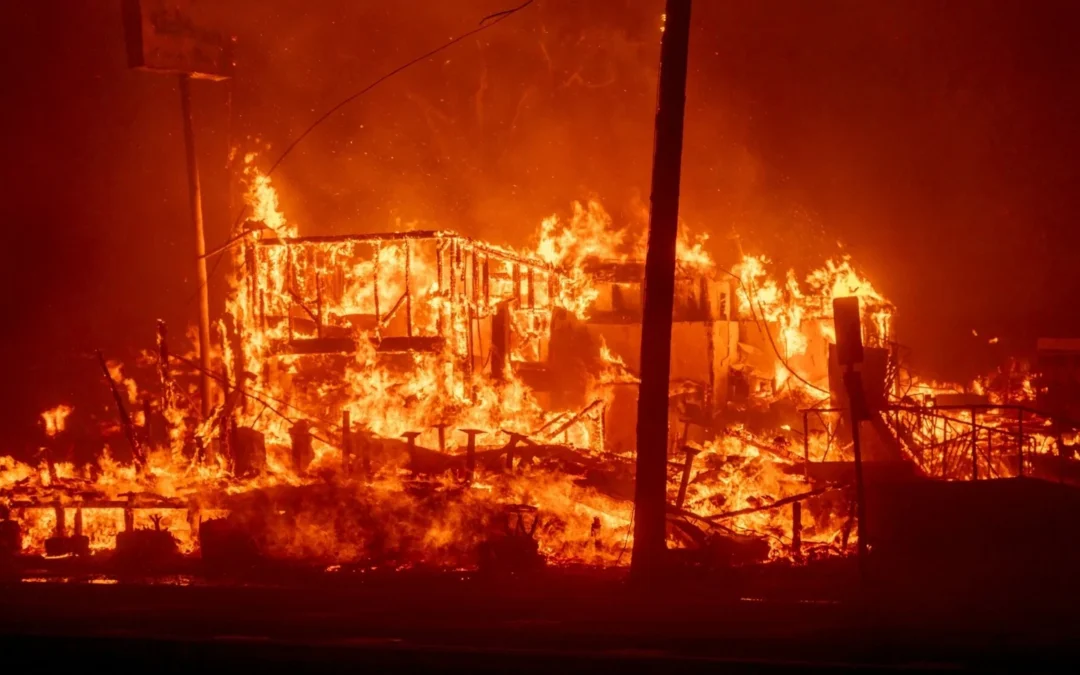
Blazes have consumed hundreds of square miles close to the cities of Bordeaux in France and Madrid, forcing hundreds of thousands of people to evacuate. New fires have broken out in England and Greece.
Imma Oliveras Menor, a senior researcher at the University of Oxford, said in an emailed statement that the study did not take into account land management practices that might have contributed to the spread or direct cause of the fires. But “it shows that climate change is here and part of the cocktail that is causing these extreme wildfires,” she said.