
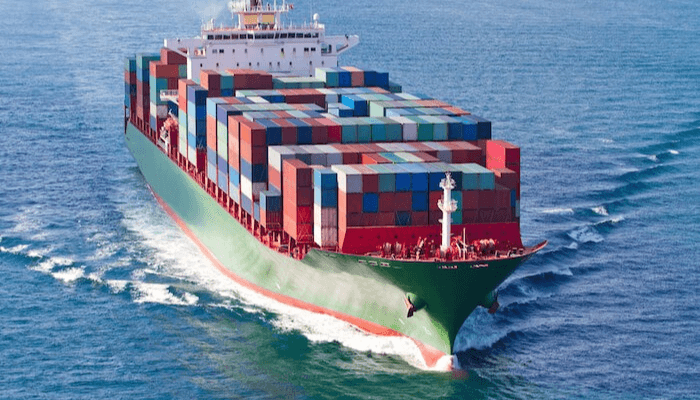
Shipping traffic passing through the crucial waterway at the entrance to the Gulf during an uneasy ceasefire between Washington and Tehran represents a fraction of the average 140 daily passages before the Iran war began on February 28.
At least seven ships – mainly dry bulk vessels – have crossed the Strait of Hormuz in the past 24 hours, in line with muted activity in recent days, shipping data showed on Monday, while talks between Iran and the United States have stalled.
The vessels included ships leaving from Iraqi ports and one dry bulk vessel from an Iranian port, according to ship tracking data from Kpler and separate satellite analysis from data analytics specialists SynMax.
Shipping traffic passing through the crucial waterway at the entrance to the Gulf during an uneasy ceasefire between Washington and Tehran represents a fraction of the average 140 daily passages before the Iran war began on February 28.
The U.S. Central Command has redirected 37 vessels since a blockade was imposed on Iran on April 13, the military said on April 25.
Six Iranian tankers returned to Iranian ports and sailed back through Hormuz in recent days with some 10.5 million barrels of oil, according to satellite analysis from TankerTrackers.com.
Around four million barrels of Iranian oil onboard tankers sailed through the U.S. blockade on April 24, according to separate satellite analysis from TankerTrackers.com.
Idemitsu Maru tanker carrying Saudi oil crosses Strait of Hormuz
Panama-flagged tanker Idemitsu Maru, carrying 2 million barrels of Saudi oil, crossed the Strait of Hormuz, LSEG shipping data showed on Tuesday, becoming the first Japan-linked crude tanker to do so since the Iran war began.
Before the U.S.-Iran conflict broke out on February 28 and disrupted Middle East crude oil and liquefied natural gas supplies, Japan relied on the region for 95% of its oil imports, much of it coming via the Strait of Hormuz.
The move comes as Japan’s recent diplomatic efforts to safeguard energy supplies were disrupted by the war.
Earlier in April, the Sohar LNG tanker co-owned by Japan’s Mitsui O.S.K. Lines and the Mitsui-owned LPG tanker, Green Sanvi, crossed the strait.
Idemitsu Maru, a very large crude carrier (VLCC), is managed by a unit of Japanese refiner Idemitsu Kosan.
Idemitsu Kosan declined to comment on individual ships.
The vessel was 30 kilometers (18.6 miles) east of Larak Island and moving eastward with its Automatic Identification System active, separate data from MarineTraffic showed.
Iran and US allowed Russian superyacht to cross Strait of Hormuz
A superyacht owned by Russian billionaire Alexey Mordashov was able to transit the blockaded Strait of Hormuz after undergoing maintenance in Dubai because neither Iran nor the United States objected, a source close to Mordashov said on Tuesday.
It has been unclear how the multi-deck pleasure vessel, worth over $500 million, gained permission to sail on Saturday through the commercially important waterway at the heart of the U.S.-Iran conflict, where traffic has been severely restricted since February.
Sailing under a Russian flag, the yacht, called Nord, crossed the strait on an approved route in compliance with international maritime law, the source said.
“Iran did not interfere with the movement of the yacht, as it is a civilian vessel of a friendly country conducting a peaceful transit. The American side also raised no questions regarding the yacht’s movement, as it did not call at Iranian ports and has no connection to Iran,” the source said.
Just a few, mainly merchant vessels, have been passing daily through the crucial waterway at the entrance to the Gulf as Washington and Tehran maintain an uneasy ceasefire. This represents a fraction of the average 125 to 140 daily passages before the Iran war began on February 28. In response, the U.S. has imposed a blockade of Iranian ports.
Russia is a longstanding ally of Iran. Iranian Foreign Minister Abbas Araqchi travelled to St Petersburg on Monday for a meeting with Russian President Vladimir Putin, after discussions with peace mediators in Pakistan and Oman over the weekend.
After crossing the strait, Nord has been located near the coast of Oman since Sunday, according to LSEG data.