
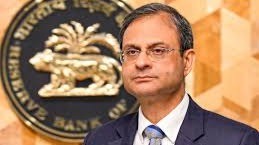
The Indian economy is facing a “rare goldilocks” period. Since October, India’s economy has experienced rapid disinflation leading to a breach of the central bank’s lower threshold of tolerance. Given these macroeconomic conditions, “policy space” exists to support growth, said RBI Governor Sanjay Malhotra adding that growth has remained strong
The six-member monetary policy committee voted unanimously to lower the repo rate to 5.25%, in line with a consensus view, and maintained a “neutral” stance, suggesting room for further rate cuts
Mumbai: Shrugging off concerns over the depreciation of rupee, the RBI has cut interest rate by 25 basis points to 5.25 per cent in a bid to further bolster economic growth, which rose to a six-quarter high of 8.2 per cent in the second quarter of the current financial year.
The RBI has sharply raised growth projection to 7.3 per cent from earlier 6.8 per cent for the current financial year.
The RBI took steps to boost banking-sector liquidity by up to $16 billion to support a “goldilocks economy”.
The developments are expected to make advances, including housing, auto and commercial loans cheaper.
Announcing the fifth bi-monthly monetary policy for the current fiscal, RBI Governor Sanjay Malhotra said the Monetary Policy Committee (MPC) has unanimously decided to cut the short-term lending rate or repo rate by 25 basis points to 5.25 per cent with a neutral stance.
The Indian economy is facing a “rare goldilocks” period, RBI Governor Sanjay Malhotra said in a video address.
Since October, India’s economy has experienced rapid disinflation leading to a breach of the central bank’s lower threshold of tolerance, said Malhotra, adding that growth has remained strong.
Given these macroeconomic conditions, “policy space” exists to support growth, he added.
“Underlying inflation pressures are even lower”, Malhotra said, pointing to a “generalised” decline in price pressures.
External uncertainties could pose “downside risks” to growth, Malhotra said.
Looking ahead, domestic factors such as healthy agricultural prospects, continued impact of GST rationalisation, benign inflation, healthy balance sheets of corporates and financial institutions and congenial monetary and financial conditions should continue to support economic activity, added Malhotra.
According to Malhotra,continuing reform initiatives would further facilitate growth.
On the external front, services exports are likely to remain strong, while merchandise exports face some headwinds. External uncertainties continue to pose downside risks to the outlook, while speedy conclusion of various ongoing trade and investment negotiations present upside potential.
“Taking all these factors into consideration, real GDP growth for 2025-26 is projected at 7.3 per cent, with Q3 at 7.0 per cent; and Q4 at 6.5 per cent. Real GDP growth for Q1:2026-27 is projected at 6.7 per cent and Q2 at 6.8 per cent. The risks are evenly balanced,” outlined Malhotra.
Retail inflation stood at an all-time low of 0.25 per cent in October and is expected to remain soft in coming months. The central bank targets inflation at 4 per cent, within a tolerance band of 2 per cent on either side.
The six-member monetary policy committee voted unanimously to lower the repo rate to 5.25 per cent, in line with a consensus view, and maintained a “neutral” stance, suggesting room for further rate cuts.
The rate cut comes on the back of the consumer price index (CPI) based headline retail inflation ruling below the 2 per cent lower band mandated by the government for the last three months.
India’s retail inflation dropped to a historic low of 0.25 per cent in October 2025, marking the lowest level since the Consumer Price Index (CPI) series was introduced. Besides, the Indian economy has clocked better-than-expected GDP growth of 8.2 per cent in the second quarter.
The central bank has now cut rates by a total of 125 basis points since February 2025. It held rates in August and October.Based on the recommendation of the MPC, the RBI reduced the repo rate by 25 bps each in February and April, and 50 basis points in June amidst easing retail inflation.
However, the rupee declined to historic low and crossed 90 against a dollar earlier this week making imports costlier, raising fears of rise in inflation. Rupee has depreciated by about 5 per cent so far this year.
The RBI also decided to conduct open market operations of 1 trillion rupees ($11.14 billion) to buy bonds this month, and another $5 billion in forex swaps to add liquidity to the banking system and speed up transmission of lower rates.
India’s benchmark 10-year bond yield dropped nearly 5 basis points to 6.4581% after the central bank’s moves. The rupee fell 0.1% to 89.87, while the benchmark equity indexes were up 0.1% each.
The rate cut and liquidity infusion measures will help softening of bond yields as well as aid credit flow. In all it was a balanced policy with the much-required liquidity infusion, said Poonam Tandon, Chief Investment Officer at IndiaFirst Life.
“Do not think that the life insurance policyholder returns will be impacted significantly since the yield curve is very steep and a slight softening will not really make a big difference in the short run,” commented Tandon.
The RBI decision to cut interest rate by 25 basis points, along with recent GST reforms, would further lead to the automobile industry’s growth by enhancing affordability and accessibility for consumers, industry body SIAM said on Friday.
“Coupled with the income-tax relief measures announced in the Union Budget 2025-26 and the landmark GST 2.0 reforms, this creates strong enablers for further enhancing affordability and accessibility,” Society of Indian Automobile Manufacturers (SIAM) President Shailesh Chandra said in a statement..