
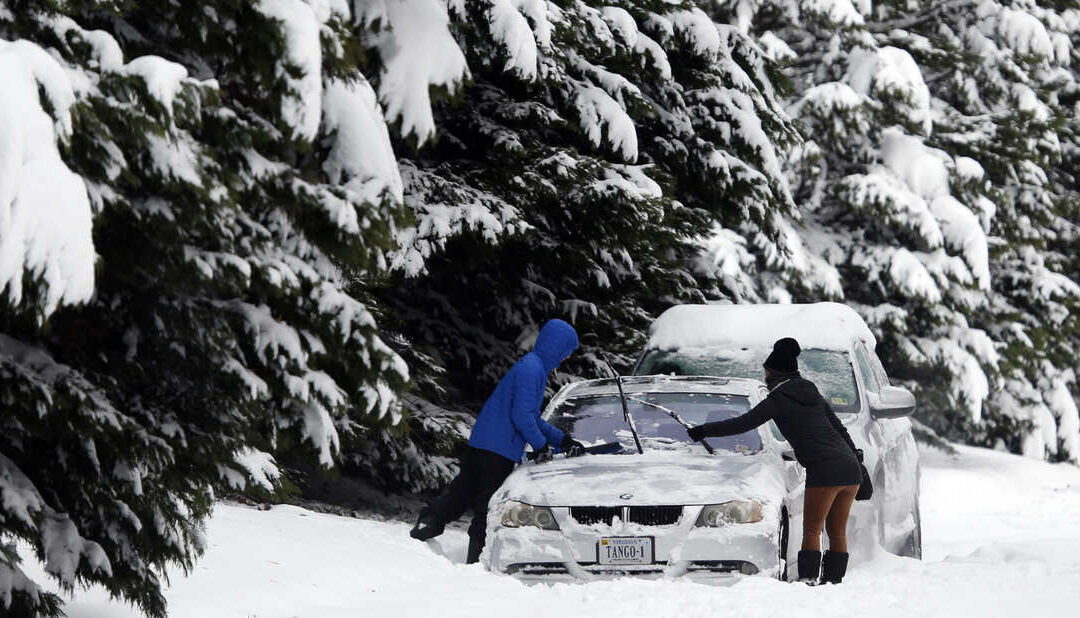
While it’s packing plenty of snow and frigid temperatures, the storm is mostly noteworthy for its size and speed. Snow, blizzard, freezes and flood warnings and advisories stretch across central and eastern US, its northern fringe and the Deep South, as well as into Canada. Its speedy march across the continent is causing violent temperature swings.
“This is a once in a 20- to 30-year type storm,” said Rich Otto, a forecaster at the US Weather Prediction Center.
Chicago:
An enormous storm is battering a vast swath of the US and Canada, knocking out power to more than 1.4 million homes and businesses, grounding thousands of flights and dashing hopes for delivery of last-minute holiday gifts.
Power outages span more 25 states, from Maine to Texas. The Tennessee Valley Authority, which provides electricity to several states, ordered rolling blackouts to cope with overwhelming demand as millions of people turned up heaters amid the cold.
US flight cancellations over the past two days reached 7,000 Friday afternoon as disruptions pile up from the Pacific Northwest to East Coast hubs, according to tracking site FlightAware.
While it’s packing plenty of snow and frigid temperatures, the storm is mostly noteworthy for its size and speed. Snow, blizzard, freezes and flood warnings and advisories stretch across central and eastern US, its northern fringe and the Deep South, as well as into Canada. Its speedy march across the continent is causing violent temperature swings.
New York City was 55F (13C) at dawn. By 10 p.m., it’s forecast to be around 10.
More than 200 million Americans — around 60% of the country — were under some form of winter weather warning or advisory Friday, according to the National Weather Service. Heavy snow is set to blanket the Great Lakes region and parts of northern New York and New England, with bitter cold following a front that is now pushing into Pennsylvania and the Appalachian Mountains.
“This is a once in a 20- to 30-year type storm,” said Rich Otto, a forecaster at the US Weather Prediction Center.
The storm has intensified while sweeping east to achieve the status of a “bomb cyclone” — when its central pressure rapidly plunges — and is now centered over southwestern Ontario in Canada. Canadians are dealing with their own travel woes and power outages due to the severe weather, including cancelled flights in the country’s busiest airports.
Bloomberg