
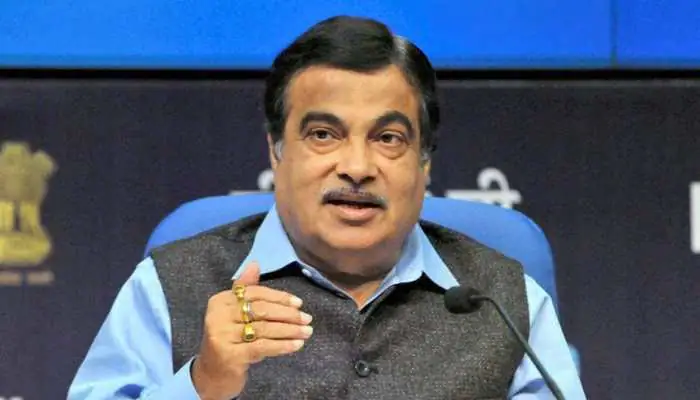
“The surety bonds will help in boosting the liquidity in the infrastructure sector by freeing the contractors working capital stuck in bank guarantees. Contractors can utilise these funds for growth of their business,” said Nitin Gadkari, union minister, road transport and highways
Mumbai/New Delhi:
After a long wait, Nitin Gadkari, union minister, Ministry of Road Transport and Highways (MoRTH) will be launching the country’s first-ever surety bonds insurance product, designed by private sector major Bajaj Allianz General Insurance on December 19 to boost liquidity in the infrastructure sector.
Both Munich Re, the largest global reinsurer and Swiss Re, the second largest reinsurer in the world, have confirmed that they have provided the technical and reinsurance support the BAGI to design the product.
The first Surety Bond will be issued for projects of National Highways Authority of India(NHAI).
Surety Bonds, like aviation covers are designed purely by reinsurance supports and above 95 per cent of the product will be reinsured with reinsurers like Swiss Re.
“On December 19, our ministry is launching India’s first-ever surety bond insurance product…that is going to give a good relief to the contractors,” Gadkari said.
Surety bonds are different from corporate bonds and financial guarantees. While surety bonds refer to the performance or delivery obligation to complete the insured project, the corporate bonds refer to financial obligation to repay the debts or loans.
“The surety bonds will help in boosting the liquidity in the infrastructure sector by freeing the contractors working capital stuck in bank guarantees. Contractors can utilise these funds for growth of their business,” the road transport and highways minister said.
According to the experts surety bond product is fairly standard one all around the world . But each country has has its local flavours.
“Main thing is the underwriting and risk management of such products. A proper database of all contractors and their financial health need to be prepared in India. This will take time. Underwriting guidelines have to be set. Insurers have to make sure that they are not-more exposed than banks which have collateral as back up. A lot of work has to be done, but yes, we are ready to provide capacity for the right underwrting compnay, who wants to get into this business seriously,’’ said a senior official of Swiss Re.
Surety Bonds
Surety bonding is a highly specialized, complex, and meticulous process which require specialized consultants for placement. It is a three-party contract by which one party (the surety underwriter/insurer) guarantees the performance or obligations of a second party (the contractor) to a third party (the Project Owner), in India’s case the MORTH/ NHAI.
It is a promise given by Surety underwriter to the project owner that they would be liable for the debt, default, or failure of the contractor and would bear cost of invocation. It provides financial protection to the ‘Project Owner’ against loss due to the inability/ non – performance as per terms, conditions, and obligations of the Contractor.
Thus, this product caters to all contracts where one needs to submit guarantees especially focusing on infrastructure.
While International Surety market provides different types of specialised Bonds like Financial Bond, environmental bond, Mining rehabilitation Bond etc. IRDAI has restricted the usage in India to only two types of Bonds i.e., Contract Surety and Commercial surety. Contract surety comprises of Bid, Advance Performance and Retention bonds and commercial surety encompasses Custom and Court bond.
The Project owner, NHAI awards the roadway development projects to local or international contractors through a rigorous process including submission of guarantee. These projects are worth trillions of rupees and Surety becomes the best option for contractors which will fulfil their requirement. Guarantee would be obtained from Indian insurance companies which would be supported by international reinsurers.
In Jan 2022, IRDAI issued surety guidelines, which allowed Indian insurance companies to issue Surety in India, and in Feb 2022, Ministry of Finance, India also amended the general financial rule, and included Surety Bond as Security instrument.
These are welcomed steps, however, surety in India is ‘work in progress’ and involves various challenges.
There is immense opportunity for surety market including NHAI, however Surety is a new concept and insurance companies in India are yet to achieve expertise. It is a challenge to assess the risk of contractor in terms of a comprehensive track record including financial numbers, total exposure, disputes, invocation data, etc. in terms of availability, transparency, and accuracy.