
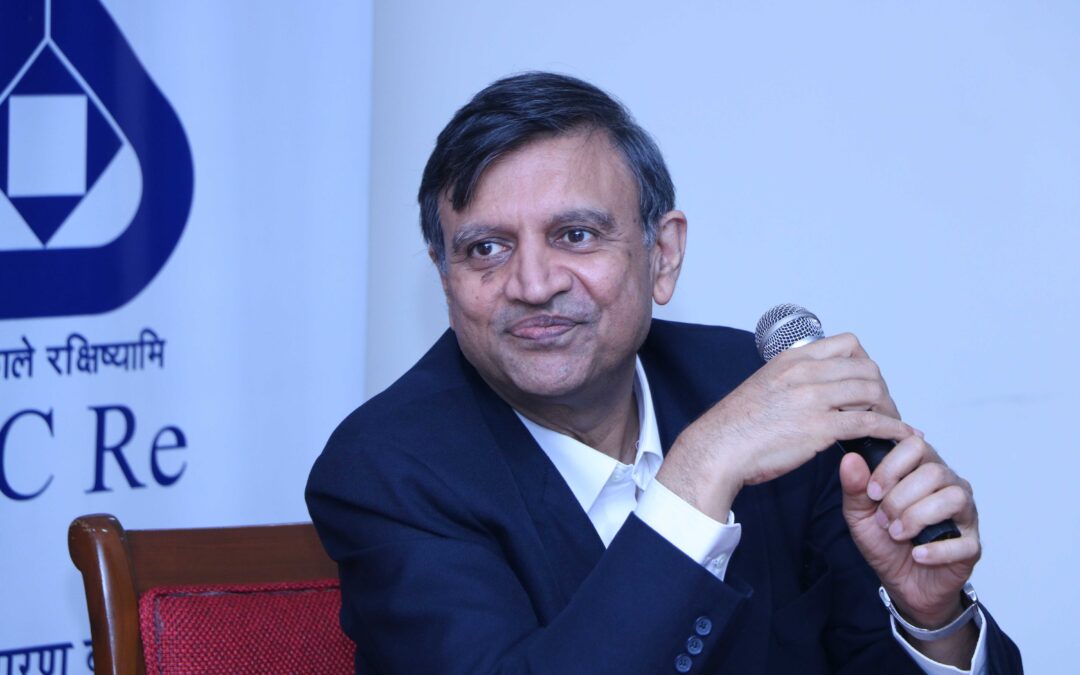
Devesh Shrtivastav, CMD, GIC Re
GIC Re has performed well in the last couple of quarters, despite uncertain market condition owing to sanction, political upheaval, wear and tear of war crises, and vagaries of climate change. I think, we weathered the Pandemic disruption rather well. This has been in large measure thanks to Indian market having excluded this risk on the business side. We did have some losses but the impact is quite manageable, said Devesh Shrtivastav, CMD, GIC Re
Mumbai:
Backed by a bounty investment income and lower underwriting losses, state owned GIC Re’s net profit in Q2 FY 2022-23 has surged by 85 per cent year on year(Y-O-Y) to Rs 1,859.93 crore as compared to Rs 1,010.55 crore in the year ago period, despite further cutting down its premiums.
The company, which is one of the top 15 global reinsurers, has continued to pursue its strategy of downsizing its topline, by shedding loss making business, to improve its bottom line and has further reduced its gross premium in Q2 FY2022-23 to Rs 8,101 crore from Rs 8,375 in the year-ago period.
GIC Re has performed well in the last couple of quarters, despite uncertain market condition owing to sanction, political upheaval, wear and tear of war crises, and vagaries of climate change, said Devesh Shrtivastav, CMD, GIC Re.
“I think, we weathered the Pandemic disruption rather well. This has been in large measure thanks to Indian market having excluded this risk on the business side. We did have some losses but the impact is quite manageable. As far as domestic business is concerned, GIC Re’s move to base property insurance pricing on bureau published burn rates did result in significant segment growth in the context of shrinking insurance premium for other segments,” explained Shrtivastav.
Indicating that its underwriting strategies to have a profitable balances sheet is paying off ,the reinsurer, the third largest Asian reinsurer, has seen its combined ratio improving to 117,89 per cent in Q2FY2022-23 from 122.17 per cent in the year ago period.
Anything below 100 per cent is a positive combined ratio showing that a re/insurer has paid claims within its premium income.
Accordingly, the reinsurer’s underwriting losses have fallen by 10 per cent y-o-y to Rs 1271 crore in the reporting quarter.
The reinsurer’s investment Income (net of expenses ) has risen by 20 per cent y-o-y to Rs 3,206 crore in the reporting quarter.
The reinsurance multinational, which has received its 30 per cent premium from overseas markets, has managed to improve its solvency ratio to 2.25 as on September 30. 2022 as compared to 1.88 as on September 30,2021
The company has reduced its exposure towards motor, health and liability portfolios while expanding its fire,engineering, agriculture and aviation business during Q2FY 20222-23.