
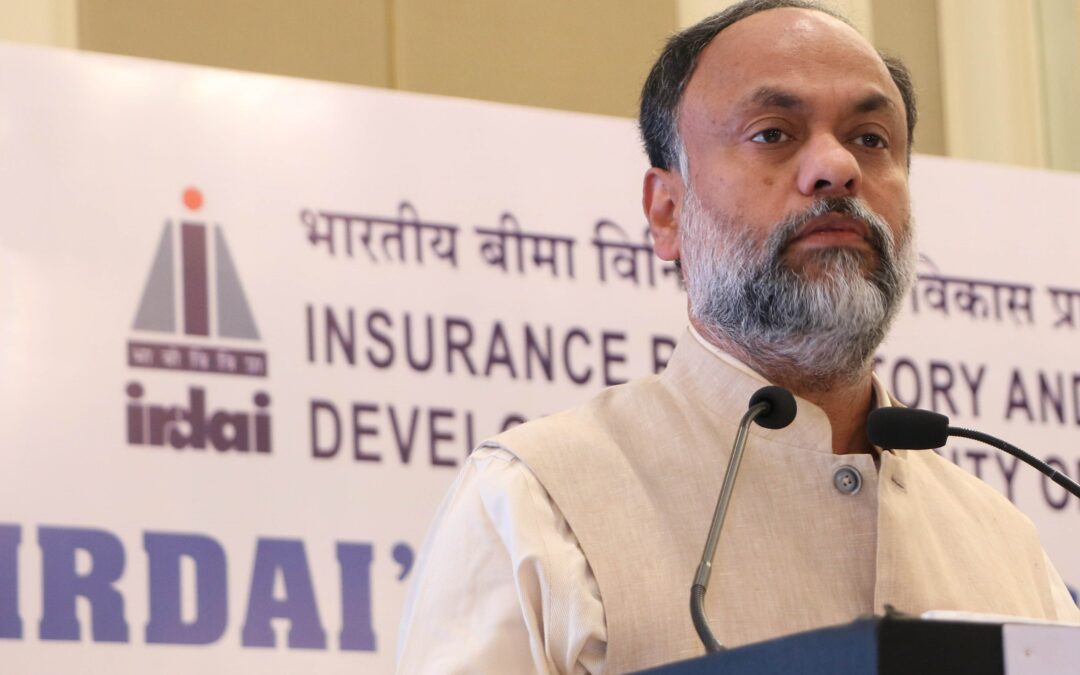
Debasish Panda,chairman, IRDAI
“If we have to double the penetration, every year there is a need to infuse an additional Rs 50,000 crore. While half of these funds need to be generated by the insurers internally, the other half has to mobilised from markets and investors. We have put in place easy entry and exits for private equities and other investors for facilitating their investment in to the sector,” Panda said addressing the annual insurance and pension summit organised by industry lobby CII
Mumbai:
The insurance industry will need a capital infusion of Rs 50,000 crore per year to double its penetration in the next five years, sector watchdog Irdai’s chief Debasish Panda said on Friday.
Panda appealed to business conglomerates to venture into insurance sector , saying the return on equity is at a healthy 14 per cent for life insurers and 16 per cent for non-life, while in the case of top five companies it goes up to 20 per cent as well.
It can be noted that the insurance sector is a very competitive industry, with nearly two dozen life insurance companies and over 30 non-life ones. The overall penetration for insurance is 4.2 per cent as of FY21-end.
“If we have to double the penetration, every year there is a need to infuse an additional Rs 50,000 crore. While half of these funds need to be generated by the insurers internally, the other half has to mobilised from markets and investors. We have put in place easy entry and exits for private equities for facilitating their investment in to the sector,” Panda said addressing the annual insurance and pension summit organised by industry lobby CII here.
He said the number has been arrived at after doing an analysis of current GDP growth, inflation and penetration, and also added that he will meet the heads of insurers after March to prepare in pursuit of the same requirements.
“I’d like to reach out to the conglomerates who are present in this country, individual investors who are interested to invest their money,” he said adding that on his recent roadshows in US he found keen interest of foreign investors for the Indian insurance sector.
He elaborated on the regulations framed to enable ease of doing business for insurance companies. Since June, the regulator has announced several regulatory changes such as use-and-file to launch products without prior approval, easing of capital raising and solvency norms to invest in insurance companies.
The Insurance Regulatory and Development Authority of India chief said the target is to double penetration in the next five years, and added that it is possible to insure all by 2047, when the country will be celebrating its 100th anniversary of independence.
India is at present the tenth biggest market in the world and will be the sixth biggest by 2032, Panda said.
Industry is content serving people with traditional or old products, but needs to analyse the newer needs of protection as well, he exhorted.
He asked the players to engage with housing regulators to try and make property insurance compulsory, or impress the need for property insurance with the Union housing ministry.
Insurers also have to go beyond the present distribution arrangements with scheduled commercial banks, and have bancassurance arrangements with non-bank lenders, co-operative banks and also payment aggregators.
IRDAI has also allowed corporate agents to tie up with nine insurers (up from three earlier) and initiated Bima Sugam, Vahak, and Vistar proposals.
“These will be win-win for all – insurers, policyholders, and distributors. Distributors will be able to sell policies seamlessly on the platform, without the need to gather forms or deposit cheques. Everything will get settled on this platform,” he said.
Panda afterwards had met some of the CEOs of the general insurance industry for discussing Vahak, and Vistar proposals.
Bima Sugam is proposed to be an industry and regulator-backed online marketplace for selling all kinds of insurance products.
However, he did not provide a definite timeline for the launch of Bima Sugam, which will essentially function like an industry-enabled platform for buying and selling insurance policies as also claim settlement and other service requests.
“A committee has already deliberated upon and fast-tracked the proposal…(should) come up at the earliest possible time-frame,” Panda said.
“Amendments to the Insurance Act (for instance, composite life and general insurance licence for companies) have been accepted by the government. Let’s hope that they go through in the next parliament session,” he said.
He also urged insurance companies to bolster their grievance redressal process for the benefit of policyholders.
“It is critical. Companies should create a separate vertical with an independent set of redressal officers to handle complaints. It does not make sense if the complaints (that reach IRDAI’s grievance management cell) reverse in the same direction (and go back to the company official who might have left the grievance unresolved),” he added.