
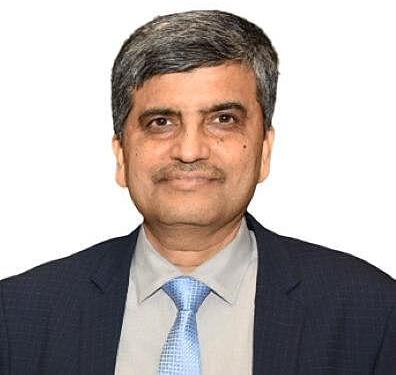
Ajay Seth , chairman, IRDAI
Bima Sugam, the game changing e-market place for the Indian insurance industry, should be made operational in another month or six weeks and fee in the platform should not exceed 5 per cent of the premium.
Mumbai: Ajay Seth, chairman, IRDAI, said the Bima Sugam, the game changing e-market place for the Indian insurance industry, should be made operational in another month or six weeks and fee in the platform should not exceed 5 per cent of the premium.
“I would have expected it to be launched six months ago. The sooner it becomes operational, the better. The first product we expect to be available on the platform is motor insurance. Certain issues on Motor insurance need to be addressed, including changes to the regulatory framework following court judgments. I expect the first product to be launched within the next month to six weeks, said Seth on Tuesday while participating the BFSI Conclave organised by business daily Business Standard in Mumbai..
Bima Sugam is envisaged as a neutral platform where customers can compare prices, understand simple insurance products and purchase policies directly, potentially at a lower cost than through other distribution channels. One of the mandates is that the fee in the platform should not exceed 5 per cent of the premium, he elaborated.
On the IRDAI’s consultation paper ‘Recalibrating Economics of Insurance Distribution’ he said, “We are carefully examining the concerns being raised, analysing the available evidence and considering the appropriate way forward.Reforms of this nature must be built on consensus. They cannot simply be implemented by issuing another set of regulations. We are reaching out to industry participants, including intermediaries and distributors, to understand their concerns and develop a workable approach.The objective is to protect customer choice while ensuring that distribution remains sustainable.’’
“Over the past 40 days, I have met extensively with representatives of the insurance industry, distribution channels and policyholders. We are now at the stage of building consensus,’’ hinted Seth.
“It has generated a wider discussion on the transformative role of insurance and the changes required. I am listening to the concerns being raised, including the important role intermediaries play in assisting policyholders at the time of a claim. The paper does recognise this role, but concerns remain, and we need to examine them carefully,’ stressed Seth.
On the IRDAI’s plan to ensure proper claim settlement for customers, Seth said, “ We currently track the number of claims settled, including claims paid in full, claims paid partially, claims repudiated and claims rejected. On that basis, the industry may report a claims settlement figure of 99 per cent.But what does that figure mean to an ordinary policyholder? Consumers want to know how much of the premium collected by an insurer is ultimately paid out in claims. We do not currently track that information in a manner that provides the necessary clarity to the public.’’
Similarly, according to him, consistent information is not readily available on how long insurers take to approve hospital admissions or process patient discharges.
Policyholders need to know whether admission approvals take one hour, two hours or six hours, and how quickly discharge formalities are completed. The next step for the regulator is to focus on the claims experience of policyholders. Greater transparency on claims payments, admission approvals and discharge timelines would help customers compare insurers on service quality, rather than relying solely on premiums or commissions, explained Seth.
On the insurance portability, he said the activity is concentrated in a very small set of entities. He pointed out that the commissions paid might be influencing customer behaviour.
He said that 60 per cent of the port-ins was concentrated among three entities who also accounted for 20 per cent of port-outs.
“If a large number of people were so convinced about the good quality, people with them should not have been leaving out. So what is at play? The commission is driving behaviour from one to another,” he said.
Seth further said the insurance sector needs to implement the best practices from the banking and capital markets industry.
He said the insurance regulator will work to expedite claims in case of health policies, noting that the health insurance sector has the “maximum dissatisfaction” levels among the customers.
He noted that data on the time required for hospital admission and discharge under health insurance policies is currently unavailable, adding that IRDAI will focus on addressing this gap going forward.
He said there is a need to reassess the industry’s performance, and suggested a shift from looking at penetration to number of lives covered and the effectiveness of the cover for every rupee of premium paid.
General insurance has been growing at about 1.3 times the growth in nominal GDP, while life insurance is at par with nominal GDP growth, he said.
Sir
Your study is real and the hospitals submit the final bill and get discharge but the patient will be waiting for Tpa to sanction final approval. Sometimes the amount sanctioned will differ more and has to pay from pocket. Claim settlement with in no time
Private insurance companies offer large commission to agents so that they will have more licenses so that where they get more will be their preference.
We believe that focus needs to be placed on service; if the service is good, complaints will naturally decrease. Every company needs to prioritize providing good service.
हमें लगता है कि सर्विस पर ध्यान देने की जरूरत है अच्छी सर्विस होगी तो शिकायत अपने आप कम होगी हर कंपनी को अच्छी सर्विस पर ध्यान देने की आवश्यकता है