
Conflict in the region is also increasing the risk of oil spills and maritime pollution.
Dubai: An oil spill from a damaged tanker off the coast of the United Arab Emirates has widened, satellite images showed, triggering more beach closures and raising environmental concerns.
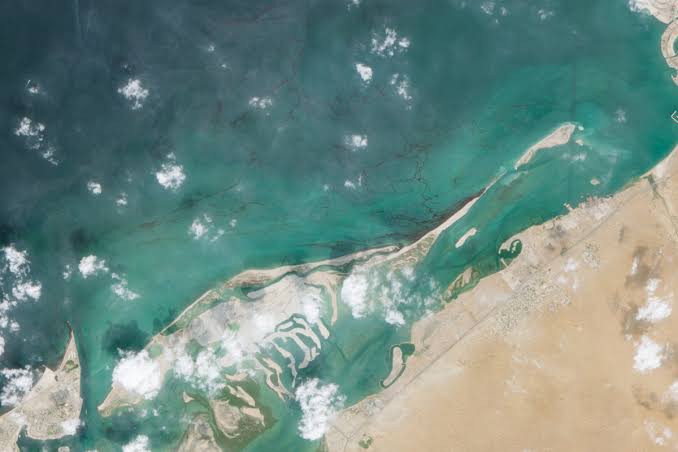
Images from the European Union’s Copernicus satellite observation network dated October 24 show the oil spill has widened over the last few days and is reaching close to the shores of the northern Umm Al Quwain emirate, with dark layers of oil spreading at sea and along its coastline.
Since the start of the US-Israeli war with Iran, attacks on commercial vessels in Gulf shipping lanes have driven up security risks for maritime traffic and heightened fears over the conflict’s environmental fallout.
October has been the worst month for attacks on commercial shipping in the Strait of Hormuz and nearby waterways, according to data compiled by the Washington Institute for Near East Policy think tank.
The UAE said on Friday that efforts were under way to contain oil leaking from a tanker offshore, with its Ministry of Climate Change and Environment conducting an environmental assessment.
Authorities have not named the tanker involved in the incident or said what caused the spill. But experts told Reuters that the spill was coming from a tanker called the Gem No.2, which shipping sources said was a vessel that had been struck by an unidentified projectile last month, causing a fire that was later extinguished.
The images provided by the EU’s Copernicus Sentinel-2 satellites showed a large oil spill coming from the tanker.
The UAE authorities shut more beaches after an oil spill in the Persian Gulf raised concerns over environmental and health impacts.
Sharjah said Al Hamriya Beach has been closed as a precautionary measure to prevent pollution from the oil spill. Ras Al Khaimah said that all its beaches are closed until further notice, without specifying the reason for the closure.
On Friday the UAE’s climate ministry detected the spill off the coast Umm Al Quwain, north of Dubai, and temporarily closed all beaches and coastal areas in the emirate. It didn’t identify the tanker.
Odors in Umm Al Quwain, Sharjah and Ajman don’t pose health risks to residents, the ministry said in a post on X.
Specialized teams and relevant authorities were dispatched to Sharjah to undertake necessary measures to ensure the safety of beaches and prevent pollutants from reaching them, the emirate’s media office said.
The region has suffered oil spills and leaks in recent months. In August, a tanker ran aground near Oman’s southeastern coast leaving the country to battle a slick covering about six-and-a-half times the land area of Manhattan.
Shortly after, Iran was dealing with an oil spill off Qeshm Island, near a breeding ground for endangered hawksbill sea turtles.
Conflict in the region is also increasing the risk of oil spills and maritime pollution.
A cargo vessel sank in the Strait of Hormuz this month after a strike that sparked a fire, the Maritime and Port Authority of Singapore said. Freighters struck by projectiles can leak ship fuel, even if the main oil storage tanks aren’t breached, endangering wildlife and marine environments.
Agencies