
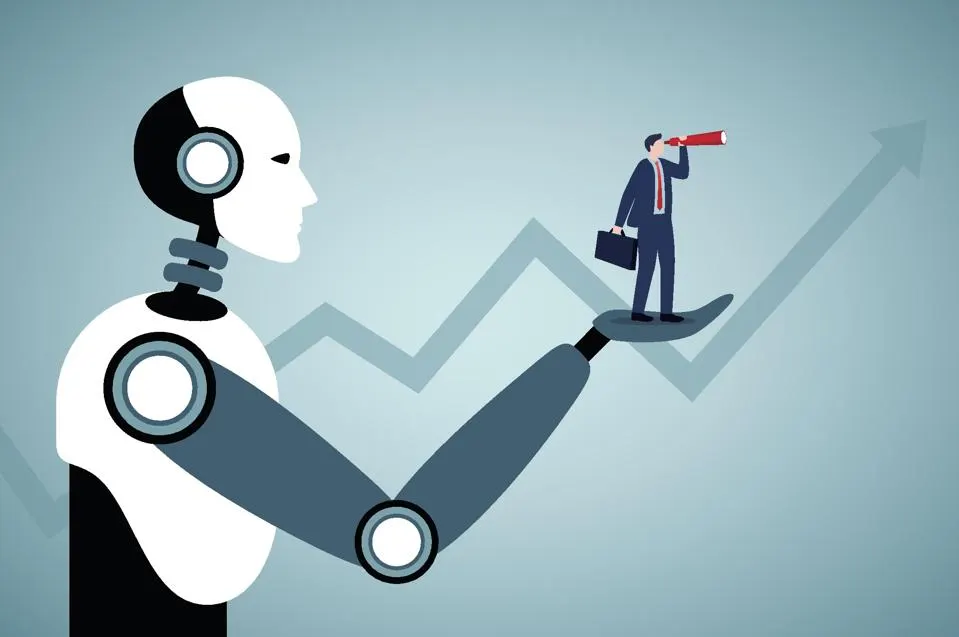
People need to move from asking : “Will AI take my job?” to:“Which parts of my job should AI take away so that I can do something more valuable?”
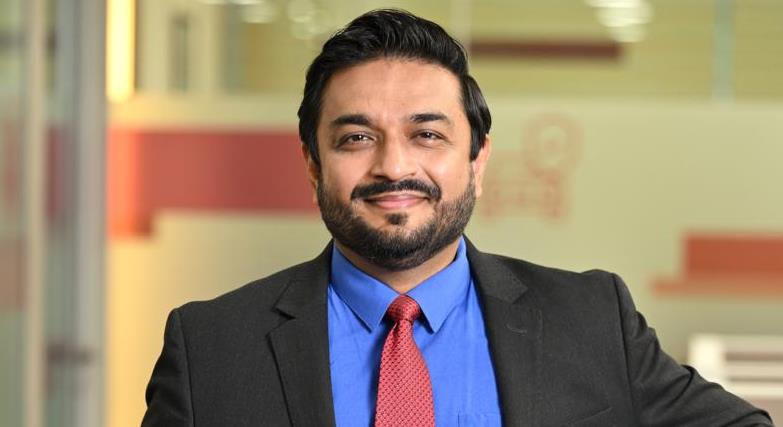
Mohit Sharma, Chief Digital, AI & Transformation Officer, Generali Central Life Insurance
As businesses and societies navigate an increasingly interconnected digital landscape,Artificial Intelligence (AI) has become the next big step in technological change.
Generative AI, or Gen AI as it is popularly known, is a broad category of AI that can create content such as text, images, audio as well as video based on users’ prompts by using deep learning models that copy how the human brain makes decisions.
These models learn from large amounts of data and then respond to user prompts.For years digital transformation in insurance focused on automation —digitizing forms, eliminating paper, reducing manual processes and improving turnaround times. That helped efficiency.
Now, Generative AI is shifting the conversation entirely.
Reimagining the insurance journey with Gen AI
The opportunity today is no longer just to make an existing process faster. It is to reimagine the process itself.
The question we need to ask ourselves goes beyond simply wondering, “How can Gen AI automate what we do today?” We should push ourselves to ask a question: “If we were to redesign our insurance operations today with Gen AI available, from the very first day would we design it in the same way?”
Likely the answer is no.
AI can read documents follow conversations break down information, spot trends and offer suggestions. It’s also getting better at helping people make choices. Now with Agentic AI we’re moving into a phase where AI can manage several tasks and systems together to reach a clear business goal.
For insurers, this creates an opportunity to reimagine how decisions are made, how employees work and how customers experience insurance.
The future isn’t Human versus AI. It is Human X AI.
AI brings scale, speed, pattern recognition, consistency and the ability to process enormous amounts of information.
Humans bring judgement, empathy, contextual understanding,accountability and values. The future will be a hybrid of Humans & AI, each doing what they do best. Hence, AI has the potential to be a force multiplier, rather than simply a manpower substitute.
Consider something as basic as buying an insurance policy. Instead of expecting a customer or salesperson to navigate a lengthy application form, imagine an AI-enabled journey where the system asks only the relevant questions, understands information already provided,extracts data from documents and intelligently guides the user through the next step.
Similarly, Gen AI can assist a salesperson in understanding a customer’s needs, recommending appropriate solutions, explaining products in simpler language and providing personalised sales guidance.
Let’s look at Underwriting.
Traditionally, an underwriter may have to review an application along with multiple supporting documents before arriving at a decision. AI can help consolidate this information, summarise the case, highlight key risks and provide a recommendation based on established underwriting rules and historical patterns.
The underwriter can then focus attention on what really matters—judgement, exceptions and complex risks. So, it’s not about AI taking the place of the Underwriter. Instead, it’s about using AI that helps the Underwriter make decisions quicker and more consistently.
The same philosophy can extend to Claims. AI can read documents, summarise medical or other supporting information, identify inconsistencies and assist claims teams in prioritising cases. Complex or sensitive cases can continue to receive the human judgement and empathy they deserve.
These are just some key examples where the Human X AI combination can fundamentally transform insurance operations.
Moving from hindsight to foresight
Perhaps one of the most exciting applications of AI lies in its ability to transform how insurers use data.
There is a major shift underway, from Business Intelligence to Decision Intelligence.
-Traditional Business Intelligence tells me: What happened?
-Analytics tells me: Why did it happen?
-Predictive AI tells me: What is likely to happen?
-Prescriptive AI tells me: What should I do about it?
-Agentic AI takes the final step: “Would you like me to do it for you?”
This is when data stops being information and starts becoming action. Insurance has traditionally segmented customers into relatively broad categories. AI gives us the opportunity to progressively move towards a much more granular understanding of individual customers.
Imagine an insurer developing an intelligent view of each customer—understanding their life stage, existing protection, financial needs, interaction history and likely future requirements.
A young parent may need education planning. Someone approaching retirement may require a completely different conversation. A customer whose policy is at risk of lapsing needs another intervention altogether.
AI can help determine not only which customer to engage, but also when to engage, what to offer, through which channel and with what message.
Over time, this can take insurers closer to creating what I like to think of as a Digital Twin of the customer—a continuously evolving understanding of the customer that allows the organisation to deliver more relevant, contextual and personalised experiences throughout the lifecycle.
Responsible AI must be built in—not an after-thought
Insurance is fundamentally a business of trust. As AI becomes involved in more decisions, responsible adoption becomes non-negotiable.
Data privacy, security, explainability, bias management, model governance and regulatory compliance need to be built into the AI architecture from the beginning.
More importantly, organisations must clearly determine where AI can act autonomously and where human-in-the-loop oversight remains essential. A claims decision affecting a family, an underwriting exception or a sensitive customer interaction cannot be viewed purely through the lens of efficiency.
AI should make insurance faster and smarter—but also fairer, more transparent and more human.The biggest AI transformation is actually people transformation.
Technology will probably move faster than organisations can absorb it. So, I don’t think the biggest constraint over the next few years will necessarily be models, compute or technology. It will be organisational readiness.
People need to move from asking : “Will AI take my job?” to:“Which parts of my job should AI take away so that I can do something more valuable?”
And leaders have to create an environment where experimentation is encouraged, people are upskilled, failures are learnt from quickly, and teams start thinking AI-first by default.
That’s why I feel that a winning organisation will view AI as not merely a technology capability but it has to become an organisational culture.
I think buying Insurance is both logical and emotional.Insurance Purchase=Brain+Heart
AI is the Brain
Human is the Heart
Human & AI made for each other for closing and purchasing Insurance Product.