
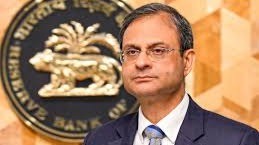
Sanjay Malhotra,Governor, Reserve Bank of India
The RBI raised the country’s real GDP growth projection for the current financial year 2026-27 by 40 basis points to 7.1 per cent, citing the strength of economic activity despite global headwinds.It expects inflation at 5.2%, a small increase over its earlier forecast of 5%. Core inflation is seen at 4.4% from 4.3% earlier.
Mumbai:The Reserve Bank of India raised its benchmark repo rate by 25 basis points to 5.5% on Wednesday, marking the first rise in nearly four years amid mounting inflation and strong economic growth.
The central bank also signalled further rate hikes by changing its stance from “neutral” to “calibrated tightening”, but Governor Sanjay Malhotra said the extent and timing of any more increases would be contingent on actual inflation and growth outcomes.
The RBI expects inflation at 5.2%, a small increase over its earlier forecast of 5%. Core inflation is seen at 4.4% from 4.3% earlier.
There is some evidence of elevated inflation expectations and generalisation of price pressures, he said.
However, RBI raised the country’s real GDP growth projection for the current financial year 2026-27 by 40 basis points to 7.1 per cent, citing the strength of economic activity despite global headwinds.
Announcing the outcome of the RBI Monetary Policy Committee meeting, Malhotra said geopolitical tensions, elevated international commodity prices, additional frictions in global trade and tightening global financial conditions could weigh on India’s growth outlook.
“Taking all these factors into consideration, real GDP growth for this year is projected at 7.1 percent, with Q2 at 7.2 percent, Q3 at 6.9, and Q4 at 6.8 percent,” Malhotra said.
He said the 40 basis points upward revision reflected the strength of economic activity despite the significant global challenges.
The RBI Governor said India’s real GDP growth stood at 7.8 per cent in Q1, supported by resilient private consumption and strong investment activity, which recorded almost a 12 per cent increase. The contribution of net exports also remained positive.
“We exhibited resilience amidst global headwinds, as evident from real GDP growth of 7.8 per cent in Q1,” Malhotra said.
He said high-frequency indicators for Q2 suggest that economic activity is maintaining momentum, although with some moderation compared with the previous quarter.
Looking ahead, Malhotra said global economic uncertainty and supply chain disruptions could affect domestic economic activity. He also said a weak southwest monsoon and strong El Niño conditions could affect the upcoming rabi season and rural demand.
He said continued infrastructure spending, a rebound in private capex and strong credit flows are expected to support investment activity. Services exports are expected to remain buoyant, while recently operationalised bilateral trade agreements should support merchandise exports.
India has joined major central banks in raising rates as higher oil prices triggered by the Iran war fuel inflation, squeeze purchasing power and weigh on currencies. Weak monsoon rains linked to El Niño have compounded price pressures in Asia’s third-largest economy.
The six-member rate panel voted unanimously in favour of the rate hike. Nearly 60% of economists in a Reuters poll had expected a 25 bps increase in the repo rate.
It is clear that the outlook for inflation is no longer benign, Malhotra said in his policy address.
India’s benchmark 10-year bond yield jumped to 7.2655 per cent, up 5 bps after the RBI decision, while the rupee currency was largely unchanged around 96.36. The benchmark Nifty 50 share index and the BSE Sensex were down 0.6 per cent % and 0.7%, respectively.
Going forward, the insurance industry expects further hike of rates by the RBI.
Churchil Bhatt, senior executive vice president, Investment, Kotak Life Insurance, said “In line with market expectations, the RBI-led MPC increased the policy repo rate by 25 bps and changed its policy stance from neutral to calibrated tightening, reflecting its focus on containing the second-round impact of the otherwise supply-side inflationary pressures.The decision comes against the backdrop of resilient domestic growth, firming inflation expectations, elevated commodity prices, weather disruptions and persistent global uncertainties.
The central bank also revised its macroeconomic projections, raising its FY27 GDP growth forecast by 40 bps to 7.1 per cent and FY27 CPI inflation forecast by 20 bps to 5.2 per cent, reflecting the impact of higher food and energy prices. Core inflation for the year is projected at 4.4 per cent, he elaborated.
“While no incremental liquidity measures were announced in the policy statement, the market expects the RBI to deploy an appropriate mix of liquidity management tools to align the weighted average call rate (WACR) with the policy repo rate, as and when required. Given the policy action was largely on expected lines, the 10-year benchmark yield is currently trading in the range of 7.23-25 per cent, with an upside bias,”commented Bhatt.
Ashwani Dhanawat, executive director & chief investment officer, Shriram General Insurance, said the RBI’s 25 bps hike and shift to a ‘calibrated tightening’ stance is a prudent, pre-emptive move.
With crude above $100, a softer rupee and inflation broadening beyond food, waiting for the full pass-through to show up in CPI would have risked entrenching inflation expectations. The RBI also retained a robust 7.1 per cent growth outlook, which signals confidence that it can tighten without hurting the economy’s momentum.
“We see this as a shallow cycle rather than a prolonged one. Further action will depend on crude, the currency and the next two inflation prints. For long-term investors like insurers, higher yields offer an attractive opportunity to lock in returns on fresh accruals. We expect bond markets to remain volatile in the near term and will deploy gradually on yield spikes,”explained Dhanawat.
Shobit Gupta, chief investment officer, Generali Central life Insurance, stated,“The RBI delivered a hawkish 25 bps repo rate hike to 5.50 per cent, with the shift in stance to calibrated tightening underscoring its commitment to anchoring inflation expectations. Against a backdrop of elevated oil prices, tighter global financial conditions, weather-related risks to food inflation, and resilient domestic growth, we expect a further 50-75 bps of rate hikes in the current cycle. The anticipated tightening path is likely to keep upward pressure on short-term yields, leading to further yield curve flattening.”
However, with yields having adjusted meaningfully, current market levels are becoming increasingly attractive for fixed income investors from an accrual and medium-term investment perspective, he added
Consumer inflation accelerated in August to 4.82 per cent from a year earlier, above the Reserve Bank of India’s 4 per cent medium-term target for a third consecutive month. Higher prices of fuel and food are now rippling through the economy, with nearly half of the consumer basket seeing inflation above 4 per cent.
At the same time, economic growth remains strong, giving the central bank greater leeway to raise the cost of borrowing for consumers and businesses.
The central bank expects GDP growth in the current financial year at 7.1%, 40 bps higher than its earlier projections.
GDP growth for the April-June quarter stood at 7.8%, well above the central bank’s forecast of 7%.
Manufacturing activity has remained steady despite cost pressures, while services sector activity has stayed broad-based, supported by higher domestic and external demand. Both manufacturing PMI and services PMI remained in the expansionary zone in Q2, although the pace of expansion slowed from Q1.
Private consumption remained broadly resilient, supported by discretionary spending, while fixed investment continued to remain strong.
However, the RBI Governor said some weakness was visible in non-durable goods and domestic air passenger traffic.
Merchandise exports registered higher double-digit growth during July and August, supported by efforts to expand market access and diversify markets. Services exports also recorded accelerated growth during the two months.