
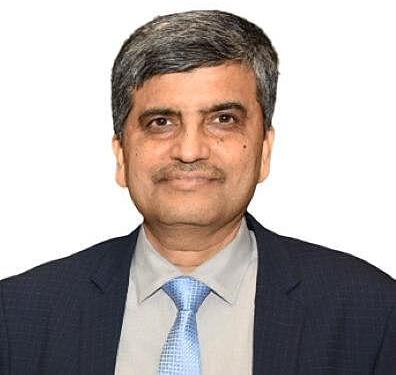
“ “I have been meeting CEOs of the industry over the last few days to understand their views on the new consultation paper. We will meet all the CEOs on Monday to discuss the implementation of the distribution reforms and would like to get detailed industry feedback before moving ahead,” said Ajay Seth, chairman, IRDAI.,” IRDAI chairman Ajay Seth said.
The IRDAI is targeting Jan 1 or Apr 1 to kickstart the new distribution regime
New Delhi:The Insurance Regulatory and Development Authority of India (IRDAI) will meet insurance industry CEOs in New Delhi on Monday to discuss the implementation of its proposed distribution reforms, which have stirred considerable debate across the industry.
This will be the first formal meeting between the regulator and insurance CEOs since IRDAI issued its Public Consultation Paper, “Recalibrating Economics of Insurance Distribution,” on September 23.
The sweeping proposals seek to reset the economics of insurance distribution, covering distribution structures, expenses, commissions, market conduct, transparency and the use of digital infrastructure.
“ “I have been meeting CEOs of the industry over the last few days to understand their views on the new consultation paper. We will meet all the CEOs on Monday to discuss the implementation of the distribution reforms and would like to get detailed industry feedback before moving ahead,” said Ajay Seth, chairman, IRDAI.,” IRDAI chairman Ajay Seth said.
The regulator has invited stakeholders to submit their comments on the consultation paper by October 25 and is targeting Jan 1 or Apr 1 to kickstart the new distribution regime.
According to the sources the IRDAI is keen to do it at the earliest and may start it on Jan 1 and may not wait till Apr 1 when the majority of the general insurance business get renewed.
Though, a large number of players in the industry are critical about the sweeping reforms proposals and hoping that the IRDAI will moderate a few that would hit them hard, Seth has remained firm that the cost of distribution in the insurance industry needs to come down, while insurers and distributors must improve productivity and operate more efficiently.
“The existing cost structure undermines trust and persistency, as early exits effectively wipe out the policyholder’s principal while weakening the sector’s overall value proposition. The objective of the new reforms are is to get the economics of the insurance sector right and greater competition and more players would be critical to creating value in the industry,” Seth stressed.
Seth said the proposed framework should ultimately benefit policyholders by creating greater efficiencies and potentially lowering premiums.
The regulator, he said, would monitor where premium collections are being spent and whether returns to policyholders are improving.
The Insurance Brokers Association of India (IBAI), the official apex body of India’s 798 licensed insurance brokers, has expressed serious concern over the sweeping proposals which are in the consultation paper and has argued that the paper’s key proposal removing more than thirty separate commission caps by product and channel, together with a one-third cut in insurers’ overall expense limit — will harm the very policyholders it seeks to protect.
The association urged the IRDAI to preserve the existing framework,in force since 2023, publish an impact assessment and target genuine mis-selling instead of imposing blanket commission caps.
The proposed reforms include tighter limits on insurers’ expenses and a restructuring of the commission framework, with the regulator seeking to align distribution costs more closely with the economics and complexity of insurance products and channels.
Proposing tighter expense of management(EoM) limits, sharper curbs on commissions and mis-selling, the Indian insurance regulator IRDAI, on Wednesday, has said for general insurers, the EoM calculation would move from gross written premium (GWP) to domestic GDPI, with the ceiling progressively reduced from 30 per cent of GWP to 20 per cent of GDPI over five years.
For life insurers’s the EoM ceiling would shift to a company-level measure linked to Gross Direct Premium Income (GDPI), falling to 15 per cent within two years and 12.5 per cent within five years, said IRDAI, unveiling a comprehensive regulatory push to rein in distribution costs and recalibrate the economics of insurance distribution.
Further commission structures would become more differentiated, taking into account the insurance segment, line of business, distribution channel, product complexity and the effort required for sales and servicing. Additional rewards could be permitted for selling policies in underserved markets, including rural areas, small towns with populations of up to 50,000 and smaller cities with populations of up to 10 lakh.
The proposals also envisage cost audits and safeguards against indirect payments, aimed at improving accountability for actual distribution costs.
Greater transparency would be required from insurers and large distribution entities, which would have to disclose commission policies and structures in a simple and accessible manner. Specified commercial insurance policies would also carry commission disclosures, giving customers greater visibility into distribution costs embedded in premiums.
The proposals would also prohibit volume- or reward-linked incentives for bank and NBFC employees selling insurance, link the identity of individual sellers to policies issued, put information on mis-selling incidents in the public domain and allow commission claw-backs where mis-selling is established.
The proposed framework takes a tougher line on mis-selling and forced bundling. Insurers and distributors would be required to document customer needs and product suitability, while all forms of remuneration—whether direct or indirect, monetary or non-monetary—would be brought within the regulatory definition of commission.
When the Fire Rates where defined by IIB (which would have been based on a systematic study of various industries and their claim rations, risk involved etc), why is it that the Insurance companies are allowed to give discount in the same owing to competition and then when there are claims, the Insurance companies find themselves in losses. Why can’t all the insurance companies stick to fixed Rates and like motor, define Discount based on past experience of particular insured. This will not only save Insurance companies from losses, but also awaken the Insured to maintain higher standards of safety for Higher discounts in premium
Indeed unemployment friendly land mark. Unnecessary disruption.
Please cut commission Insurance brokers,
Useless. Reform requires in despute resolution. Insurer should not insist for court settlement. Independent arbitrator/panchayat decision should be enforced.CRM posts department should be surrendered etc can give better protection to stakeholders
Insurance products often fail to clearly highlight what they cover and, more importantly, what they do not cover, leaving common customers confused.
Mis-selling is particularly prevalent through bancassurance, telecalling and website/digital channels—yet these channels are also permitted under the regulatory framework. Instead of addressing these root causes, reducing intermediary remuneration may weaken genuine brokers, leading to job losses and reduced service quality.
IRDAI should focus on controlling mis-selling at its source and ensuring equal accountability across all distribution channels, rather than weakening genuine intermediaries who provide personalised service and support.
Since the broker is representing the insured, the insured should pay service charges to him for negotiating and best insurance quote at the most competitive cost and not the insurers by way of brokerage. This will further reduce the cost of distribution for insurers.
Insurance Advisors and brokers work in the customer’s best interest by negotiating with insurers to get lower premium rates and preventing unwarranted rate hikes or penalty loadings.
They evaluate the customer’s actual protection needs against their paying capacity, ensuring policyholders purchase suitable cover without mis-selling or over-budgeting.
During reimbursement claims, advisors provide critical ground support—guiding customers on paperwork, ensuring proper documentation, and physically coordinate with local service branches to get claims settled smoothly.
Unlike impersonal direct apps, an advisor forms a personal bridge between the insurer and the policyholder, building trust on both ends through personal rapport.
Advisors invest significant personal time and effort in after-sales service and claim support. If their commission/remuneration is cut drastically, their financial survival is threatened, which will ultimately harm the servicing ecosystem.
1. Why IRDA/govt unable to control hospitals who are main culprit? Why medical inflation is 12% when normal inflation is around 4%?
2. Why IRDA is unable to stop misselling?
3. Why IRDA allowing to sale insurance policies by unprofessional person/outlets? Whether they want to made it a grocery shop?
4. On IRDA advisory companies have reduced commission on senior citizens policies and also reduced 18% other commission then why they are still unable to stop premium increase?
5. Why IRDA approving such health products in which multi fold of bonus is adding and converting policy and because of that hospitals are doing mal practices in treatments of the patients and average claims are increasing too high?
Till they will not control the hospitals bills, this problem will never solve.