
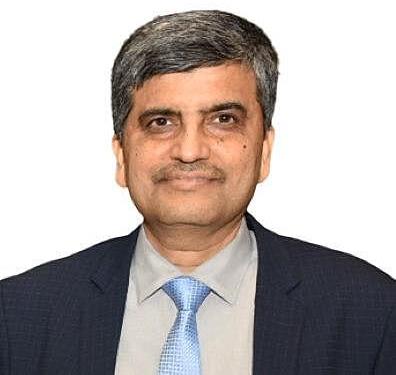
Ajay Seth, Chairman, IRDAI
Defending the regulator’s sweeping proposals to recalibrate insurance distribution economics, Seth said the proposed framework should ultimately benefit policyholders by creating greater efficiencies and potentially lowering premiums.The regulator, he said, would monitor where premium collections are being spent and whether returns to policyholders are improving.
New Delhi: Insurance regulator IRDAI is considering January 1 or April 1, 2027 as the effective date for its proposed new distribition reforms including new Expense of Management (EoM) framework for insurers, chairman Ajay Seth has said, adding that the final date will be decided after consultations with the industry.
Seth also indicated that Bima Sugam, the proposed digital insurance marketplace, is likely to be launched by November, in an interaction with business news portal Moneycontrol.
Defending the regulator’s sweeping proposals, which has shaken up various players and stakeholders of the Indian insurance industry, to recalibrate insurance distribution economics, Seth said the proposed framework should ultimately benefit policyholders by creating greater efficiencies and potentially lowering premiums.
The regulator, he said, would monitor where premium collections are being spent and whether returns to policyholders are improving.
The IRDAI last week released its consultation paper, “Recalibrating Economics of Insurance Distribution,” proposing a comprehensive overhaul of distribution economics, including expenses, commissions, market conduct, transparency and the use of digital infrastructure. Stakeholders have been asked to submit their comments by October 25.
“Today, in life insurance, the cost of doing business for private insurers is around 22 percent. In general insurance, the cost of business is around 32 per cent,” he said highlighting the need to examine where such costs can be optimised and efficiencies created.
A very large part of the market is being served by LIC and SBI Life, and their cost of doing business is in the range of around 11-12 percent. But for another part of the industry, the cost is around 22 percent, and there are companies in life insurance where the cost is 30-35 percent. They have to catch up in terms of efficiency, he urged.
The regulator, he said, would seek to balance policyholder value with insurers’ ability to grow and earn sustainable margins.
For general insurers, the IRDAI has proposed shifting the basis for EoM calculations from gross written premium (GWP) to domestic gross direct premium income (GDPI), with the ceiling progressively reduced from 30% of GWP to 20% of GDPI over five years.
For life insurers, the proposed EoM ceiling would move to a company-level measure linked to GDPI, with the limit falling to 15% within two years and 12.5% within five years.
The consultation paper also proposes a differentiated commission framework based on the insurance segment, line of business, distribution channel, product complexity and the effort involved in sales and servicing.
Additional rewards could be permitted for distribution in underserved markets, including rural areas, towns with populations of up to 50,000 and smaller cities with populations of up to 10 lakh.
IRDAI has further proposed cost audits and safeguards against indirect payments to strengthen accountability for actual distribution costs.
I requested agent Gulafasha Khan of Bajaj Capital broking house, Gautam Nagar, Bhubaneswer to port my health insurance from Star Health insurance to Manipal Health insurance, giving more than one month to renew.
Agent cheated me in policy SARVAH050082601 as it was made digital system and I was ignorant due to 65 years old. Relationship manager Suraj Kumar Routray of this company betrayed.
So wise I complained at Baragada police station Bhubaneswer. They called Suraj Kumar Routray and person admitted his fault. Inspector assured me to justice. This evidence was booked in police station on 25 July 2026 in C.C. camera.
Please inquire and give order to investigate matter and legal action may be taken for this forgery. Mobile 93480 74477.