
The declaration in Maharashtra came after the national weather department forecast India would end its annual monsoon season with a rainfall deficit, threatening farmers’ livelihoods.
A stronger-than-usual El Nino climate phenomenon, which typically brings drier conditions to South Asia, has also led to abnormal rain patterns, the weather department has said.
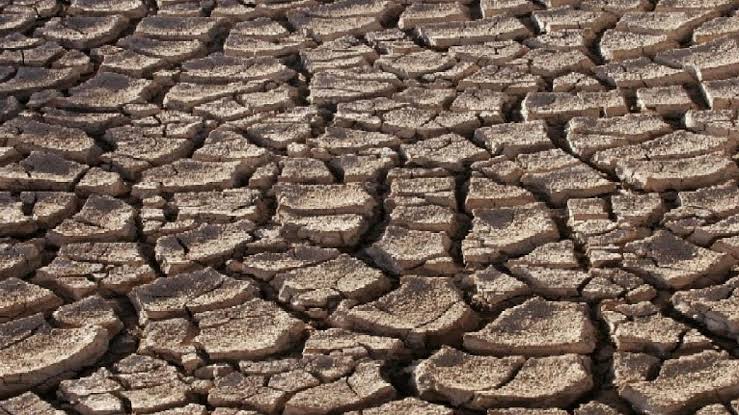
Mumbai/New Delhi: Drought has hit three-quarters of India’s richest state of Maharashtra, the government said on Saturday, after prolonged low rainfall in the region home to the megacity of Mumbai.
The declaration in Maharashtra came after the national weather department forecast India would end its annual monsoon season with a rainfall deficit, threatening farmers’ livelihoods.
A stronger-than-usual El Nino climate phenomenon, which typically brings drier conditions to South Asia, has also led to abnormal rain patterns, the weather department has said.
The government of Maharashtra, a huge western state whose capital Mumbai is India’s financial and commercial centre, said drought was present across 74 percent of the territory.
Drought has hit three-quarters of India’s richest state of Maharashtra, the government said on Saturday, after prolonged low rainfall in the region home to the megacity of Mumbai.
The declaration in Maharashtra came after the national weather department forecast India would end its annual monsoon season with a rainfall deficit, threatening farmers’ livelihoods.
A stronger-than-usual El Nino climate phenomenon, which typically brings drier conditions to South Asia, has also led to abnormal rain patterns, the weather department has said.
The Maharashtra government on Saturday declared 265 of the state’s 358 talukas drought-affected, announcing a slew of relief measures, including crop loan restructuring, land revenue concessions, and power bill subsidies.
According to a government resolution issued late on Friday, the drought covers 74 per cent of the state. Most of these talukas are in Solapur, Ahilyanagar, Nashik, Latur, Beed, Buldhana, Amravati, Yavatmal, Nagpur and Chandrapur.
Chief Minister Devendra Fadnavis has directed district collectors to initiate crop-damage assessments immediately and assured that farmers remain the centre of the government’s relief efforts in the drought situation.
The government will assess crop damage and “ensure that farmers, farm labourers and rural families receive the necessary assistance in a timely manner”, his office said.
He said that considering the possibility of El Niño peaking in next February, “we should be ready to face troubles if it intensifies”.
The state government on Saturday declared drought in 265 of its 358 talukas, or 74 per cent of the state, amid rainfall deficit and announced various relief measures, including crop loan restructuring, land revenue concessions, and power bill subsidies.
Fadnavis said complaints about the exclusion of certain talukas from the drought criterion are very few and that losses in those areas will be assessed.
“The assistance will be provided to the affected talukas. Twelve emergency measures have been approved, and at the first trigger we already issued orders for their implementation,” Fadnavis told reporters.
He said the government has started preparing (crop) inspection reports to an extent, and will provide appropriate assistance after these reports are prepared.
“We are rapidly completing whatever processes are needed (preceding the announcement of financial assistance to farmers),” Fadnavis added.
He said the state government has received complaints about the exclusion of some talukas from the drought criterion; however, the numbers are very few.
“Even in those locations from where we are receiving complaints, we will assess losses incurred by farmers,” he said, adding that cultivators affected by crop loss will be included under Trigger Three, reiterating that no farmer will be left out.
Responding to a query on water wastage at certain facilities, Fadnavis said every district should prepare a water plan.
“If you reserve water from the available stocks, it will last until July and August 2027, and if somewhere there is excess water, then that water can be used for other purposes,” he added.
He said many large reservoirs currently have abundant water and they are full.
“If you reserve the water needed through July-August, then the remaining water may need to be allocated for Rabi crops somewhere or given to industry, and we can consider that appropriately. Therefore, instead of taking a blanket position for all, decisions should be made based on the water availability in each district and each taluka,” the Chief Minister added.
On global reports on the possibility of rising heat intensity and the need for expansive mitigation measures in the upcoming summer, Fadnavis said the El Niño weather pattern is expected to peak next February before declining.
“The El Niño effect will weaken once the Pacific Ocean starts cooling down. Considering these possibilities, we should prepare in every way and be ready to face issues if the El Niño effect intensifies,” he added.
Maharashtra Congress president Harshwardhan Sapkal said the government must act on a “war footing” and immediately deposit Rs 1 lakh per hectare into farmers’ bank accounts as compensation, while NCP(SP) general secretary Mahesh Tapase sought to know the timeframe within which the financial assistance would be provided to the affected cultivators.
He said the government should also provide special financial assistance for the rabi season and waive crop loans, as farmers faced uncertainty over their livelihood and their children’s education.
Sapkal claimed that the present drought was more severe than the one in 1972, and said the government should formulate a comprehensive plan to deal with the situation.
Citing the employment guarantee scheme introduced after the 1972 drought and horticulture schemes introduced during Sharad Pawar’s tenure as chief minister, he said the government needed to come up with a similar policy response.
Districts like Dharashiv and Beed have not received rainfall since July, affecting the crops, cattle, and daily water needs of farmers and labourers.
According to state government data, the rainfall for the Chatrapati Sambhajinagar Division was recorded at 424.5 mm, while the normal rainfall expected was 613.1 mm for the period from June 1 to September 18, marking a deficit of 30.8 percent.
Dharashiv and five other districts in Marathwada fall under the Chatrapati Sambhajinagar Division.
The Pune and Nashik divisions also recorded around a 30 percent rain deficit, while the Amravati and Nagpur divisions recorded a 27 percent rain deficit.
The Konkan division recorded a 6.3 percent rain deficit.
Hundreds of millions of people in India depend on the June-to-September monsoon to bring vital rains that sustain agriculture and industry.
Maharashtra has a population of 130 million and is a major agricultural state that produces cotton, soybeans, sugarcane and pulses.
Many farmers depend on rain for irrigation and are highly vulnerable to crop failures, which can push whole families into financial crisis.
The impact of low rainfall is also being felt in southern India, where Karnataka state has also announced aid for farmers in drought-hit areas.
El Nino is a naturally occurring climate pattern associated with warmer ocean temperatures in the Pacific that can change wind and rainfall patterns around the world.
Scientists say human-caused climate change can amplify its effects by making more energy and moisture available to fuel extreme weather.