
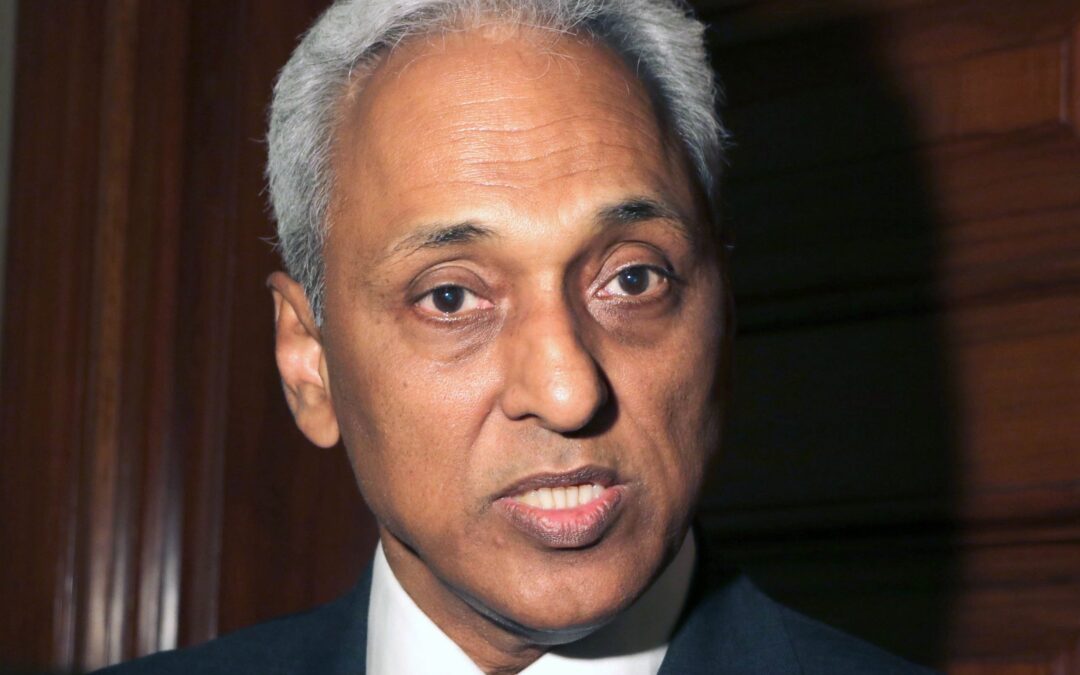
Sivasubramanian Ramann, Chairman,PFRDA
NPS Swasthya is a health-focused pension product under the National Pension System that allows subscribers to set aside part of their retirement corpus for medical expenses. PFRDA introduced it initially as a proof of concept under its regulatory sandbox framework to test how healthcare benefits could be integrated with the NPS architecture.
Mumbai: The Pension Fund Regulatory and Development Authority (PFRDA) is likely to formally launch its NPS Swasthya pension product within the next 30 days, with the final guidelines expected to be issued in the next few days, PFRDA Chairman Sivasubramanian Ramann said on Thursday.
Speaking to the media on the sidelines of the Global Fintech Fest 2026 in Mumbai, Ramann said the product has already been tested under a proof of concept and received an encouraging response.
“Swasthya is right now a proof of concept. We are working on it. The proof of concept worked very well. We have, let me say, a very encouraging response, and that’s what has led us to finalise the product. I think in the next few days, we’ll be releasing the final guidelines for the product,” Ramann said.
He added that the Central Recordkeeping Agencies (CRAs) are already working on the technology required for the product and the formal launch could take place in about 30 days.
“Hopefully in about 30 days’ time, we should be able to deliver the product and launch it formally,” he said.
NPS Swasthya is a health-focused pension product under the National Pension System that allows subscribers to set aside part of their retirement corpus for medical expenses. PFRDA introduced it initially as a proof of concept under its regulatory sandbox framework to test how healthcare benefits could be integrated with the NPS architecture.
In simple terms, it is designed to make a portion of your pension savings available when you need money for healthcare, while the remaining money continues to be invested for retirement.
Under the latest PoC framework, the product also includes a health insurance top-up. The insurance premium is deducted from the NPS Swasthya account, while the insurance component can provide additional coverage beyond the amount available from the pension account.
Ramann explained that under the proposed product, the payment mechanism would work directly between the pension account, insurer and hospital.
“What is important in the NPS Swasthya is my ability to pay money to the hospital directly. So from the pension account, money will release and go directly to the hospital. Then the health benefit administrator, through the insurance company, will provide for the top-up insurance to be released, which will go to the hospital,” he said.
The idea, according to Ramann, is to create a dedicated pool for healthcare expenses within the pension framework. If the subscriber does not need to use the money for hospitalisation, the corpus remains invested and can continue to grow with market returns.
“Lucky if you don’t ever go to hospital, you are multiplying your money based on the market returns that anyway you are getting. So that is the double benefit that we are saying,” he said.
Ramann said the final product is expected to be available through pension funds, with pension funds tying up with insurance companies to offer the bundled product.
“The pension fund is going to be the master policyholder… the onus is on the pension fund to come up with the best bundled product,” he said.
This would allow subscribers to choose among pension funds based on the health and pension benefits offered in their respective bundled products.
Technology will play a central role in expanding pension coverage in India, particularly among workers in the unorganised sector who do not have regular salaried employment, Raman said.
Raman informed the PFRDA is developing simpler digital mechanisms to bring millions of workers into the formal pension system.
He said the regulator has developed the NPS Instant platform, which is designed around a UPI-based digital framework. The platform will allow users to open a pension account through a few clicks on their mobile phones and subsequently make contributions directly through UPI.
Raman explained the initiative follows Prime Minister Narendra Modi’s emphasis on making pension access as simple and convenient as digital payments through UPI.
The e-Shram database maintained by the Ministry of Labour is expected to be an important enabler in this effort, he said. The database contains verified information on a large number of workers, much of which can be used for opening pension accounts.
“The idea is to use technology to make the process simple enough for workers to join the pension system digitally,” Raman said, adding that PFRDA is working on multilingual and user-friendly solutions to ensure wider adoption across the country.
On guaranteed-return pension products, Raman said developing such products is part of PFRDA’s statutory mandate. While the government has incorporated a guarantee mechanism under the Unified Pension Scheme (UPS) for government employees, creating a similar institutional framework for the non-government sector remains a major challenge.
An expert committee is examining the issue and evaluating various options, he said.
PFRDA is also working on several products that could eventually form the foundation for guaranteed-return pension schemes.
Agencies