
“Nepal’s non-life insurance market relies heavily on global reinsurance capacity to underwrite catastrophe risks, and so international reinsurers are expected to absorb a significant share of the overall insured losses,” said Victoria Ohorodnyk, senior director and head of analytics at AM Best.
At least 13 hydropower projects, including operational and under-construction facilities, have been reported damaged by the floods. Preliminary estimates of economic losses in the hydropower and electricity infrastructure sector have already reached hundreds of billions of Nepalese rupees.
Mumbai/ Kathmandu: As insurers and reinsurers begin assessing the financial fallout from Nepal’s catastrophic flash floods, state-owned General Insurance Corporation of India (GIC Re) expects only a limited impact on its portfolio, despite extensive damage to the country’s hydropower infrastructure.
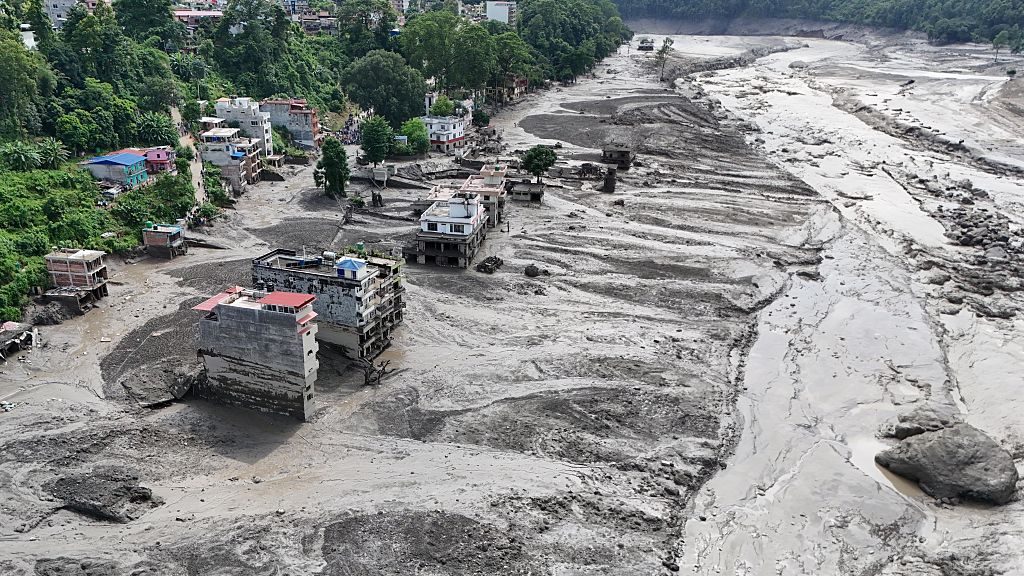
A glacier collapse on Wednesday unleashed a huge torrent of rock, ice, mud and debris through Himalayan mountain river systems, killing more than 600 people in Nepal and China’s Tibet, with more than 2,000 still unaccounted for.
The flood levelled towns in the border area, sweeping away bridges and roads and damaging major hydropower stations.
“Going by our initial assessment and estimates, our losses are at a minimum as all our exposures are capped at a certain level. We have no facultative exposures in Nepal and participated in treaties only,” said GIC Re sources.
At least 13 hydropower projects, including operational and under-construction facilities, have been reported damaged by the floods. Preliminary estimates of economic losses in the hydropower and electricity infrastructure sector have already reached hundreds of billions of Nepalese rupees.
For the insurance market, however, the eventual bill is likely to be considerably lower.
International earing agency AM Best expects insured losses to be concentrated in commercial risks, particularly hydropower generation, engineering and construction projects and commercial property along the affected trade corridor.
“Nepal’s non-life insurance market relies heavily on global reinsurance capacity to underwrite catastrophe risks, and so international reinsurers are expected to absorb a significant share of the overall insured losses,” said Victoria Ohorodnyk, senior director and head of analytics at AM Best.
“However, claims development on hydropower and engineering risks warrants close monitoring over the coming quarters.”
In its Best’s Commentary, Nepal’s Catastrophic Floods Pressure a Thinly Insured Market, AM Best said overall insured losses should remain modest relative to economic losses because insurance penetration in Nepal remains among the lowest in Asia.
Reinsurance to absorb a significant share
The disaster nevertheless highlights the concentration of insured values in Nepal’s relatively small commercial insurance market.
Hydropower and infrastructure projects carry outsized sums insured compared with the overall size of the domestic market. As a result, losses from a handful of large projects could be significant for individual insurers, while being distributed internationally through reinsurance programmes.
The event could therefore provide an important test of the adequacy of catastrophe and engineering reinsurance structures serving Nepal’s hydropower sector.
AM Best said motor and marine cargo lines could also see moderate claims as cross-border trade has been disrupted, with the Gyirong crossing remaining inoperable. Travel insurers are also expected to face increased claims for trip cancellations, curtailments and emergency medical evacuation as affected areas include popular tourist destinations.
Hydropower losses escalate
The most severe damage has been reported in Nepal’s hydropower corridor.
Rajan Dhakal, spokesperson for the Nepal Electricity Authority (NEA), said the authority’s preliminary assessment pointed to losses worth hundreds of billions of rupees.
“The Rasuwagadhi Hydropower Project has been completely washed away, while the Chilime project has been buried,” Dhakal said, adding that the immediate priorities remained rescue operations, finding missing people and restoring electricity supply.
The NEA estimate is substantially above the Rs25 billion-Rs30 billion average loss estimate cited by the Independent Power Producers’ Association, Nepal (IPPAN), underscoring the uncertainty surrounding the final economic and insured loss.
Uttam Bhlon Lama, senior vice-president of IPPAN, said older hydropower facilities with ground-level powerhouses had suffered extensive or complete damage, while newer projects with underground powerhouses and desanders had generally fared better.
He estimated losses at around 25%-30% of total project cost, although a full assessment is still pending.
Insurance coverage emerges as a key issue
Nepal may need $4 billion to $5 billion to rebuild after this week’s devastating floods, Finance Minister Swarnim Wagle told Reuters on Saturday, a bill equal to nearly a tenth of the economy.
“The initial estimate is between $4-$5 billion. Just an estimate,” Wagle said. “We will require much less than what we needed for the 2015 earthquake. Loss and damage is being assessed.
Wagle did not elaborate on why the reconstruction bill was expected to be less than the $9 billion spent after the 2015 magnitude-7.8 quake, Nepal’s worst recorded disaster. It killed nearly 9,000 people, destroyed more than half a million homes and caused losses estimated at around a third of Nepal’s economy.
Wednesday’s floods will nevertheless be a major blow to an economy reliant on remittances, tourism and hydropower, damaging power projects that account for more than 12% of national generating capacity.
The extent to which insurance ultimately supports reconstruction will depend not only on the physical damage but also on the insurance status of individual projects.
Privately developed hydropower projects are generally insured, but concerns remain over the adequacy of coverage for government-owned infrastructure.
Raju Raman Paudel, former executive director of the Nepal Insurance Authority, said insured projects should receive compensation once damage assessments are completed.
“But there are concerns that not all NEA projects are insured. That could create difficulties,” he said.
This coverage gap could leave the government and project owners carrying a substantial portion of the reconstruction burden, particularly where public infrastructure lacks comprehensive property, engineering or business interruption protection.
Newer projects with underground powerhouses and desanders have suffered comparatively less damage,” Lama said. “Overall, we estimate losses at around 25 to 30 percent of the total project cost, although a complete assessment is still pending.”
The ultimate insured loss will depend on the final engineering assessments, policy limits, deductibles, exclusions and reinsurance arrangements. Claims development could therefore extend over several quarters.
Affected operational projects include the 20MW Langtang Khola project, which was in the testing phase, the 5MW Mailung Khola, 14.8MW Mailung Khola, a 25MW solar project operated by the NEA and its subsidiaries, the 14MW Devighat, 24MW Trishuli, 60MW Upper Trishuli A, 22MW Chilime and the 111MW Rasuwagadhi Hydropower Project.
Projects under construction that have been affected include the 37MW Upper Trishuli 3B, jointly owned by the NEA and Nepal Telecom, the privately developed 120MW Rasuwagadhi Bhotekoshi, the 6.42MW Upper Mailung A, the 216MW Upper Trishuli 1 and the 15.6MW Middle Trishuli Ganga project.
As many as 537 workers and employees remained unaccounted for at nine hydropower projects in Nepal’s flood-hit Rasuwa and Nuwakot districts, with rescue teams intensifying efforts to reach people believed trapped inside tunnels blocked by mud and debris.
Rescue operations have been hampered by mud and debris blocking tunnel entrances, damaged infrastructure, difficult terrain and adverse weather, prompting Nepal to seek specialised assistance from India, China and other countries.
According to the Independent Power Producers’ Association in Nepal (IPPAN), 898 workers and employees at nine hydropower projects in the two districts were initially reported out of contact following the August 26 floods.
Of them, 361 have been rescued, leaving 537 still unaccounted for, according to local media reports that cited IPPAN.
The most serious situation is at the 216 MW Upper Trishuli-1 Hydropower Project in Rasuwa, with 300 people still believed to be trapped inside the project’s tunnel, the media reports said.
At the 60 MW Upper Trishuli-3A Hydropower Project in Nuwakot, rescue efforts have made some progress after the tunnel entrance was buried by mud and debris.
The Nepali Army dismantled excavators and bulldozers and airlifted them by helicopter to Battar, Nuwakot, to facilitate access to the flood-hit project site, the Nepal News web portal reported.
At the 22 MW Chilime Hydropower Project, IPPAN said eight people remained out of contact, while project officials said six employees were believed to be trapped inside a tunnel.
Project CEO Baburaja Maharjan told OnlineKhabar news portal that a mountaineering rescue team flown to the site by Simrik Air on Saturday entered the tunnel but could proceed only about 100 metres before finding it completely blocked by mud.