

AI can help make life insurance more personalised, relevant and transparent for customers, while simultaneously revolutionising product development, distribution and operational efficiency for insurers.
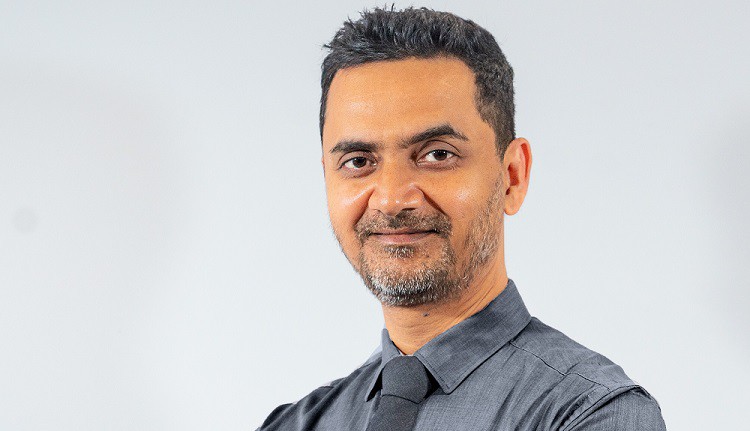
Gyanendra Singh, Chief Technology Officer, Aviva India
India presents a striking paradox for insurers. Despite being one of the world’s fastest-growing insurance markets, it remains among the least insured. This gap represents both a challenge and a significant opportunity.
Life insurance in India is often hindered by low consumer awareness and persistent mis-selling, with customers frequently steered toward complex, high-commission products rather than solutions tailored to their needs.
At its core, insurance should be simple, accessible and aligned with the interests of policyholders. While insurers are increasingly using digital channels to engage directly with consumers, artificial intelligence (AI) has the potential to take this transformation much further.
AI can help make life insurance more personalised, relevant and transparent for customers, while simultaneously revolutionising product development, distribution and operational efficiency for insurers.
Know exactly what you want from AI
The rush to adopt AI is often driven as much by fear of missing out as by a clear understanding of its potential. However, deploying AI without a defined purpose rarely delivers meaningful results. For insurers, AI should not be viewed as a technology experiment but as a business enabler capable of solving specific challenges and creating measurable value.
Every AI investment should be assessed against a simple set of criteria: Does it enhance customer experience? Does it streamline operations? Can it scale sustainably? And does it generate outcomes that can be measured? Ultimately, the success of AI lies not in its novelty but in its impact, whether that means reducing turnaround times, increasing straight-through processing, lowering acquisition costs, improving retention, boosting operational efficiency, or expanding distribution at scale.
If you’re an insurer, you should think like not just an insurance company but also a tech company. Today, we have the technology to offer customers many things they didn’t have before. A simpler, quicker onboarding process using India’s digital public infrastructure and e-KYC. Policy issuance in a matter of minutes instead of the days or weeks it used to take earlier.
AI-powered health kiosks that can provide a quick health assessment through a simple face scan. Such features create more customer-friendly engagement and lay the foundation for further conversations around health, wellness, and financial protection. This will help the insurance industry move from a one-size-fits-all approach to a more personalized and proactive model.
Become a part of customers’ everyday lives.
AI will help insurers design products better suited to individual customer needs and lifestyles. In fact, we can create an entire wellness ecosystem, wherein customers can access AI-powered features such as diet recommendations, health insights, and wellness tracking. I believe that’s a good direction for the insurance industry, going forward: not just provide protection after an event occurs, but use technology to promote prevention and wellness.
At the back end of operations, AI can improve underwriting through intelligent document processing and automated data extraction. This will significantly reduce turnaround time and enhance straight-through processing.
Insurance companies should empower their employees with AI-enabled tools so they can spend less time on administrative tasks and more on developing customer-centric solutions.
A word of caution here. Customers share some of their most sensitive personal and financial information with insurers, and nothing is more important than protecting that trust. AI adoption must therefore be complemented by strong governance frameworks and compliance measures.
AI can play a meaningful role in addressing Mis-selling
AI is not only transforming how insurers design products and serve customers; I believe it can also help address one of the industry’s persistent challenges, mis-selling.
For instance, personalised training can help employees better understand products and customer needs, while monitoring actual customer pitches can help identify gaps between what is intended and what is communicated.
Pre-issuance verification can further ensure that customers understand the product and its key features before making a purchase. Having simpler and more intuitive buying journeys can enable more informed decisions. That being said, I believe AI should be used mindfully and strategically, with the right checks and balances to ensure technology complements human judgement and accountability.
Better control means better direction
All the above measures become easier to implement if the business is wholly owned by one company. Only last month, Aviva became the first foreign life insurance company to take full ownership of its Indian business when we acquired the remaining stake in Aviva Life Insurance Company India from our joint venture partner. This move gives us greater flexibility to take strategic decisions and deploy additional capital in priority areas. Equally importantly, it enables us to leverage Aviva’s global technology expertise,
AI capabilities, and best practices to create offerings specifically customized for the Indian market instead of merely selling an adapted global product in India. Full ownership makes it easier to formulate a product strategy and use local insights to create products better suited to income patterns, risk profiles, distribution channels, and regulatory requirements. This is particularly valuable in an underpenetrated market like India.
A new approach to designing and marketing insurance
Looking ahead, insurers should evaluate AI-powered voice technologies and AI-assisted customer engagement solutions that can provide personalized customer support. I have no doubt that AI will help insurers innovate faster and respond more quickly to socioeconomic shifts and customer expectations.
The biggest shift we’ll probably see will be from reactive insurance to predictive or preventive insurance, wherein insurers help customers lead healthier, safer, and more financially secure lives, and not just step in after a health event occurs. The trick to doing it right is to combine permissible customer data with AI capabilities and human judgement.
I strongly believe life insurance has a better chance of catching on faster in a country like India if it’s designed and marketed to feels less like a safety net and more like a smart companion, a daily value proposition. It shouldn’t just be something that customers think about once a year or only when the need arises.
A healthy, ongoing, two-way relationship with customers is the best insurance any company can get for itself.