
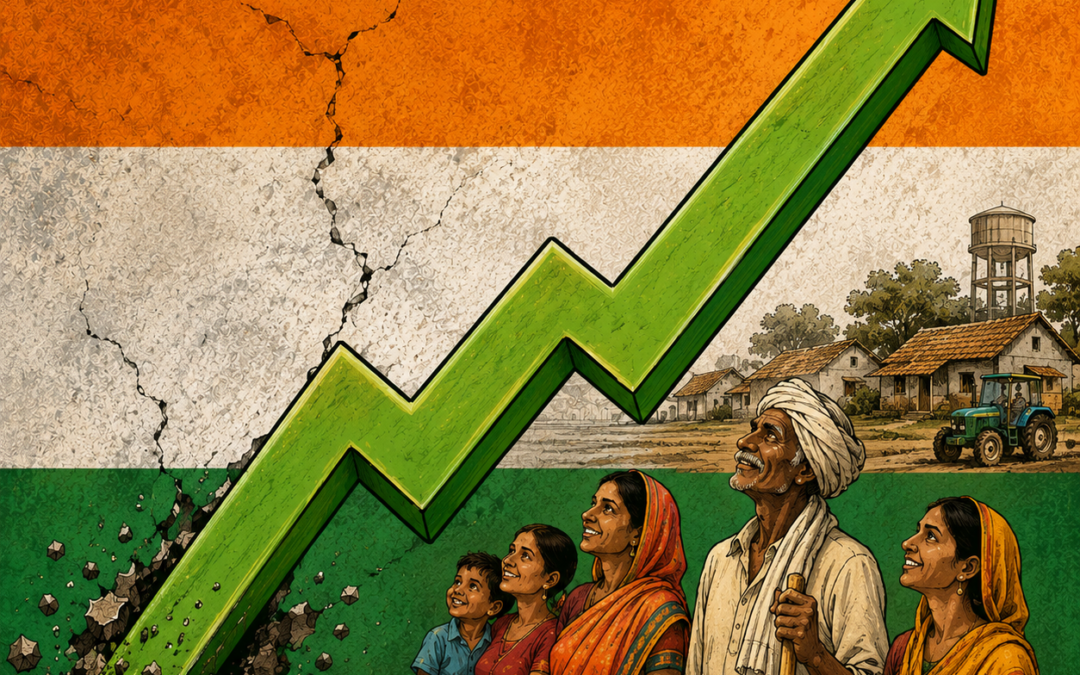
For India’s semi-urban and rural households, life insurance is not merely a financial instrument; it is a means of preserving dignity and safeguarding aspirations. It empowers families to face adversity with greater confidence, knowing that years of hard work and sacrifice are protected against life’s uncertainties.

Kedar Patki, Chief Financial Officer, IndiaFirst Life
India’s growth story is increasingly being written beyond its metropolitan centres. Across Tier-2 and Tier-3 cities and semi-urban regions, families are aspiring to build better futures.
Parents are investing in quality education for their children, purchasing homes, expanding family businesses, and seeking opportunities that previous generations could only dream of. Economic progress has fuelled ambition, but it has also increased financial responsibilities.
Behind many of these aspirations lies a familiar reality: a single income earner often carries the financial responsibility of the entire household.
Whether it is a teacher, trader, farmer, transport operator, small business owner, or salaried employee, one individual is frequently responsible for meeting the family’s daily needs while also funding its long-term goals.While the cost of living in smaller towns may be lower than in large cities, financial vulnerabilities remain significant.
A medical emergency, prolonged illness, disability, accident, or the untimely loss of the family’s breadwinner can quickly disrupt years of careful planning. In many cases, a single adverse event can erode savings accumulated over decades and place future aspirations at risk.
Healthcare is a prime example. Although access to medical services has improved considerably, treatment for serious illnesses often requires travel to larger cities. Hospital expenses, medicines, diagnostics, transportation, and accommodation for accompanying family members can place substantial strain on household finances.
What begins as a health challenge can soon become a financial one.
At the same time, educational aspirations are rising rapidly. Across small-town India, parents are determined to provide their children with opportunities that were once beyond reach. Whether it is professional education, skill development programmes, competitive examination coaching, or higher studies, these ambitions require sustained financial commitment.
When household income is disrupted, it is often the dreams of the next generation that suffer first.
Traditionally, Indian families have relied on strong community and family networks during difficult times. Relatives, neighbours, and friends have often stepped forward to provide emotional and financial support. These social bonds remain one of India’s greatest strengths.
However, changing family structures are placing increasing pressure on these informal support systems.
Nuclear families are becoming more common, migration has separated family members across cities and states, and rising living costs mean that even well-intentioned relatives may not always be in a position to provide meaningful financial assistance.
Moreover, seeking repeated financial help can be emotionally challenging. Families facing adversity often value not only support but also their independence and self-respect. Financial dependence can add stress to an already difficult situation and may affect a family’s sense of dignity during a period of hardship.
Consider the story of Ramesh Patil (name changed), a school teacher in a small town and the sole earning member of his family. His wife managed the household while their two children pursued their education. Following an unforeseen medical condition that resulted in permanent loss of vision, Ramesh was forced to discontinue his profession, leading to a significant reduction in household income.
Suddenly, the family’s financial future appeared uncertain. Educational expenses, household commitments, and medical costs continued, but the income that sustained them had disappeared. Fortunately, Ramesh had purchased a life insurance policy with a disability rider years earlier. The benefits received under the policy provided a crucial financial cushion during a period of immense uncertainty. The payout helped replace lost income, ensured that his children’s education continued uninterrupted, and enabled the family to meet essential expenses without exhausting their savings or depending heavily on relatives.
For Ramesh and his family, the policy delivered far more than financial assistance—it preserved their confidence, independence, and ability to move forward with dignity.
This is where life insurance demonstrates its true value.
Life insurance is often associated solely with financial compensation following the loss of life. In reality, its role is much broader. At its heart, life insurance is about protecting continuity. It ensures that a family’s financial journey does not come to a halt when faced with an unexpected setback.
Whether it is supporting day-to-day household expenses, helping children continue their education, managing outstanding liabilities, or providing income replacement through disability benefits, life insurance offers families the stability needed to navigate uncertain times. It provides breathing space when difficult decisions must be made and allows families to focus on recovery rather than immediate financial survival.
For semi-urban households, life insurance is not merely a financial instrument; it is a means of preserving dignity and safeguarding aspirations. It empowers families to face adversity with greater confidence, knowing that years of hard work and sacrifice are protected against life’s uncertainties.
The importance of this protection is becoming increasingly evident as aspirations continue to grow. Small-town India is producing entrepreneurs, professionals, skilled workers, and future leaders. Parents are making extraordinary sacrifices to create opportunities for their children. Protecting those aspirations is just as important as creating them.
As financial awareness continues to deepen, life insurance is emerging as a cornerstone of financial resilience. Savings and investments help families build wealth, but protection helps preserve it. Together, they create the foundation for long-term financial security.
India’s future will increasingly be shaped by the success of its small towns and semi-urban communities. As these regions continue their journey of economic growth and social progress, financial preparedness must become an integral part of household planning.
Life insurance may work quietly in the background, but when adversity strikes, it becomes a powerful force that protects dignity, safeguards aspirations, and helps families move forward with confidence.
In the end, life insurance is not simply about securing lives. It is about protecting dreams, preserving dignity, and securing futures.