
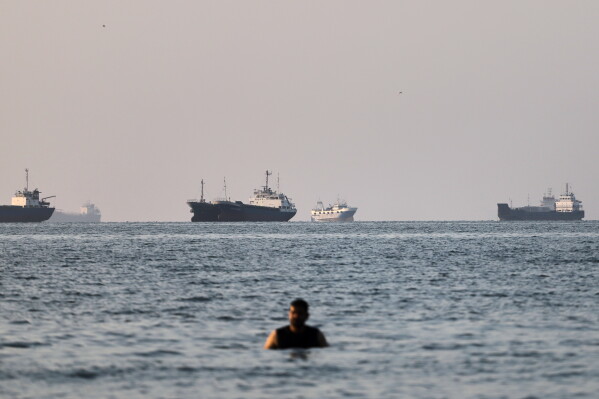
In the past 24 hours, war insurance rates for ships inside the Gulf have already ticked higher towards 3% of the value of a vessel from 2% at the end of last week, said the sources, who declined to be named due to the sensitivity of the matter.
Some war underwriters have advised shipping companies to pause voyages through the Strait of Hormuz while others are reviewing their policy terms after renewed vessel attacks threatened a return to war between Iran and the U.S., insurance industry sources said on Wednesday.
Tuesday’s attacks on three tankers in the critical waterway prompted Washington to revoke a license allowing Iran to sell oil and launch strikes on Iranian targets overnight.
President Donald Trump said on Wednesday that an interim agreement to end the war with Iran was “over” and U.S. forces were likely to launch new strikes on Wednesday night following Iranian attacks on U.S. bases in the Gulf.
Those comments triggered a 5% jump in global oil prices.
War risk insurance is typically provided on a seven-day basis and is reviewed every 24 to 48 hours, according to industry sources, and even slight increases translate to additional daily costs of hundreds of thousands of dollars.
In the past 24 hours, war insurance rates for ships inside the Gulf have already ticked higher towards 3% of the value of a vessel from 2% at the end of last week, said the sources, who declined to be named due to the sensitivity of the matter.
There were, however, no immediate indications that war cover had been halted.
“Someone will cover you, but probably at 5% at the least,” said one underwriting source.
The U.N.’s International Maritime Organization (IMO) said on Wednesday that sailings through Hormuz should be avoided “as long as the safety and security of crews cannot be assured.”
Speaking on Wednesday, IMO Secretary-General Arsenio Dominguez said the continued high cost of ship insurance in the region was a great concern, “compounding the strain on shipowners and operators.”
“Governments with influence over the insurance and reinsurance markets have a role to play in engaging with insurers to ensure premiums reflect current realities, rather than continuing to reflect the peak of the crisis,” he said.
Reuters