
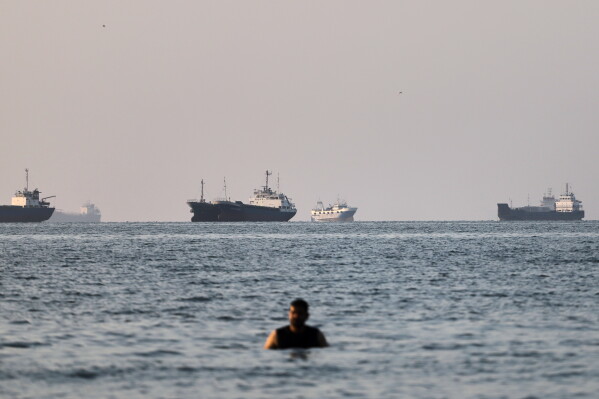
Three separate attacks on ships would mark the highest number since the US and Iran signed an interim peace deal last month, underscoring the continued risks to ships crossing through Hormuz. Tehran has repeatedly said it won’t allow vessels to transit the waterway without its permission.
A Qatari liquefied natural gas carrier was hit and a laden Saudi oil tanker suffered damage as they exited the Strait of Hormuz, heightening unease among shipowners and testing a US-Iran agreement to halt attacks.
The Al Rekayyat gas carrier was struck in the early hours of Tuesday, according to people familiar with the matter, who asked not to be named due to the sensitivity of the issue.
Separately, a person familiar with the matter said that a Saudi crude oil tanker was damaged while leaving Hormuz, without providing further details, while a UK naval group issued a report of a third attack.
The crew of the Qatari gas carrier have abandoned ship, one person familiar with the matter said. It is anchored southeast of Limah, Oman, according to Pakistan’s Hydrographic service, which monitors shipping in the area.
Three separate attacks on ships would mark the highest number since the US and Iran signed an interim peace deal last month, underscoring the continued risks to ships crossing through Hormuz. Tehran has repeatedly said it won’t allow vessels to transit the waterway without its permission.
Meanwhile, the US has continued to manage a shipping corridor along the Omani side of the strait, keeping ships away from Iranian waters.
A handful of ships transited Hormuz using both the Iranian and Omani routes on Tuesday. Oil prices rose as much as 3%, while European gas futures added as much as 6%.
The Qatari vessel, owned by the nation’s state-owned shipping company Nakilat, is the first LNG tanker from the country to come under attack since the war began, and marks a significant setback for its efforts to revive exports after months of near-paralysis.
The incident comes at a delicate moment for diplomacy, with Qatar serving as a key intermediary in negotiations between the US and Iran over ending the conflict. Qatar’s foreign ministry spokesman said Iran should cease all practices that harm regional security.
Any attacks involving Saudi oil tankers would also raise concerns in oil markets. While the kingdom can export some crude via its Red Sea terminal at Yanbu, it still relies on Hormuz to fully restore flows to normal levels. Saudi ships have been among the slowest in Gulf nations to return to the waterway. Exports have remained uneven, occasionally nearing pre-war levels.
The Saudi and Qatari vessels were transiting Hormuz without their transponders on, ship-tracking data show, a common measure to avoid attracting attention.
QatarEnergy, Nakilat, Saudi tanker giant Bahri and the Saudi Energy Ministry didn’t respond to requests for comment.
The strike has already raised fresh concerns among shipowners. Al Areesh, another LNG tanker that loaded in Qatar and was headed out of the Persian Gulf, appeared to turn before the strait on Tuesday before sailing in circles, according to shipping data. It had been signaling Pakistan’s Port Qasim as its destination.
Bloomberg