
Daily rates for a VLCC from the Middle East to China are currently quoted around $287,000, which is down from more than $500,000 shortly before the peace accord was announced.In contrast, rates for chartering smaller tankers have edged higher as the heavy concentration of vessels around the Arabian Gulf tightened capacity in other regions.
LITTLETON, Colorado: The world’s oil tanker fleet is behaving as if the Strait of Hormuz is reopening — even as the waterway itself remains only partially navigable and politically contested.
From ship tracking data to freight rates, the signals are clear: owners and charterers are moving early to position vessels for a return to Gulf exports.
But the gap between expectation and reality remains wide, leaving the global oil shipping system in a fragile middle ground between crisis and recovery.
SIGNS OF RECOVERY
The most immediate evidence of adjustment lies in real-time vessel movements.
Tanker transits through Hormuz, which collapsed to a fraction of normal levels during the conflict, are starting to recover.
Before the war began on February 28, around 90 to 110 vessels passed through the strait daily, but flows collapsed by more than 90% at the height of the disruption.
Recent data shows traffic picking up again, with dozens of vessels making crossings on some days, although levels remain well below pre-crisis norms and prone to sudden reversals.
That stop-start recovery underscores a key point: the system is not yet functioning normally. Instead, it is being stress-tested in real time by shipowners probing the boundaries of what is safe and commercially viable.
ON THE ROAD AGAIN
If transits offer a snapshot of current flows, ballast movements — empty ships heading into the Gulf — provide a far clearer signal of forward expectations. And those signals are flashing strongly.
Ship tracking data shows increasing numbers of empty tankers re-entering the Gulf, including LNG carriers linked to Qatar that have resumed voyages into Hormuz for the first time since the conflict began.
At the same time, laden export flows remain constrained. Cargo throughput is still running at roughly half of pre-conflict crude levels, reflecting both operational limits and lingering security risks.
This divergence is critical. It shows that the fleet is positioning ahead of actual demand — committing ships now in anticipation that cargoes will follow.
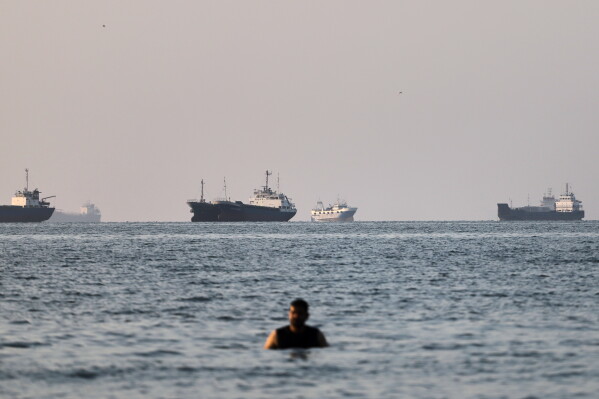
That positioning effort is compounded by one of the largest shipping backlogs in recent history. Hundreds of vessels remain stuck in or around the Gulf, creating a bottleneck that could take weeks to fully unwind even under stable conditions.
The result is a fleet that is not just responding to market signals, but actively reshaping its global deployment as congestion clears and access gradually improves.
RATE MOVES
Freight rates are reinforcing that picture in a dramatic fashion.
Very Large Crude Carrier (VLCC) earnings on key Middle East routes have plunged to their lowest since before the conflict started as vessels accumulated in the Middle East ahead of the recovery in actual moveable cargoes, according to LSEG data.
Daily rates for a VLCC from the Middle East to China are currently quoted around $287,000, which is down from more than $500,000 shortly before the peace accord was announced.
In contrast, rates for chartering smaller tankers have edged higher as the heavy concentration of vessels around the Arabian Gulf tightened capacity in other regions.