
Iran and the US have set up a communication line to “avoid incidents and miscommunication” related to maritime traffic through the Strait of Hormuz, where shipping volumes have picked up in recent days, even if they’re still far off pre-war levels.
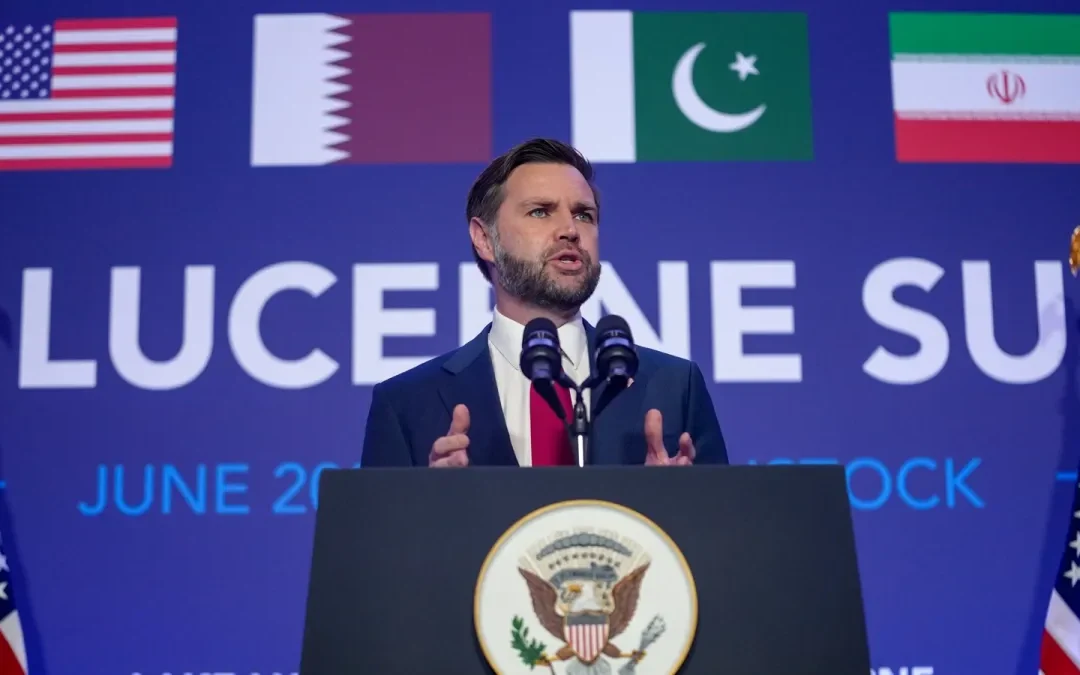
BUERGENSTOCK, Switzerland/BEIRUT: Iran said there had been “major progress” in all-night discussions with the US, as the warring sides try to reach a peace deal within two months.The countries began technical talks in the Swiss resort of Bürgenstock over the weekend, following their interim agreement last week that led to a ceasefire extension and Iran reopening the Strait of Hormuz.
Plenty of obstacles remain, however, including Israel’s war in Lebanon against Hezbollah, an Iran-backed militant group. At one stage on Sunday, Iran said it would suspend talks — but never actually did — after US President Donald Trump threatened military action against the Islamic Republic over its funding of proxy groups in the Middle East.
On Monday morning, Iranian Foreign Minister Abbas Araghchi said the mediators, Qatar and Pakistan, had managed to ease some of the tensions over Lebanon. He added Iran was beginning to see financial benefits from last week’s memorandum of understanding, including waivers of US sanctions on its oil exports and assets in countries such as Qatar being unfrozen.
“Tireless Pakistani and Qatari mediation has delivered major progress to end Lebanon War,” Araghchi said on X. “Oil and petrochem exports are waived, blockade lifted, some frozen assets released, and major reconstruction & development plan launched for Iran.”
Pakistan and Qatar, in a joint statement, spoke of “encouraging progress.” They said Iran and the US had agreed to establish a “high level committee” to oversee the talks, as well as working groups dealing with nuclear issues and sanctions on Tehran. There will also be a “de-confliction cell” to help ensure the cessation of military operations in Lebanon.
Iran and the US have set up a communication line to “avoid incidents and miscommunication” related to maritime traffic through the Strait of Hormuz, where shipping volumes have picked up in recent days, even if they’re still far off pre-war levels.
Israeli President Isaac Herzog said Israel was not opposed to a diplomatic end to the Iran war, but any agreement must ensure Tehran cannot use funds it receives as part of the deal for military purposes or to support regional proxies.
The interim peace agreement calls for ending all hostilities, including in Lebanon, which Israel invaded in March after Hezbollah fired across the border.
Israel was not party to the peace agreement and says it will not withdraw its troops from Lebanon, but on Friday it agreed a new ceasefire. Though intense fighting continued for another day, Lebanese officials said it had abated since Saturday night.
Iran is ramping up oil exports thanks to the US lifting a naval blockade that was squeezing the Islamic Republic’s economy.
US Vice President JD Vance arrived in Switzerland on Sunday and is leading Washington’s delegation, though he said he’d probably only be there a few days. Jared Kushner, Trump’s son-in-law, and Steve Witkoff, a special envoy, were also on the ground and heavily involved.
Iran’s team is headed by Mohammad Bagher Ghalibaf, the speaker of parliament. He left Switzerland on Monday after what Iranian media said were “intense talks.”
Negotiations are set to continue throughout this week, with lower-level delegates discussing technical matters.
“The absence of trust is truly a hugely complicating factor,” Hasan Alhasan, senior fellow for Middle East policy at the Bahrain-based International Institute for Strategic Studies, said on Bloomberg Television. “It complicates the details, especially around sequencing. Each side wants to make sure the other is keeping to their end of the commitment before they make any concessions.”
Oil fell further in early trading on Monday, with Brent crude down 0.7% to around $80 a barrel. It dropped almost 8% last week, though is still up more than 30% for the year. Traders say that’s largely because it will take months, if not longer, for flows of oil and liquefied natural gas through the Hormuz strait to return to normal.
Dozens of people were injured in a blast at Qatar’s main domestic gas plant on Sunday, underscoring the risks to Middle Eastern energy facilities as they ramp up production in the wake of the US-Iran interim pact. There was an explosion and fire at the Barzan gas supply facility, according to operator QatarEnergy, and the government said 54 people were injured, while 18 were missing.
Trump also warned Iran the US could start collecting tolls for Hormuz traffic if there’s no deal. Speaking Sunday to Fox News, he said he told Iranian leaders if they close the strait again, they “won’t even make it back” to Iran, using an expletive.
Since the US and Iran began a shaky ceasefire in early April, the US leader has vacillated between saying a more permanent deal was imminent and threatening more airstrikes on Iran.
He’s come under significant pressure to end a war he began with Israel in late February. The resulting surge in energy prices has accelerated inflation globally and dented his Republican Party’s popularity ahead of midterm elections in November.
Israel and Iran hawks in the US have criticized the MOU, saying it gives far too much financial relief to a country they see as an archenemy, without curbing its ballistic missile program or support for Middle Eastern militant groups such as Hezbollah in exchange.
Trump and Vance have said the deal will stop Iran ever getting a nuclear weapon and will also bring down fuel and other prices for Americans.
“What today really represents is the beginning of a technical negotiation that’s not going to solve every disagreement,” Vance told reporters on Sunday. The meeting “is going to allow us to sit together as teams for the first time really in history to figure out what matters most to the respective parties, to settle those issues, to solve those issues, and get to a better tomorrow.”
Critics of the war and of the memorandum have said the US is unlikely to get anything better than the 2015 nuclear deal between Iran and world powers. That accord, which took 20 months to finalize, was lambasted by Trump, who pulled the US out of it in 2018, during his first term.
A resolution to the fighting in Lebanon will be decisive for the success of the US-Iran talks, according to an official familiar with the discussions, who asked not to be identified talking about sensitive information. Iran’s Araghchi echoed that publicly, saying Lebanon was the “first real test.”
The official added that only an Israeli retreat from Lebanon can fully ensuring the interim deal will move forward.
Israel is not party to the Swiss talks and has balked at the idea of its forces leaving southern Lebanon until Hezbollah — designated a terrorist organization by the US — no longer threatens its northern communities with missiles and drones.
The war in Lebanon, which restarted when Hezbollah fired on Israel in support of Iran in early March, has killed thousands of people there and displaced more than a million.
Israel wants Lebanon’s army to be able to take over areas it’s holding and prevent Hezbollah from returning.
“We’ll move out only when we know that it’s the Lebanese army that’s moving in,” Danny Danon, the Israeli ambassador to the United Nations, said to the country’s Army Radio. “As far as we’re concerned, what’s important is the reality on the ground.”