
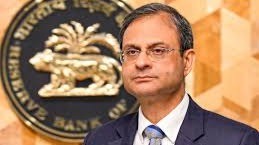
Sanjay Malhotra, Governor,Reserve Bank of India
“The central bank’s rate panel noted that the global environment has deteriorated,” RBI Governor Sanjay Malhotra said. The central bank’s rate panel felt it was “prudent” to wait until greater clarity emerges, he said.
MUMBAI:The Reserve Bank of India on Friday kept its policy repo rate unchanged at 5.25%, opting to look past rupee weakness and assess the fallout from rising global energy costs on inflation and growth.
“The central bank’s rate panel noted that the global environment has deteriorated,” RBI Governor Sanjay Malhotra said while announcing the policy decision. The panel felt it was “prudent” to wait until greater clarity emerges, he said.
While inflation is expected to rise, underlying price pressures remain benign, Malhotra said. Second-round effects of the price pressure warrant vigil, he said.
Higher Inflation; Lower growth
Average retail inflation for the year is now projected at 5.1% compared with 4.6% earlier.
The central bank expects core inflation at 4.7%, up from its earlier projection of 4.4%.
Retail inflation in India remains below target and is projected to stay within the central bank’s tolerance band in the current fiscal year, giving the RBI headroom to hold interest rates.
India targets retail inflation at 4%, and within a tolerance band of 2-6%.
GDP growth in the current financial year is now expected at 6.6%, below the 6.9% forecast in April. In the year ended March 31, 2026, India’s economy is expected to have grown 7.6%. Data is due later on Friday.
Nearly 80% of 56 economists polled by Reuters expected the RBI’s monetary policy committee to hold the repo rate.
All six members of the rate panel, which includes three central bank officials and three external appointees, voted to hold rates. The MPC decided to continue with its “neutral” stance.
India’s benchmark 10-year bond yield tipped slightly lower to 6.96%, after the RBI decision, while the rupee weakened a touch to 96.72 against the dollar. The benchmark equity indexes added marginally to early gains, and were up 0.2%.
A war-driven surge in crude prices and record foreign fund outflows have pushed the rupee down nearly 5% to historic lows since the Gulf conflict erupted late in February, fuelling calls from some analysts for higher rates to defend the currency.
The RBI has been explicit about upside risks — global commodity shocks, supply chain disruptions, and, most critically, El Niño conditions. If the monsoon turns spatially skewed, the Q3 projection could easily breach the 6% handle. The pause today does not foreclose a rate action later in the year,said Ashwani Dhanawat, executive director & chief investment officer, Shriram General Insurance.
“The RBI’s decision to hold the repo rate at 5.25% reflects a clear recognition that today’s inflation pressures are being driven primarily by global supply-side shocks rather than overheating domestic demand. With energy prices remaining volatile, higher interest rates would have done little to ease inflation while risking a slowdown in credit demand and consumption,” said Sarbvir Singh, joint group CEO, PB Fintech
For fintech lenders, rate stability is particularly important because it preserves affordability for everyday borrowers — salaried professionals, self-employed individuals and small businesses that are highly sensitive to changes in monthly repayment obligations, added Singh.
“Across the ecosystem, we continue to see healthy demand for productive credit, but customers are also becoming more conscious of borrowing costs and financial discipline,” her commented.
Across the region, policymakers are already moving to shore up their currencies. Indonesia, the Philippines and Sri Lanka have raised interest rates in recent weeks, while South Korea has held fire but signalled a turn is imminent.
The global outlook and the prospect of a weak monsoon could add downside risks to growth, Malhotra said.