
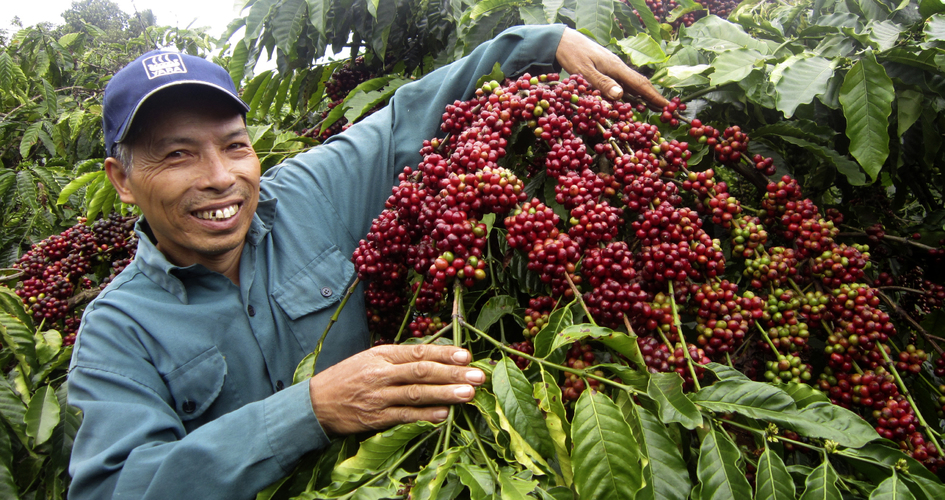
In late 2025, Willis placed the high rainfall parametric solution with Bao Minh Insurance Corporation in Vietnam, protecting coffee farmers’ revenue against a loss of yield due to excessive rainfall during the ‘golden’ harvesting period. The solution uses satellite data from NASA to measure rainfall levels in three areas of the Gia Lai province – West Ia Grai, East
Ia Grai and North Chu Prong.
London:Willis, a WTW business , and Global Parametrics, a parametric risk transfer provider and CelsiusPro Group company, announce that payouts of an innovative parametric policy have been distributed to coffee farmers in the Central Highlands of Vietnam who suffered losses due to high rainfall during the 2025/26 coffee growing season.
These payouts come shortly after funds were triggered under a separate parametric drought
policy structured and placed by Willis in 2024, also for the benefit of Vietnamese coffee
growers. The new high rainfall policy aims to build on this success, increasing the scope of
parametric protection available to farmers.
In late 2025, Willis placed the high rainfall parametric solution with Bao Minh Insurance
Corporation in Vietnam, protecting coffee farmers’ revenue against a loss of yield due to
excessive rainfall during the ‘golden’ harvesting period. The solution uses satellite data from
NASA to measure rainfall levels in three areas of the Gia Lai province – West Ia Grai, East
Ia Grai and North Chu Prong.
If the rainfall exceeds predefined values, the insurance is triggered and the farmers receive timely payouts without the need for lengthy claims processes or on-the-ground assessments.
Risk capacity to support the payouts was provided by the Natural Disaster Fund (NDF), a
public-private partnership managed by Global Parametrics, a subsidiary of CelsiusPro
Group, specialising in parametric protection against climate and natural disaster risks. The
NDF is funded by the UK government’s Foreign, Commonwealth and Development Office
and Germany’s development bank KfW.
Once again, Willis’ parametric solution responded exactly when needed. The 2025/26 policy
coincided with Typhoon Kalmaegi, which caused some of the worst flooding of modern times
in the Central Highlands of Vietnam. Rainfall exceeded 1.7m 1 in some parts of the central
highlands with Gia Lai being one of the areas badly affected. This decimated livelihoods,
with some coffee farms completely submerged, significantly reducing yield.
Nathan Pereira, Analyst, Alternative Risk Transfer Solutions at Willis, said,“This programme
delivers tailored and timely financial protection to vulnerable coffee farmers, while
strengthening trust in insurance and improving understanding of how effective risk solutions
can support their livelihoods.”
Mark Rueegg, chief executive at CelsiusPro Group, said: “Delivering rapid, reliable payouts
after extreme weather events is exactly what parametric solutions are designed to do. This
programme demonstrates how innovative risk transfer, backed by strong public-private
partnerships, can provide meaningful financial resilience to vulnerable farming communities.
By combining advanced data with local expertise, we are helping to close protection gaps and support more sustainable agricultural livelihoods in the face of increasing climate
volatility.”
The high rainfall programme formed part of an initiative supported by the InsuResilience
Solutions Fund (ISF), delivered in partnership with Willis, ECOM Agroindustrial Corp. Ltd,
Bao Minh Insurance Corporation, the International Center for Tropical Agriculture (CIAT) in
Vietnam, and the University of Southern Queensland (UniSQ) in Australia.
Nguyen Thi Mai, Sustainability Project Assistant at ECOM Agroindustrial Corp. Ltd, said,“This payout underscores the value of innovative risk solutions in agriculture, demonstrating how such initiatives can translate into real support for farmers facing extreme weather. Through close collaboration with partners, it reflects a shared effort to help farmers manage climate risks while contributing to a more resilient and sustainable supply chain.”