
This latest communication comes amid reports that Tehran has formulated a “14-point plan” intended to counter the US-supported “nine-point peace plan”.The Iranian proposal reportedly outlines a three-stage roadmap, which includes a 30-day phase designed to transition a temporary ceasefire into a permanent end to hostilities.
Tehran:Iran has sent its response to a US proposal to begin peace talks to end the war, the IRNA news agency reported on Sunday, as two carriers were allowed to pass through the blockaded Strait of Hormuz.
The IRNA report said the response to a US proposal to end fighting before starting talks on more contentious issues, including Iran’s nuclear program, had been sent to Paksitan, which is mediating.
While Western powers bolster their naval presence, Iran formally submitted its reply to the most recent American proposal for regional de-escalation on Sunday. State media confirmed the message was transmitted via Pakistani mediators, following an announcement from Tehran that it had finished a detailed review of Washington’s proposal.
According to Iran’s state-run IRNA news agency, the present stage of discussions is expected to concentrate on ending the ongoing conflict in the region.
This latest communication comes amid reports that Tehran has formulated a “14-point plan” intended to counter the US-supported “nine-point peace plan”.
The Iranian proposal reportedly outlines a three-stage roadmap, which includes a 30-day phase designed to transition a temporary ceasefire into a permanent end to hostilities.
As part of the negotiations,Tehran has sought sanctions relief, the removal of restrictions on Iranian ports, the withdrawal of US troops from the region, and a halt to Israeli military operations in Lebanon.
However, these intensifying diplomatic efforts are occurring against a backdrop of heightened friction and a potential breakdown of stability in the Gulf. Iran recently cautioned that its “restraint is over” and issued threats of retaliation should its vessels be targeted.
This warning follows a series of reports regarding strikes on commercial shipping near the Strait of Hormuz and the coast of Qatar.
Further complicating the security landscape, Iran’s Revolutionary Guards have warned of “heavy attacks” against American interests in the event of further strikes on Iranian tankers.
These statements follow reports that a US fighter jet disabled two Iranian-flagged vessels in the Gulf of Oman, leaving the region caught between a fragile peace process and the threat of expanded naval warfare.
After some 48 hours of relative calm following sporadic clashes last week, hostile drones were detected over several Gulf countries on Sunday, underlining the threat still facing the region despite a month-old ceasefire.
Still, the QatarEnergy-operated carrier Al Kharaitiyat passed safely through the strait and was heading for Pakistan’s Port Qasim, according to data from shipping analytics firm Kpler, the first Qatari vessel carrying liquefied natural gas to cross the strait since the US and Israel started the war on February 28.
Sources said earlier the transfer, which offered a modicum of relief to Pakistan after a wave of power blackouts caused by a halt to vital gas imports, had been approved by Iran to build confidence with Qatar and Pakistan, both mediators in the war.
In addition, a Panama-flagged bulk carrier bound for Brazil that had previously attempted to transit the strait on May 4, passed through, using a route designated by Iran’s armed forces, Iran’s semi-official Tasnim news agency reported on Sunday.
TRUMP IS UNDER PRESSURE TO END WAR AHEAD OF CHINA VISIT
With US President Donald Trump due to visit China this week, there has been mounting pressure to draw a line under the war, which has ignited a global energy crisis and poses a growing threat to the world economy.
But, despite diplomatic efforts to break a deadlock between the two sides and the passage of the Qatari gas tanker, the threat to shipping lanes and the economies of the region remained high.
On Sunday, the United Arab Emirates said it intercepted two drones coming from Iran, while Qatar condemned a drone attack that hit a cargo ship coming from Abu Dhabi in its waters.
Kuwait said its air defences had dealt with hostile drones that entered its airspace.
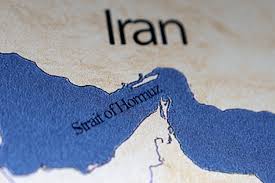
Tehran has largely blocked non-Iranian shipping through the narrow Strait of Hormuz, which before the war carried one-fifth of the world’s oil supply and which has emerged as one of the central pressure points in the war.
Qatari Prime Minister Mohammed bin Abdulrahman al-Thani, who discussed Pakistan’s mediation efforts to end the war with US
Secretary of State Marco Rubio in Miami on Saturday, told Iran’s Foreign Minister Abbas Araqchi that using the Strait of Hormuz as a “pressure tool” would only deepen the crisis.
He told Araqchi in a phone call that freedom of navigation should not be compromised, the Qatari foreign ministry said on Sunday, without specifying the exact date of the call. Turkey’s foreign minister also spoke to Araqchi, an official in the Turkish foreign ministry said.
Iranian lawmakers have said they are drafting a bill to formalise Iran’s management of the strait, with clauses including forbidden passage to vessels of “hostile states”.
Recent days have seen the biggest flare-ups in fighting in and around the strait since a ceasefire began a month ago: the UAE came under renewed attack on Friday and sporadic clashes were reported between Iranian forces and US vessels in the strait.
US BERATES ALLIES FOR NOT HELPING TO REOPEN STRAIT
Washington imposed a blockade on Iranian vessels last month but Tehran has so far taken its time before responding to calls to end a war that surveys show is unpopular with US voters facing ever-higher gasoline prices.
A CIA assessment indicated Iran would not suffer severe economic pressure from a US blockade for about another four months, according to a US official familiar with the matter.
A senior intelligence official characterised as false the “claims” about the CIA analysis, which was first reported by the Washington Post.
The US has also found little international support in the conflict, with NATO allies refusing calls to send ships to open the Strait of Hormuz without a full peace deal and an internationally mandated mission.
After meeting Italian Prime Minister Giorgia Meloni on Friday, Rubio questioned why Italy and other allies were not backing Washington’s efforts to reopen the strait, warning of a dangerous precedent if Tehran were allowed to control an international waterway.
Britain, which has been working with France on a proposal to ensure safe transit through the strait once the situation stabilises, said on Saturday it was deploying a warship to the Middle East in preparation for such a multinational mission.
Meanwhile,Iran has voiced strong opposition to the deployment of a French aircraft carrier intended for a potential mission aimed at restoring “confidence among shipowners” within the volatile Strait of Hormuz.
The diplomatic friction intensified after Iran’s Deputy Foreign Minister, Kazem Gharibabadi, issued a stern warning on the social media platform X. He cautioned that any international naval cooperation with Washington’s current maritime strategy would be viewed as a direct provocation.
Gharibabadi wrote that “the presence of French and British warships, or those of any other country potentially accompanying the illegal and internationally unlawful actions of the United States in the Strait of Hormuz, will be met with a decisive and immediate response”.
Al Jazeera reported that the French Ministry of Armed Forces confirmed last week that the nuclear-powered Charles de Gaulle aircraft carrier was travelling towards the strategic waterway.
The deployment comes as French President Emmanuel Macron and British Prime Minister Keir Starmer spearhead an international mission dedicated towards “restoring freedom of navigation” in the critical shipping lane.
Agencies