
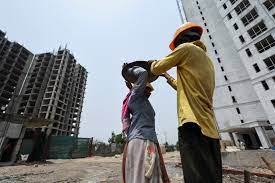
In view of the prevailing and forecasted conditions, IMD has issued comprehensive heatwave safety guidelines and advised citizens to take necessary precautions. These include avoiding prolonged exposure to direct sunlight, especially during peak afternoon hours, staying adequately hydrated, wearing light and breathable clothing, and avoiding strenuous outdoor activities during high-temperature periods. Special care has been advised for vulnerable groups such as children, the elderly and individuals with pre-existing health conditions.
New Delhi:The India Meteorological Department under the Ministry of Earth Sciences has issued detailed heatwave guidance and advisories as several parts of the country continue to experience rising temperatures and above-normal conditions.
As per the latest assessment, maximum temperatures in many parts of northwest, central and peninsular India are currently ranging between 40°C to 44°C, with the highest temperature of 44.5°C recorded at Sri Ganganagar (Rajasthan). In several regions, temperatures have been observed to be markedly above normal by 5°C or more, indicating a developing heat stress scenario across parts of the country.
The IMD has indicated that heatwave conditions are very likely to develop in isolated pockets of Jammu & Kashmir, Himachal Pradesh, Punjab, Haryana, Chandigarh & Delhi, Uttar Pradesh, Rajasthan and central India over the coming days. At the same time, hot and humid conditions are expected over coastal and eastern regions, while warm night conditions are likely in parts of north India, which may further increase discomfort levels and health risks.
The department has further projected that there will be no significant change in maximum temperatures over northwest India till 27th April, followed by a gradual fall, while central and other regions may witness a gradual rise and subsequent decline in temperatures during the forecast period.
In view of the prevailing and forecasted conditions, IMD has issued comprehensive heatwave safety guidelines and advised citizens to take necessary precautions. These include avoiding prolonged exposure to direct sunlight, especially during peak afternoon hours, staying adequately hydrated, wearing light and breathable clothing, and avoiding strenuous outdoor activities during high-temperature periods. Special care has been advised for vulnerable groups such as children, the elderly and individuals with pre-existing health conditions.
The IMD has emphasised that early awareness and preventive action are critical in reducing heat-related illnesses such as heat exhaustion and heat stroke. The IMD’s extended outlook indicates that heatwave conditions are likely to persist across multiple regions over the next 7 days, particularly in parts of:
-Northwest India (Punjab, Haryana, Delhi, Rajasthan, Uttar Pradesh)
-Central India (Madhya Pradesh, Chhattisgarh, Vidarbha)
-Select southern regions (Kerala & Mahe)
In addition, hot and humid weather conditions are expected in coastal states, including Odisha, West Bengal, Tamil Nadu and Andhra Pradesh, while warm night conditions may continue in northern plains, compounding heat stress during nighttime.
According to IMD’s seasonal outlook for April to June 2026, above-normal heatwave days are likely over parts of east, central and northwest India and the southeast peninsula, underscoring the need for continued preparedness and mitigation measures during the ongoing hot weather season.
The IMD has made comprehensive heatwave guidance, including do’s and don’ts, preparedness measures and sector-specific advisories, available on its official website for public access and dissemination at https://mausam.imd.gov.in/responsive/heatwave_guidance.php.
The guidance is aimed at supporting individuals, communities and local administrations in minimising health risks and enhancing resilience against extreme heat conditions.
The IMD continues to closely monitor temperature trends and issue timely forecasts and warnings, and citizens are advised to remain updated through official sources and adhere to the prescribed safety measures.
Meanwhile,as scorching heat starts to grip various parts of the country, health experts have advised people to be cautious about heat-related problems such as dehydration and heat stroke.
According to medical professionals, the immediate effects of heat typically manifest as skin-related issues that further lead to other complications such as swelling, muscle cramps, fatigue, and dizziness.
Prolonged exposure to direct sunlight and hot environments significantly increases the risk of heatstroke, which can prove fatal, they said.
Speaking to PTI, Dr Naval K Vikram, a professor in the Department of Medicine at the All India Institute of Medical Sciences, Delhi, said the heat gives rise to a variety of physical ailments.
“The primary issues caused by the heat are skin-related problems, like heat rashes. The excessive sweating leads to itching and various skin irritations. Many individuals also report complaints of swelling in their hands and feet,” Vikram said.
Explaining that excessive sweating results in dehydration, simultaneously depleting sodium and electrolyte levels within the body, he said this can trigger muscle cramps.
This condition is particularly prevalent among individuals who engage in strenuous physical labour during the hot weather, such as daily wage labourers, farmers, and athletes.
“As the heat intensifies, individuals may experience extreme fatigue, headaches, weakness, and nausea,” he said.
Vikram added that in severe cases, this can escalate into heatstroke, a critical condition that can impair vital organs such as the brain, heart, and kidneys, and may even prove life-threatening.
There is often a misconception among the public that home remedies suffice for addressing mild heat-related symptoms. However, experts caution that certain warning signs should never be ignored, as doing so could have dangerous consequences.
“Most heat-related ailments can be treated at home. However, if an individual experiences severe muscle cramps, extreme fatigue, intense dizziness, abnormal behaviour, or a continuously rising body temperature, these constitute serious warning signs,” Vikram said.
He added that such situations require immediate hospitalisation.
Naveen Srivastava, a 32-year-old employee of a private firm in the national capital, who commutes daily to work via the Metro, remarked that this summer heat has made everyday life extremely difficult.
He said, “Going to the office every day feels nothing short of a challenge.”
“The moment I step out of the house in the morning, it feels as though the sun is scorching my body. By the time I reach the Metro station, I am in a terrible state,” he said.
According to medical professionals, staying adequately hydrated throughout the day is essential for protection against the heat. Natural beverages such as coconut water, buttermilk, and lemon water are particularly beneficial.
Experts also advise against venturing out into direct sunlight between 12 pm and 3 pm. However, for street vendors and hawkers, a significant portion of their daily routine is spent on the roadside, exposed to the scorching sun.
Lalit, a fruit vendor operating on the roadside in Delhi’s Mayur Vihar Phase 1 locality, told PTI, “This heat has completely ruined everything. I try to shield myself from the sun by draping cloths around my cart. I have to earn a living, whether it’s sunny or raining, I have to keep working.”