
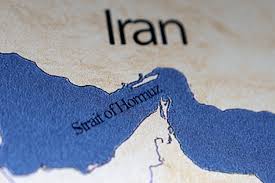
Trump’s announcement effectively slowed oil tanker movements in the strait, with just two Iranian-linked tankers leaving the Gulf. In normal trading conditions, crude and products loaded from Iranian ports are typically headed for China, with India a recent buyer of Iranian crude.
Two Iranian-linked tankers exited the Gulf on Monday as other vessels began avoiding the Strait of Hormuz after the U.S. said it would start blockading Iranian ports later in the day, unsettling shipping markets at a vital energy chokepoint, shipping data showed.
The move followed the collapse of weekend talks between Washington and Tehran, prompting President Donald Trump to say on Sunday the U.S. Navy would enforce a blockade targeting vessels entering and leaving Iranian ports, even as Washington stressed it would not restrict transit through the strait itself.
Trump’s announcement effectively slowed oil tanker movements in the strait, with just two Iranian-linked tankers leaving the Gulf. In normal trading conditions, crude and products loaded from Iranian ports are typically headed for China, with India a recent buyer of Iranian crude.
The tanker Auroura is laden with Iranian oil products while the New Future vessel is carrying diesel loaded from the Hamriyah port in the United Arab Emirates and is heading to Sohar, Oman, Kpler and LSEG data showed. Both are medium-range tankers carrying about 330,000 barrels of oil.
U.S. Central Command said U.S. forces would begin implementing the blockade of all maritime traffic entering and exiting Iranian ports at 10 a.m. ET (1400 GMT) on Monday.
It would be “enforced impartially against vessels of all nations entering or departing Iranian ports and coastal areas, including all Iranian ports on the Arabian Gulf and Gulf of Oman,” it said in a statement on X.
U.S. forces would not impede freedom of navigation for vessels transiting the Strait of Hormuz to and from non-Iranian ports, and additional information would be provided to commercial mariners through a formal notice prior to the start of the blockade, it said.
Iran’s Revolutionary Guards said on Sunday that any military vessels attempting to approach the Strait of Hormuz would be considered a violation of the ceasefire and be dealt with harshly and decisively.
Pakistani Tankers Headed Into Gulf
Prior to Trump’s announcement, Pakistan-flagged tankers Shalamar and Khairpur entered the Gulf on Sunday, data from LSEG and Kpler showed.
The Aframax tanker Shalamar is heading to the United Arab Emirates on Monday to load Das crude, the data showed, while the Panamax-sized Khairpur is heading to Kuwait to load refined products, according to the data.
Pakistan National Shipping, which manages Shalamar, did not immediately respond to a request for comment outside of office hours.
Liberia-flagged very large crude carrier (VLCC) Mombasa B, which also transited the strait earlier on Sunday, is sailing empty in the Gulf and heading to Basra, Iraq, according to the data.
Malta-flagged VLCC Agios Fanourios I, which attempted to enter the Gulf on Sunday to load Iraqi Basra crude for Vietnam, has since turned back and is anchored near the Gulf of Oman, the data showed. The tanker plans to head to Iraq.
Eastern Mediterranean Maritime, which manages Agios Fanourios I, did not respond to a request for comment.
CMB.TECH NV, listed in LSEG data as the manager of the Mombasa B said it no longer manages the ship. The current manager Sinokor did not immediately respond to a request for comment.
Despite the stalemate, three supertankers fully laden with oil passed through the Strait of Hormuz on Saturday, shipping data showed. They appeared to be the first vessels to exit the Gulf since the ceasefire deal was struck last week.
Oil prices surged when trade reopened on Monday, with no sign of a swift reopening of the Strait of Hormuz to ease the worst ever disruption in supplies.
Since the war started, Iran has effectively shut the strait to all vessels except its own, saying ships would only be allowed through under Iranian control and subject to a fee. U.S. President Donald Trump said he would now block Iran’s ships too, and any vessels that paid Iran a toll.
The ceasefire that halted six weeks of U.S. and Israeli airstrikes is under threat, with only a week left to run, after Washington said Tehran had rejected its demands at talks in Islamabad, the highest-level discussions since Iran’s 1979 Islamic Revolution.
Two Iranian-linked tankers, the Aurora and New Future, laden with oil products and diesel, left the strait on Monday shortly before the U.S. blockade was due to take effect, according to data from provider LSEG.
An Iranian military spokesperson, quoted by state media, said any U.S. restrictions on vessels in international waters would be illegal and amount to “piracy.” If Iranian ports were threatened, no port in the Gulf or Gulf of Oman would remain secure, the spokesperson said.
Earlier, Iran’s Revolutionary Guards said any military vessels approaching the strait would be considered to have violated the ceasefire.
On Sunday, Trump had posted on social media: “No one who pays an illegal toll will have safe passage on the high seas,” adding, “Any Iranian who fires at us, or at peaceful vessels, will be BLOWN TO HELL!”
With the war unpopular at home and rising energy prices causing political blowback, Trump paused the U.S.-Israeli bombing campaign last week after threatening to destroy Iran’s “whole civilisation” unless it reopened the strait.
Iran has effectively ignored that demand, while bringing new demands of its own to the talks, including recognition of its control of the strait, the lifting of all sanctions and the withdrawal of forces from the huge U.S. military bases across the Middle East.
Iran retains missiles and drones that can hit Gulf neighbors, and a stockpile of uranium enriched to near bomb-making levels that the U.N. nuclear agency estimated last year at more than 400 kg (900 pounds). Tehran’s leadership, which faced a popular uprising at the start of the year, has withstood the U.S. onslaught with no sign of organized opposition.
U.S. officials said Iran had rejected demands at the talks to give up the uranium stockpile, end future enrichment and halt funding for its regional allies, positions carried over from negotiations Trump abandoned two days before the war.
Washington still hopes that Iran will seek peace and a chance to begin rebuilding from damage that has deepened an economic crisis that provoked pre-war domestic unrest.
But emboldened Iranian officials say they are in a stronger position than before, and will make a deal only if the U.S. makes further concessions. Iran had “encountered maximalism, shifting goalposts, and blockade” from the United States at the talks, said Foreign Minister Abbas Araqchi.
Oil Benchmarks Understate Disruption
Benchmark oil prices, which had eased last week after the ceasefire was announced, surged more than 7% on Monday, back above $100 a barrel as traders digested the news that the weekend talks had failed to produce a breakthrough.
Traders say the main benchmarks – used to set prices for trillions of dollars’ worth of commodities across industries worldwide – actually understate the severity of a disruption with no precedent in modern times.
The benchmarks are based on contracts to deliver oil one to two months ahead. Physical supplies, however, are already tight, with some refineries paying record premiums of up to $50 above the benchmarks to get their hands on oil now.
If the benchmarks catch up to physical prices, industries would face massive cost rises and some traders could be forced to realize huge paper losses. A reckoning could be approaching as the last Gulf oil shipped before the war runs out.
“Reopening the Strait has become the market’s most time-sensitive priority,” JP Morgan analysts said in a note. “The last tanker to clear Hormuz on February 28 is expected to reach its destination around April 20, marking the point at which pre-closure barrels are fully exhausted from the global supply chain.”
Trump has long said a bump in U.S. gasoline prices would be short-lived. But he told Fox News’ “Sunday Briefing” that they could stay high through November’s midterm elections.
Iran’s chief negotiator, Mohammad Baqer Qalibaf, posted a map of Washington-area gasoline prices on social media with the comment: “Enjoy the current pump figures. With the so-called ‘blockade’. Soon you’ll be nostalgic for $4–$5 gas.”
Reuters