
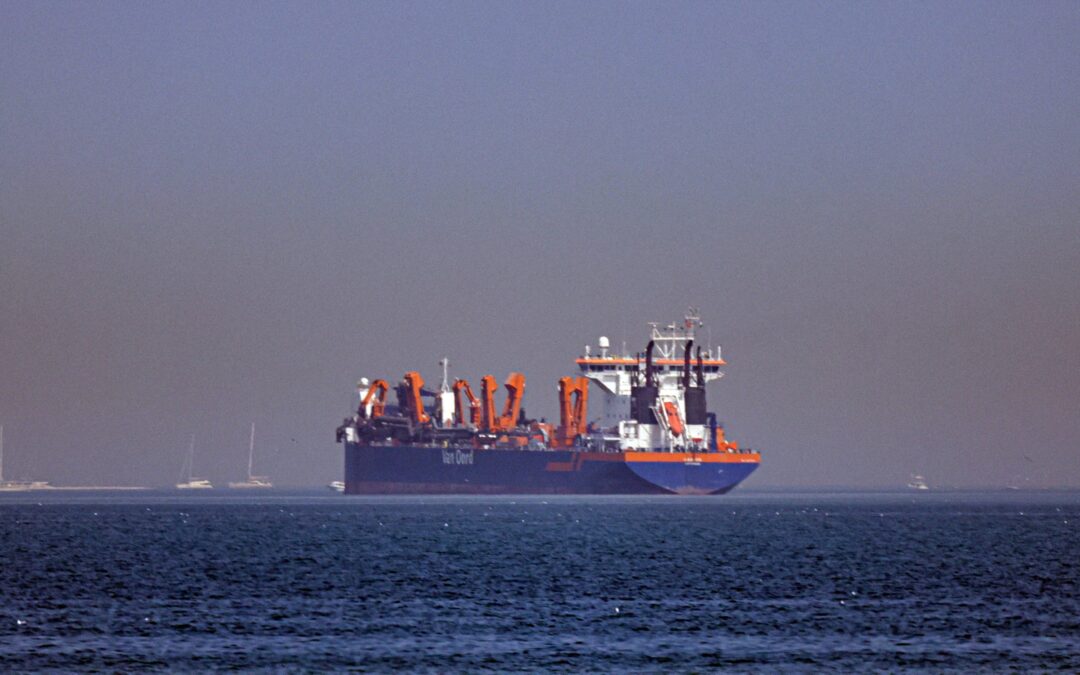
Iran has started charging transit fees on some commercial vessels passing the Strait of Hormuz, people familiar with the matter have said, the latest sign of its control over the world’s most important maritime energy route. The war in the West Asia has all-but stopped traffic through the waterway — a small handful of ships appear to have transited through by taking a route that hugs the Iranian coastline.
Iran said foreign ships are allowed to cross the Strait of Hormuz, as long as they aren’t supporting acts of aggression against the country and follow regulations put in place by Tehran.
The nation made the comments in a letter circulated to members of the International Maritime Organistion on Tuesday, adding that countries could benefit from safe passage “in co-ordination with the competent Iranian authorities.” The original letter from Iran was dated March 22, the IMO said.
Iran has started charging transit fees on some commercial vessels passing the Strait of Hormuz, people familiar with the matter have said, the latest sign of its control over the world’s most important maritime energy route. The war in the West Asia has all-but stopped traffic through the waterway — a small handful of ships appear to have transited through by taking a route that hugs the Iranian coastline.
Vessels seeking to transit the Strait of Hormuz under Iranian protection are being asked to provide lists of crew and cargo, along with voyage details and bills of lading, in order to secure a green light from the Islamic Revolutionary Guard Corps.
The process is still idiosyncratic and can vary from ship to ship, according to accounts from people familiar with the trade, but it points to Iran’s increasing efforts to assert control over the vital maritime channel with a semi-formal system as the conflict in the Persian Gulf extends into its fourth week.
Asian countries have been acutely affected by the disruption in the energy trade from the Persian Gulf, with shortages of fuels across the region. India, among the most impacted, has seen a severe shortage of liquefied petroleum gas. Only a handful of Indian LPG tankers have made it through the strait — after talks between New Delhi and Tehran.
India has said international laws guarantee the right of freedom of navigation through the strait, meaning no fees could be charged.
Chinese government agencies charged with supervising shipping are aware of protection fees paid by some Chinese vessels through local agents, one of the people said, adding officials see little basis for such charges. That’s partly because transit rights are guaranteed by international law, but also because Beijing is a vital trading partner for the region and an economic lifeline for Tehran, buying up most of its oil exports.
Iran has said the full restoration of security and stability in the Strait is contingent on the end of military threats in the region.
While Iran’s Supreme Leader Mojtaba Khamenei has already said Iran should keep the strait shut, the letter sets out a clearer and more nuanced position. It’s yet another example of the country claiming sovereignty over the waterway with the war now in a fourth week.
The near-halt to ship transits via Hormuz — through which about a fifth of the world’s oil and gas, along with vast amounts food, metals and other materials are shipped every day — has sent the prices of vital commodities soaring. In Asia, a region heavily reliant on energy imports, billions of people are dealing with gas outages and preparing for fuel rationing.
Commodities markets have been exceptionally volatile as traders try to gauge when the war will end and Hormuz will be reopened. Though oil advanced Tuesday on renewed fears of an escalating conflict, futures may plunge on any sign that vessels will be able to move more freely through the waterway.
In the letter on Tuesday, Iran said “non-hostile vessels, including those belonging to or associated with other states, may – provided that they neither participate in nor support acts of aggression against Iran and fully comply with the declared safety and security regulations — benefit from safe passage through the Strait of Hormuz in co-ordination with the competent Iranian authorities.”
The Islamic Republic said it “restricted the passage of vessels belonging to or associated with the aggressors and those participating in their acts of aggression.”
It added that the full restoration of security and stability in the Strait is contingent on the end of military threats in the region.
Bloomberg