
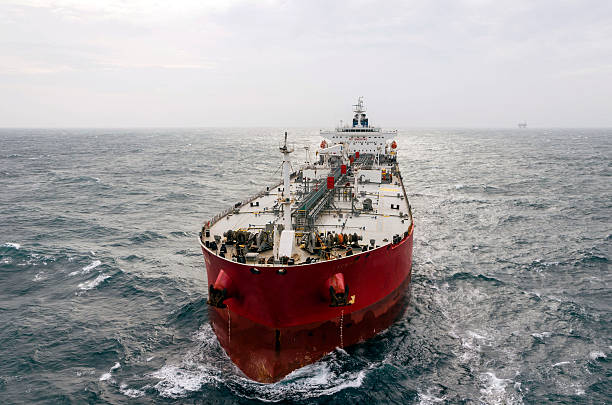
More than half of the world’s largest maritime insurance clubs have also now scrapped war-risk insurance for vessels entering the Gulf
Dozens of laden oil tankers are hunkering down inside the Persian Gulf after attacks near the Strait of Hormuz have all but closed off the waterway, upending regional logistics, slowing exports and threatening near-term production.
There are about 240 ships near the Strait of Hormuz, most of them centered around Iran’s Bandar Abbas, according to S&P Global Mint ship tracking.
Several owners and captains said that they were waiting for the security situation to become clearer before attempting to pass through the strait. Major shipping companies have also advised vessels to shelter in place.
At least 40 very-large crude carriers, or VLCCs, each carrying about 2 million barrels of oil, are currently idling within the Gulf, according to ship-tracking data by Kpler.
Oil tanker traffic transiting the main shipping lanes in the Strait of Hormuz was halted on March 1, according to tracking data reviewed by Platts, part of S&P Global Energy.
There were no crude or product tankers seen arriving to transit the main Hormuz traffic separation scheme (TSS) channels that run east–west through the narrowest part of the strait between southern Iran and the UAE/Oman coast, according to tanker tracking data from S&P Global Commodities at Sea.
However,not all traffic was gone, however. “Commercial traffic, though reduced in volume, continues to transit the strait,” the Joint Maritime Information Center said in a Feb. 28 advisory at 19:35 UTC (11:35 pm Dubai time).
“The US is advising against sailing through the Arabian Gulf, Gulf of Oman, North Arabian Sea and the Strait of Hormuz, and the Iranian Revolutionary Guard is transmitting occasionally through maritime radio channels that the Strait of Hormuz is now closed,” Chief Safety & Security Officer at BIMCO, Jakob Larsen, said by email on March 1.
“There are, however, no official Iranian intelligence reports for now indicating that a decision to attempt to close the Strait of Hormuz has been made at this stage.Insurance rates for shippers are expected to increase “manyfold, and ships with business connections to the US or Israel approaching the area are probably not going to be able to get insurance,” Larsen said from a Feb. 28 email.
“Inefficiencies will likely increase on the back of recent developments, as we expect shipowners to adopt a ‘wait-and-see’ approach,” Fearnley Securities analysts Fredrik Dybwad and Sigurd Gjone Gabrielsen wrote in a note.
While Iran has not formally closed access to the chokepoint after US and Israeli strikes began on Saturday, it has warned vessels not to proceed. At least three have come under attack as of Monday morning.
More than half of the world’s largest maritime insurance clubs have also now scrapped war-risk insurance for vessels entering the Gulf.
The result is the strait that connects some of the world’s largest producers to their buyers is effectively off-limits. In the last 24 hours, only a handful of large tankers appear to have exited the waterway. Only two US-sanctioned Iranian tankers appear to be close to entering, according to ship-tracking data.
A tally of all transits by ship-tracking platform Vortexa shows only four supertankers transiting on March 1, down from 22 a day before.
The true number of vessels stuck in the Persian Gulf could be even higher once small tankers are taken into account. Many ships choose to switch off their transponder signals to “go dark” and limit risk, while signal jamming complicates tracking efforts.
The Joint Maritime Information Center, a multinational naval advisory group that focuses on the region, has raised its security alert level to “critical”, its highest, citing “confirmed missile and drone attacks against multiple commercial vessels within the Gulf of Oman, Musandam approaches, and UAE coastal waters.”
The Sea La Donna is the latest casualty, with details of the incident still under investigation, JMIC said, adding that it had “found no association that would make these vessels a viable candidate for targeting and attack.”
Crude tankers were observed clustered near the Port of Fujairah in the UAE, just outside the Strait of Hormuz, with vessels headed toward the port, according to data from Commodities At Sea March 1.
“The [tankers] inside, I’m not sure what they will do,” the broker said, suggesting that ships may opt to wait a few days and “see what happens,” but crew may refuse to transit the volatile Strait.
“For the time being, we expect any decisions made on vessel routings to be made on a vessel-by-vessel basis,” Maersk stated on its website on March 1.
Flag registries — authorities that ensure vessels comply with international law — have also sounded the alarm. The Liberian and Marshall Islands registries, which are the world’s top and third-largest respectively, have told ships to adhere to the highest level of security, meaning cargo operations should be suspended.
The collapse in traffic is already rattling importing nations but it could ultimately also threaten producers. With limited storage and few empty ships available inside the Gulf, producers could see tanks fill up if the crisis drags on for weeks — and find themselves forced to suspend output.
JPMorgan & Chase analysts estimated an effective closure lasting more than 25 days could force production shut-ins.
Hormuz is also a vital transit rout for LNG. Qatar is the world’s second-largest LNG exporter, making up 20% of supply last year, and the country’s shipments must pass through the Strait to reach buyers in Asia and Europe.
Several container ships have also either halted, or U-turned while transiting.
Concerns have also spilled over into the Red Sea, where Yemen-based militia Houthis had been targeting commercial ships with projectiles. Some of the world’s largest container carriers are rerouting ships to avoid the Red Sea, after the Tehran-backed Houthis threatened to restart attacks on cargo ships in the area.
Bloomberg