
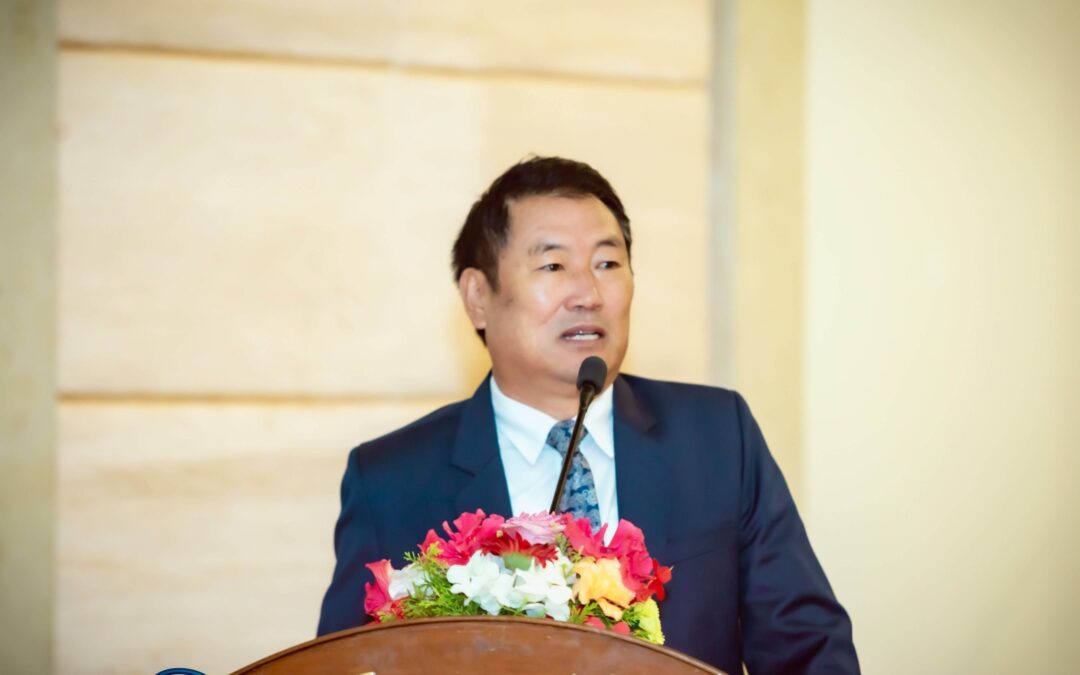
Speaking on the impacts of climate change in the mountains, Director General of the International Centre for Integrated Mountain Development (ICIMOD), Nepal, Pema Gyamtsho, highlighted that both “too much water and too little water” are now visible across the region
New Delhi:Terming glacial lake outbursts in the Himalayan region as “very serious”, international environment expert Pema Gyamtsho said that urgent action is needed to monitor risks and strengthen disaster preparedness.
Speaking on the impacts of climate change in the mountains, Director General of the International Centre for Integrated Mountain Development (ICIMOD), Nepal, Pema Gyamtsho, highlighted that both “too much water and too little water” are now visible across the region.
“During monsoons, rainfall comes in torrents, causing floods, while in other periods, springs are drying up, leading to droughts,” Gyamtsho told PTI at the World Sustainable Development Summit 2026 in New Delhi.
He underlined the importance of transboundary cooperation, adding that India, as both an upstream and downstream country, must understand the implications of water management across borders.
“There is enough water for all of us if we manage it well and are willing to share resources. We should focus on what unites us more than what divides us,” Gyamtsho said.
Talking about glacial lake outburst floods specifically, Gyamtsho warned that over 200 potentially dangerous glacial lakes exist, and monitoring remains inadequate.
He also cited melting permafrost in the southern slopes of the Himalayas as a hidden threat that could trigger cascading disasters.
“If we do not invest in assessing risks and planning mitigation, such disasters will become more frequent,” he cautioned.
Gyamtsho added that ICIMOD works closely with governments, universities and international organisations, including India’s Ministry of Environment, Forest and Climate Change, to implement disaster risk management and restore critical water sources.
Glacial lakes and other water bodies across the Himalayan region saw a 10.81 per cent increase in area from 2011 to 2024 due to climate change, signalling a heightened risk of glacial lake outburst floods (GLOFs), according to the Central Water Commission’s (CWC) report.