
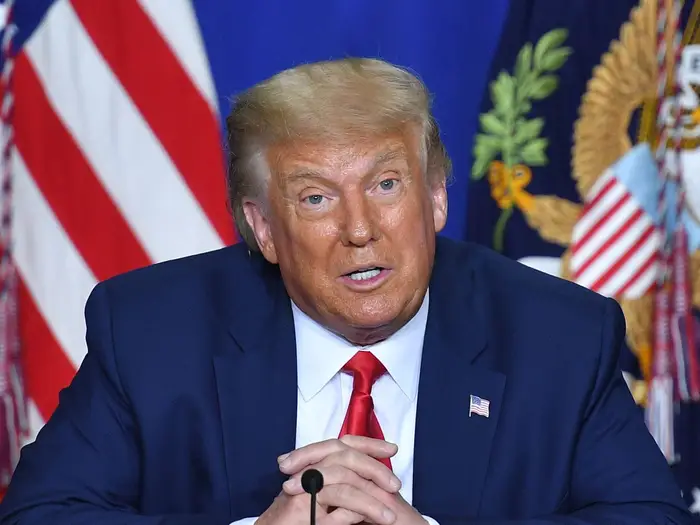
President Donald Trump
The Environmental Protection Agency is set to repeal a 2009 scientific determination known as the endangerment finding, which has been the foundation for federal climate regulations. The endangerment finding is what led the EPA to take action under the Clean Air Act of 1963 to curb emissions of carbon dioxide, methane, and four other heat-trapping air pollutants from vehicles, power plants and other industries.
The Trump administration’s imminent repeal of an Obama-era scientific finding that greenhouse gases pose a public health threat could open up a new pathway for filing lawsuits against power-plant operators and other companies.
Legal experts said the policy reversal could lead to a surge in lawsuits known as “public nuisance” actions, a pathway that had been blocked following a 2011 Supreme Court ruling that regulation of greenhouse gas emissions should be left in the hands of the Environmental Protection Agency instead of the courts.
Now that the EPA is abandoning that regulatory effort, the legal shield created by the 2011 decision will likely unravel, legal experts said.
“This may be another classic case where overreach by the Trump administration comes back to bite it,” said Robert Percival, a University of Maryland environmental law professor.
The Environmental Protection Agency is set this week to repeal a 2009 scientific determination known as the endangerment finding, which has been the foundation for federal climate regulations. The endangerment finding is what led the EPA to take action under the Clean Air Act of 1963 to curb emissions of carbon dioxide, methane, and four other heat-trapping air pollutants from vehicles, power plants and other industries.
EPA Administrator Lee Zeldin has called the rescission of the endangerment finding “the largest act of deregulation in the history of the United States.”
Power companies have generally favored President Donald Trump’s deregulatory agenda, but have expressed concern about the repeal of the endangerment finding triggering a wave of lawsuits.
U.S. courts have long recognized a legal theory known as “public nuisance,” which prohibits activities that unreasonably interfere with the health and safety of a community.
Public nuisance lawsuits are typically brought by state and local governments, and seek to make the party responsible for the nuisance pay to abate, or fix, the condition.
The cases are hard to win, in part because of difficulties in proving direct causation between a specific defendant’s emissions and particular climate harms. But legal experts have said they are one potential tool for environmental activists to hold greenhouse gas emitters liable for climate harms.
In a 2004 lawsuit, California and five other states alleged that big power companies had created a public nuisance by contributing to climate change. The defendants included American Electric Power and Xcel Energy.
The case eventually ended up before the U.S. Supreme Court, which ruled against the six states in a unanimous 2011 decision.
That 2011 decision allowed power companies to escape public nuisance lawsuits filed in federal courts, though some cases brought in state court have survived.
The policy reversal could give public nuisance cases a new lease on life, legal experts said.
Reuters