
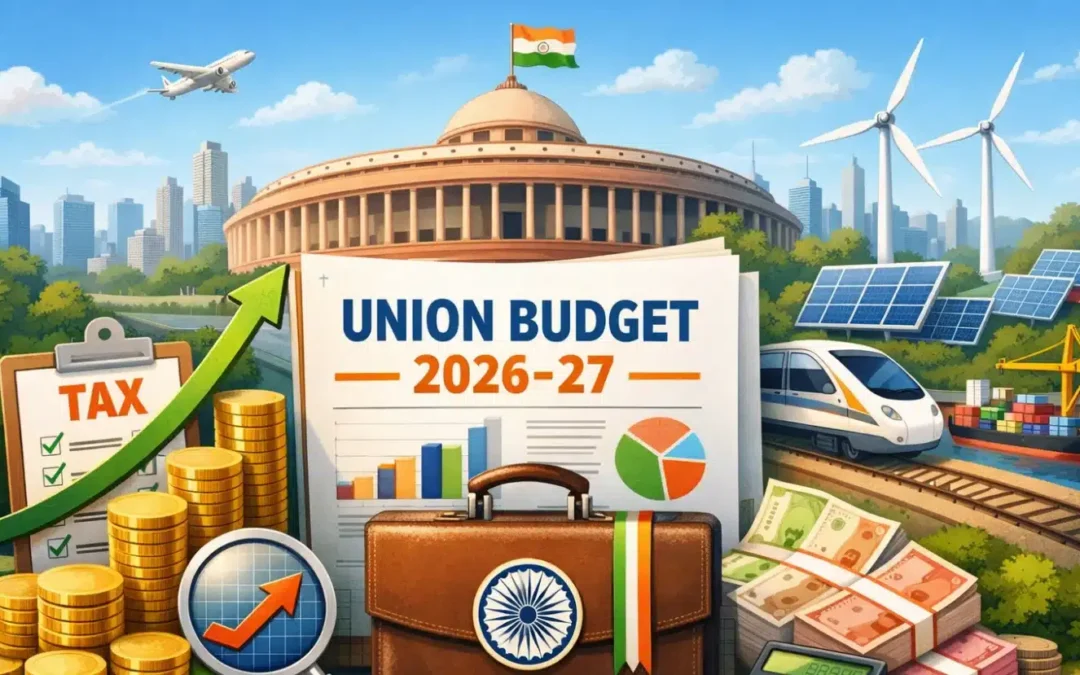
As India moves confidently towards its vision of Viksit Bharat, with right policy support,the insurance sector is committed to partnering in this journey protecting people, supporting businesses, enabling infrastructure, and building a more secure and resilient nation

Tapan Singhel, MD&CEO, Bajaj Allianz General Insurance
The Budget message is steady and confidence-building, with fiscal discipline on course and capital expenditure continuing to anchor growth. This mix matters because it protects macro stability, supports more predictable interest rates, and strengthens confidence as the country expands infrastructure, logistics and manufacturing capacity at scale.
Equally encouraging is the focus on the fundamentals that make growth more broad-based: stronger cashflows for Micro, Small and Medium Enterprises (MSMEs), deeper formalisation, and sustained investment in skills and healthcare capacity. For the insurance sector, this translates into a larger base of insurable assets and a wider opportunity to expand protection and bolster the country’s resilience across projects, enterprises, and households.
We also welcome Bharat-VISTAAR, a multilingual Artificial Intelligence (AI) advisory tool for farmers, which can help reduce uncertainty and support more resilient outcomes in agriculture.
Overall, the message is progressive: back growth with investment, build resilience, and ensure India’s growth story remains sustainable and inclusive.”

Sumit Madan, MD & CEO, Axis Max Life Insurance
“The Union Budget 2026 presents a strong and credible roadmap that deftly balances India’s growth aspirations with fiscal prudence on the journey towards Viksit Bharat. The focused development of Tier II and Tier III cities, high-speed rail corridors, and integrated East Coast industrial corridors will unlock powerful new economic hubs across Bharat. These ‘growth connectors’ will give rise to regions with rising disposable incomes and a structurally higher need for life insurance, particularly protection-oriented solutions.
Encouragingly, insurance reforms over the past few years have been a continuous and calibrated process, firmly moving in the right direction, strengthening transparency, enhancing customer trust, and expanding the reach of protection across the country. Equally important, forward-looking initiatives such as the Infrastructure Risk Guarantee Fund and the expansion of REITs and InvITs will meaningfully de-risk long-gestation projects and crowd in long-term private and institutional capital.
For an industry committed to ‘Insurance for All by 2047,’ this budget provides the macro stability and policy clarity needed to channel household savings into productive infrastructure, ensuring that India’s physical expansion is anchored in financial resilience and inclusive growth.

Rakesh Jain, CEO, IndusInd General Insurance
Union Budget 2026–27 is a forward-looking and reassuring document presented at a time when global volatility, geopolitical tensions, and supply-chain disruptions continue to shape economic realities. The Finance Minister’s emphasis on accelerating growth especially in new age sector while strengthening resilience reflects a clear understanding of what India needs at this stage of its development.
For the general insurance sector, several parts of this Budget create strong tailwinds. The MSME-focused measures including the ₹10,000 crore SME Growth Fund, the additional support to the Self-Reliant India Fund, and the significant strengthening of the TReDS ecosystem through CPSE onboarding, credit guarantee support, GeM linkages, and securitisation of receivables expand formalisation and improve liquidity for small businesses. These steps broaden the base of insurable enterprises and support wider adoption of property, liability, marine, cyber and employee health insurance in the country.
The reforms related to motor insurance, particularly the exemption of income tax on interest awarded by the Motor Accident Claims Tribunal and the removal of TDS, will meaningfully improve claimant outcomes and reinforce trust in the claims process. This is an important step towards making motor insurance more customer centric and responsive.
The Government’s ₹10,000 crore Biopharma Shakti initiative aims to position India as a global hub for biologics and biosimilars, strengthening domestic research and manufacturing. The Budget also expands health capacity by adding Allied Health Professionals, enhancing district level emergency and trauma care, training caregivers, and supporting regional medical hubs. These measures together improve healthcare delivery, outcomes, and long term insurance sustainability.
Beyond direct sector touchpoints, the Budget’s large-scale push on infrastructure including increased public capex of Rs12.2 Lakhs crore, dedicated freight corridors, expansion of waterways, high-speed rail development, and city economic regions opens major avenues for engineering, project liability, and specialty insurance. The proposed Infrastructure Risk Guarantee Fund is also a welcome move that can help de-risk large projects and accelerate private-sector participation.
Equally important is the renewed focus on India’s next phase of urban expansion. The plan to develop Tier 2 and Tier 3 cities through City Economic Regions signals a major shift in how regional growth will be shaped. By channelling investment into these emerging urban centres and strengthening them around their core economic strengths, the government is enabling more balanced urbanisation, stronger commercial ecosystems, and modern infrastructure.
As these cities scale, the complexity of economic activity will rise, increasing the demand for holistic risk solutions across property, infrastructure, liability and transit. Insurers will play a crucial role in helping businesses and communities in these regions manage risks effectively and grow with confidence.
The Budget’s strong emphasis on renewable energy, carbon capture, and advanced manufacturing broadens the risk landscape in areas such as climate-linked exposures, environmental liability, and sustainable energy projects. This creates opportunities to scale parametric covers, catastrophe protection, and climate-risk solutions that will be crucial for India’s long-term resilience.
As India moves confidently towards its vision of Viksit Bharat, the general insurance sector is committed to partnering in this journey protecting people, supporting businesses, enabling infrastructure, and building a more secure and resilient nation.
Rushabh Gandhi, MD and CEO, IndiaFirst Life Insurance Co
Budget 2026 strikes a steady balance between growth and stability. Its focus on creating jobs, easing compliance for businesses and individuals, and encouraging greater participation of NRIs and PROIs in Indian markets will support long-term economic growth. Keeping the fiscal deficit under control and in line with estimates further reinforces confidence in India’s macro-economic fundamentals.

Sharad Mathur,MD and CEO, Universal Sompo General Insurance
“The Union Budget 2026 further sustains growth momentum by adopting a balanced strategy that not only focuses on continued government spending on capital expenditure but also remains committed to the path of fiscal consolidation. The focus on infrastructure development, MSME expansion, and climate-resilient actions is heartening as it lays a strong foundation for sustained economic stability in the long run.
The initiatives that focus on simplifying tax procedures and minimizing litigation are welcome in the overall business environment as they improve predictability and ease of doing business for businesses. A stable and clear tax system, along with continued policy support, helps build investment confidence in various sectors.
As India moves ahead on the path of resilient infrastructure, stronger financial systems, and greater digital adoption, the general insurance sector will assume a more significant role in protecting assets, facilitating business continuity, and contributing to the long-term economic development of the country.”

Alok Rungta MD and CEO, Generali Central Life Insurance
The Union Budget is one of the most holistic in recent times, with a clear focus on inclusive growth. The continued emphasis on stability, easier compliance, and greater convenience for taxpayers, along with measures such as the reduction in Tax Collected at Source for education and medical expenses, will help ease cash flow pressures for families. Efforts to reduce tax litigation also reflect a more trust-based approach.
That said, there was an expectation that tax concessions for life insurance and retirement products would be revisited, as current limits no longer align with rising incomes and evolving life-stage needs. Enhanced and simpler incentives could play a meaningful role in addressing India’s protection gap.
The Budget’s push for job creation, healthcare, and connectivity is expected to strengthen household incomes. As more families become financially active, this environment underscores the growing need for life insurance not just as protection, but as a practical means to ensure income continuity and long-term financial security.

Ashwani Dhanawat, Executive Director and Chief Investment Officer, Shriram General Insurance
A growth-focused, simplification-heavy budget with strong welfare and infra underpinnings
The 2026-27 Union Budget, delivered from Kartavya Bhavan under the guiding principles of the three Kartavyas, delivers a robust, reform-oriented roadmap for Viksit Bharat. It sustains high capex momentum (up to ₹12.2 lakh crore), accelerates manufacturing in frontier sectors (e.g., ISM 2.0 with ₹40,000 crore, BioPharma Shakti at ₹10,000 crore), rejuvenates legacy clusters, champions MSMEs through equity funds and liquidity tweaks, and pushes infrastructure with high-speed rail corridors, waterways, and city economic regions.
Specifically for general insurance industry, the compassionate exemption of TDS (and full tax) on Motor Accident Claims Tribunal interest awards stands out as a victim-friendly relief, ensuring faster, untaxed access to compensation for those in distress— a thoughtful step toward ease of living.
A particularly positive move for investors and corporates is the revised taxation of share buybacks: proceeds are now taxed as capital gains for all shareholders, addressing past anomalies and aligning buybacks more equitably with other equity distributions. This promotes fairness for minority shareholders while curbing potential tax arbitrage—corporate promoters face an effective 22% rate, non-corporate at 30% via additional levies. Overall, it streamlines corporate capital allocation, reduces differential treatment, and could encourage more transparent shareholder returns without excessive complexity.
On the flip side, the hike in Securities Transaction Tax (STT) on futures and options—futures to 0.05% (from 0.02%) and options premium/exercise to 0.15% (from 0.1%/0.125%)—is a negative for active traders and the derivatives ecosystem. It raises transaction costs, potentially curbing speculative volumes, impacting liquidity in F&O, and contributing to immediate market pressure (e.g., Sensex/Nifty drops post-announcement). While aimed at moderating excessive derivatives activity and boosting revenue, it could dampen retail participation in a bull phase and affect broking revenues short-term.
Net-net, this is a growth-focused, simplification-heavy budget with strong welfare and infra underpinnings—balanced by prudent revenue measures. The buyback tweak is a clear win for equity market health, while the STT increase tempers enthusiasm in high-frequency trading circles. Execution and market adaptation will define its success in the coming year.”

Srikanth Kandikonda, Chief Financial Officer, ManipalCigna Health Insurance
“The Union Budget 2026 reflects the government’s continued focus on strengthening India’s healthcare ecosystem.
Key announcements such as the ₹10,000-crore BioPharma Shakti initiative, strengthening of the Central Drugs Standard Control Organisation through faster scientific approvals, exemptions on select cancer and rare disease drugs, and continued investments in medical education, rural healthcare, hospital capacity, and digital health platforms are positive steps towards improving access, quality, and affordability of care.
The expansion of allied health professionals, creation of advanced mental health institutions including NIMHANS 2.0, and support for traditional systems of medicine through upgraded AYUSH infrastructure further strengthen the overall healthcare delivery ecosystem.
From an industry standpoint, the Budget provides an enabling environment for health insurers to enhance affordability, encourage wider adoption of health insurance, and support the broader goal of healthcare security for all.”
Narendra Bharindwal, President, Insurance Brokers Association of India
The Budget 26-27, presented by Finance Minister Nirmala Sitharaman is a strong enabler for deepening insurance penetration by addressing the root causes of under-insurance, income volatility, informalisation, climate risk, and infrastructure gaps.
The sustained thrust on capital expenditure, infrastructure creation, and urban renewal will directly expand the insurable asset base. Large-scale investments in roads, logistics parks, ports, renewable energy, and affordable housing automatically translate into higher demand for engineering, property, liability, motor, and workers’ compensation covers making insurance a natural companion to growth, not an afterthought.
The continued focus on MSMEs, Mudra-linked credit, and ease of doing business is equally significant. When credit penetration expands, insurance penetration follows. Credit-linked insurance, whether asset protection, health covers for entrepreneurs, or business interruption becomes integral to sustainable enterprise growth.
This is where insurance moves from being “optional” to being embedded. Equally important is the emphasis on climate resilience, disaster preparedness, agriculture, and rural infrastructure. Investments in irrigation, climate-adaptive farming, and disaster mitigation open the door for wider adoption of crop insurance, parametric covers, and catastrophe protection, especially in regions that are currently underinsured but highly vulnerable.
The Budget’s commitment to digital public infrastructure and data-led governance will also improve insurance inclusion. Better data, faster verification, and digital rails reduce friction in underwriting and claims making insurance more affordable, accessible, and trustworthy for first-time buyers. Taken together, this Budget strengthens the foundations for achieving the national vision of “Insurance for All”, not through mandates, but by creating economic activity, assets, livelihoods, and confidence that naturally require risk protection. Insurance penetration rises most sustainably when growth is broad-based and resilient and this Budget clearly moves India in that direction.

Sarbvir Singh, Joint Group CEO, PB Fintech
“This year’s Union Budget stands out as a genuine aam aadmi ka Budget. The emphasis on simplifying the tax framework through a new Income Tax law signals a clear shift towards ease of compliance and reduced friction for salaried individuals and small taxpayers. At the same time, the Budget takes meaningful steps to improve the ease of doing business by sharply focusing on MSME growth and reducing complexity for entrepreneurs.
A strong push towards manufacturing in India anchors the Budget’s growth strategy, recognising its role in job creation, supply chain resilience and exports. This is complemented by people-first measures, such as exempting interest awarded by Motor Accident Claims Tribunals from income tax, ensuring that compensation intended for accident victims and their families is received in full.
Alongside this, the continued rise in public capital expenditure to ₹12.2 lakh crore for FY27, while keeping the fiscal deficit anchored around 4.3 percent of GDP, reflects a careful balance between growth and fiscal prudence, critical for advancing India’s Viksit Bharat ambition.
Looking ahead, the Budget also lays the groundwork for future-ready growth by encouraging innovation, technology adoption and global capital participation. Steps to expand NRI investment limits strengthen India’s capital base, while a growing focus on healthcare and digital infrastructure addresses foundational needs. Together, these measures position India to build a more inclusive and sustainable financial system for the next decade.”

Rohit Boda, Group Managing Director, J.B.Boda Group & Chairman, 0910 Holdings
Budget 2026 signals a powerful pivot towards building resilient economic infrastructure and empowering MSMEs as engines of growth. With record allocations to infrastructure and targeted support for small and medium enterprises, the government is laying the foundation for broad-based asset creation- be it industrial clusters, logistics corridors, or urban economic hubs.
In this context, insurance moves beyond risk transfer to become a strategic enabler of capital flow and credit confidence. As assets get built and businesses scale, demand for tailored risk solutions- covering construction risks, liability, credit insurance for MSMEs, and protection for project ecosystems- will rise significantly. This budget strengthens the ecosystem that underwrites economic growth, making insurance a natural partner in India’s next phase of industrial expansion.
For brokers and insurers alike, the focus now is on translating this structural opportunity into deeper penetration, smarter risk layering, and solutions that support scale without compromising resilience.

Pavanjit Singh Dhingra, Joint Managing Director,Prudent Insurance Brokers
The Union Budget presented by FM Mrs Nirmala Sitaraman today strikes a reassuring balance between growth ambition and fiscal prudence. At a time when businesses are operating in an increasingly uncertain geopolitical environment, the government’s continued focus on capital expenditure, simplification of taxes and Make in India for key sectors sends a strong message of confidence to corporate India.
As companies expand into new markets, adopt emerging technologies and scale faster, the nature of business risk is also evolving. This budget reinforces the importance of viewing risk preparedness- through insurance and protection frameworks- not as a compliance necessity, but as a strategic enabler of growth.
The emphasis on long-term resilience, infrastructure, and ease of doing business creates an environment where enterprises can plan with greater certainty and take calculated risks. For Indian businesses, the opportunity now lies in aligning growth aspirations with stronger risk management practices to ensure sustainability in an increasingly complex operating landscape.
Overall, the budget provides a steady roadmap for businesses to grow responsibly, with confidence and resilience at the core.