
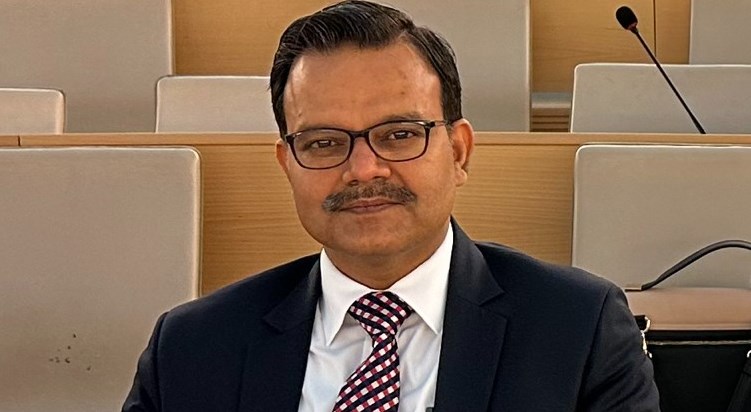
Citing AB PM-JAY (Ayushman Bharat Pradhan Mantri Jan Aarogya Yojana) and the Ayushman Bharat Digital Mission (ABDM), Barnwal underscored the importance of developing AI solutions that are context-ready, inclusive, and reflective of India’s demographic and regional diversity.
Sunil Kumar Barnwal, chief executive officer, National Health Authority
Kanpur: Sunil Kumar Barnwal, chief executive officer,National Health Authority(NHA), emphasised the strategic importance of building a trusted, federated AI ecosystem for healthcare, marking a shift from experimentation to benchmarked and reliable AI models.
Citing AB PM-JAY (Ayushman Bharat Pradhan Mantri Jan Aarogya Yojana) and the Ayushman Bharat Digital Mission (ABDM), he underscored the importance of developing AI solutions that are context-ready, inclusive, and reflective of India’s demographic and regional diversity.
The NHA, in collaboration with the ICMR–National Institute for Research in Digital Health and Data Science (NIRDHDS) and the Indian Institute of Technology (IIT) Kanpur, organized the Federated Intelligence Hackathon on the development of Digital Public Goods (DPGs) for Health AI.
Held as a pre-event to the India AI Impact Summit 2026, this national initiative aimed to drive the creation of secure, privacy-preserving, and scalable artificial intelligence solutions for healthcare in India. The hackathon took place from 19th to 24th January 2026 at IIT Kanpur.
Barnwal highlighted that AI systems must be tested on diverse, population-scale datasets before deployment and noted that federated, consent-driven architectures allow innovation to scale without centralizing data, ensuring privacy and trust.
Dr. R S Sharma, Distinguished Visiting Professor, IIT Kanpur; former CEO, National Health Authority; and former Mission Director, UIDAI, highlighted how Digital Public Infrastructure and interoperable Digital Public Goods enable secure, scalable, and citizen-centric health data management.
Vivek Raghavan, CEO and Co-founder, SarvamAI, underscored the role of India’s layered digital health architecture in enabling AI-driven healthcare transformation at both population and individual levels.
He emphasized that data quality, privacy, and security are foundational to effective AI adoption and highlighted the importance of indigenous, open-source AI models and local AI sovereignty to ensure responsible innovation, reduce external dependencies, and maximise public-sector impact.
Through a partnership between IIT Kanpur and NHA, a benchmarking platform is being developed which can evaluate the efficacy of a given AI model. This platform ensures data privacy, institutional control and trust, while enabling innovation at national scale. All the models built during the hackathon were evaluated on this platform.