
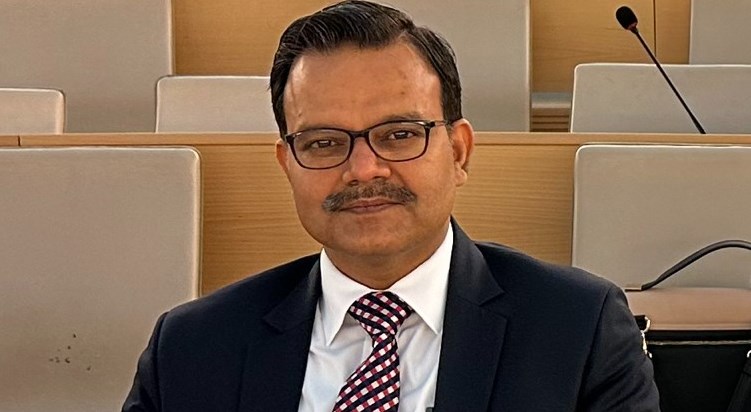
Sunil Kumar Barnwal, chief executive officer, National Health Authority, highlighted how initiatives such as NHM, ABDM, and Ayushman Bharat-PMJAY, which currently covers over 12 crore families, are leveraging data analytics, AI, and digital platforms to improve health outcomes, particularly in rural and underserved regions through early disease detection and predictive care models
New Delhi: Sunil Kumar Barnwal, chief executive officer,National Health Authority (NHA), emphasized the urgent need for a paradigm shift in healthcare delivery–from a “one-size-fits-all” approach to hyper-personalised, preventive, and citizen-centric care, in line with evolving expectations in the digital era.
“Healthcare, like other services today, must move towards hyper-personalization, creating informed choices for individuals and employees alike,” Barnwal notedwhile addressing “The Visit Health presents Wellness & HealthTech Summit 2025” in New Delhi, held recently.
Highlighting the transformative role of the Ayushman Bharat Digital Mission (ABDM), launched in September 2021, Barnwal described it as the foundational digital backbone enabling interoperable healthcare across the country.
He underscored how ABDM facilitates verified teleconsultations, consent-based health record sharing, and patient-owned longitudinal health data, while remaining fully compliant with data privacy frameworks such as the Digital Personal Data Protection (DPDP) Act.
Barnwal’s address included:
Preventive and Personalized Care:
Strategic investments in preventive healthcare can significantly reduce long-term treatment costs. Barnwal advocated for structured and age- and gender-specific annual health check-ups, emphasizing that prevention reduces avoidable hospitalizations.
Integration with National Health Programs:
He highlighted how initiatives such as NHM, ABDM, and Ayushman Bharat-PMJAY, which currently covers over 12 crore families, are leveraging data analytics, AI, and digital platforms to improve health outcomes, particularly in rural and underserved regions through early disease detection and predictive care models.
Mental Health and Workplace Well-being:
Barnwal stressed the need for leaders to adopt a “person-first” approach, fostering psychological safety at workplaces amidst everyday pressures and uncertainties.
“Leadership today requires empathy–creating environments where individuals feel safe, supported, and heard,” he emphasized.
Roadmap to India @2047:
Looking ahead, Barnwal called for sustained investment in HealthTech innovation, robust regulatory frameworks for privacy and cybersecurity, and skill development to build an integrated and intelligent healthcare ecosystem–positioning India as a global leader in digital health.
His address aligned strongly with the summit’s overarching theme of building resilient, humane, and future-ready workplaces, while reinforcing the importance of public-private partnerships in scaling HealthTech solutions to address pressing challenges such as lifestyle diseases, mental health concerns, and workforce burnout.
The event brought together policymakers, healthcare innovators, corporate leaders, HR visionaries, and well-being champions to deliberate on the future of healthcare and workplace wellness in India.