

“I cannot pretend that COP30 has delivered everything that is needed. The gap between where we are and what science demands remains dangerously wide.”U.N. Secretary-General Antonio Guterres
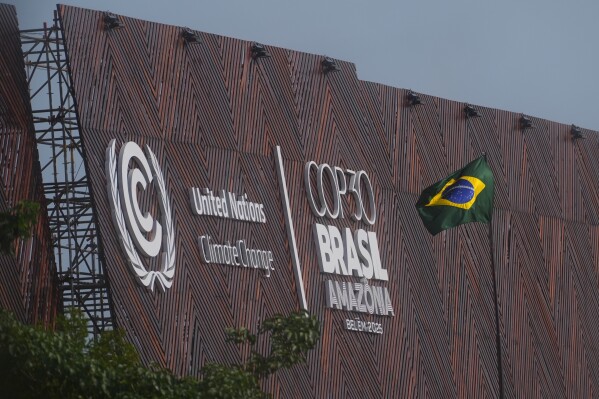
BELEM, Brazil: After two weeks of negotiations, this year’s United Nations climate talks ended Saturday with a compromise that some criticised as weak and others called progress.The deal finalised at the COP30 conference pledges more money to help countries adapt to climate change, but lacks explicit plans to transition away from the fossil fuels such as oil, coal and gas that heat the planet.
The conference didn’t do as much as scientists thought the world needed. It wasn’t as meaningful as activists and Indigenous people demanded. Few countries got everything they wanted. And the venue even caught fire.
But that disappointment is mixed with a few wins and the hope for countries to make more progress next year.
Leaders tried to nail down specifics on fighting climate change
Leaders have been working on how to fight the impacts of climate change, such as extreme weather and sea level rise, for a decade. To do that, every country had the homework of writing up their own national climate plans and then reconvened this month to see if it was enough.
Most didn’t get a good grade and some haven’t even turned it in.
Brazil, host of the climate conference known as COP30, was trying to get them to cooperate on the toughest issues like climate-related trade restrictions, funding for climate solutions, national climate-fighting plans and more transparency on measuring those plans’ progress.
More than 80 countries tried to introduce a detailed guide to phase out fossil fuels over the next several decades. There were other to-do items on topics including deforestation, gender and farming.
Countries reached what critics called a weak compromise
Nations agreed to triple the amount of money promised to help the vulnerable countries adapt to climate change. But they will take five more years to do it. Some vulnerable island countries said they were happy about the financial support.
But the final document didn’t include a road map away from fossil fuels, angering many.
After the agreement was reached, COP President Andre Correa do Lago said Brazil would take an extra step and write their own road map. Not all countries signed up to this, but those on board will meet next year to specifically talk about the fossil fuel phase out. It would not carry the same weight as something agreed to at the conference.
Also included in the package were smaller agreements on energy grids and biofuels.
U.N. Secretary-General Antonio Guterres said the deal shows “that nations can still come together to confront the defining challenges no country can solve alone.” But he added: “I cannot pretend that COP30 has delivered everything that is needed. The gap between where we are and what science demands remains dangerously wide.”
Responses ranged from happy to angry
“Given what we expected, what we came out with, we were happy,” said Ilana Seid, chair of the Alliance of Small Island States.
But others felt discouraged. Heated exchanges took place during the conference’s final meeting as countries snipped at each other about the fossil fuel plan.
“I will be brutally honest: The COP and the UN system are not working for you. They have never really worked for you. And today, they are failing you at a historic scale,” said Juan Carlos Monterrey Gomez, a negotiator for Panama.
Jiwoh Abdulai, Sierra Leone’s environment and climate change minister said: “COP30 has not delivered everything Africa asked for, but it has moved the needle.” He added: ”This is a floor, not a ceiling.” The real outcome of this year’s climate talks will be judged on “how quickly these words turn into real projects that protect lives and livelihoods,” he said.
Talks set against the Amazon rainforest
Participants experienced the Amazon’s extreme heat and humidity and heavy rains that flooded walkways. Organisers who chose Belem, on the edge of the rainforest, as the host city had intended for countries to experience firsthand what was at stake with climate change, and take bold action to stop it.
But afterward, critics said the deal shows how hard it is to find global cooperation on issues that affect everyone, most of all people in poverty, Indigenous people, women and children around the world.
“At the start of this COP, there was this high level of ambition. We started with a bang, but we ended with a whimper of disappointment,” said former Philippine negotiator Jasper Inventor, now at Greenpeace International.
Indigenous people, civil society and youth
One of the nicknames for the climate talks in Brazil was the “Indigenous peoples’ COP.” Yet some in those groups said they had to fight to be heard.
Protesters from Indigenous groups twice disrupted the conference to demand a bigger seat at the table. While Indigenous people’s rights weren’t officially on the agenda, Taily Terena, an Indigenous woman from the Terena nation in Brazil, said so far she is happy with the text because for the first time it includes a paragraph mentioning Indigenous rights.
She supported countries speaking up on procedural issues because that’s how multilateralism works. “It’s kind of chaotic, but from our perspective, it’s kind of good that some countries have a reaction,” she said.
United Nations climate talks in Brazil reached a subdued agreement Saturday that pledged more funding for countries to adapt to the wrath of extreme weather. But the catch-all agreement doesn’t include explicit details to phase out fossil fuels or strengthen countries’ inadequate emissions cutting plans, which dozens of nations demanded.
The Brazilian hosts of the conference said they’d eventually come up with a road map to get away from fossil fuels working with hard-line Colombia, but it won’t have the same force as something approved at the conference called COP30. Colombia responded angrily to the deal after it was approved, citing the absence of wording on fossil fuels.
The deal, which was approved after negotiators blew past a Friday deadline, was crafted after hours of late night and early morning meetings.
After the deal was approved, COP30 President André Corrêa do Lago said the tough discussions started in Belem will continue under Brazil’s leadership until the next annual conference “even if they are not reflected in this text we just approved.”
Deal gets mix of lukewarm praise and complaints
Many gave the deal lukewarm praise as the best that could be achieved in trying times, while others complained about the package or the process that led to its approval.
“Given the circumstances of geopolitics today, we’re actually quite pleased with the bounds of the package that came out,” said Palau Ambassador Ilana Seid, who chaired the coalition of small island nations. “The alternative is that we don’t get a decision and that would have been a worse alternative.”
“This deal isn’t perfect and is far from what science requires,” said former Ireland President Mary Robinson, a fierce climate advocate for the ex-leaders group The Elders. “But at a time when multilateralism is being tested, it is significant that countries continue to move forward together.”
Absent from the talks was the administration of U.S. President Donald Trump.
“This year there has been a lot of attention on one country stepping back,” U.N. climate chief Simon Stiell said, referring to the United States’ withdrawal from the landmark 2015 Paris agreement. “But amid the gale-force political headwinds, 194 countries stood firm in solidarity — rock-solid in support of climate cooperation.”
Some countries said they got enough out of the deal.