
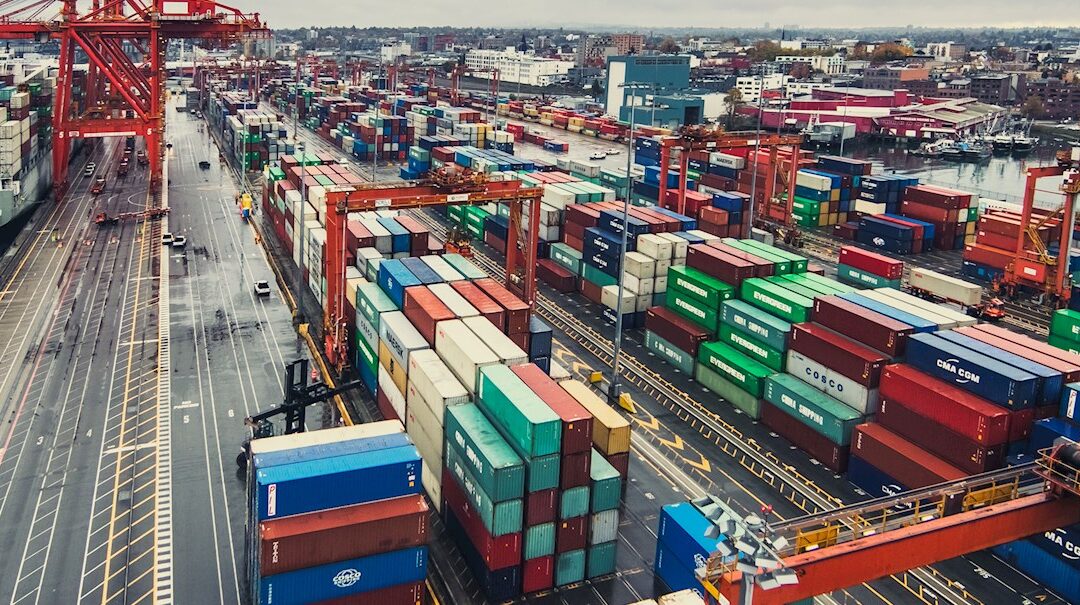
In the coming years, sea level rise, more intense storm surge and jack-up tropical storms will visit many of the world’s nearly 3,800 ports. Most of those ports are coastal; About a third are located in tropical bands vulnerable to the most powerful effects of climate change
The delicate choreography of ships, trains and trucks at the world’s ports has been severely disrupted by the pandemic, and the turmoil is unlikely to end soon. If a virus could so disproportionately affect the journey of a plastic toy or automobile from point A to point B, consider the potential effect of something even more widespread and powerful: water.
In the coming years, sea level rise, more intense storm surge and jack-up tropical storms will visit many of the world’s nearly 3,800 ports. Most of those ports are coastal; About a third are located in tropical bands vulnerable to the most powerful effects of climate change.
“The magnitude and cost of these disruptions is expected to increase if climate change causes sea level rise and storms to become stronger than expected in the future,” said a report from the Environmental Defense Fund.
Ports cannot easily escape the effects of water. When excessive rain caused floods in Itajai, Brazil in 2017, the floodwaters generated currents strong enough to prevent ships from berthing. The port was closed for three weeks. Just as too much water is a danger, it is also not enough. In 2018, an extended drought along Germany’s Rhine river lowered water levels and made it impossible for some ships to pass.
“Ports, working waterfronts and coastal infrastructure are generally under a lot of pressure from many sides,” said Austin Baker, chair of the Department of Maritime Affairs at the University of Rhode Island.
“They are located in highly sensitive environments which are often in rivers where river systems meet the sea. They are there because it was a good way to bring goods from one country to another, and then through a river system. Had to get inland.”
Because ports were the early tenants of coastal cities, there is no place where they could easily retreat from rising seas. As Baker told me, cities grew up around ports. And then the cities pushed the ports further towards the sea.
Just as cities surround ports, so are transport networks that enable goods to travel by the inland sea. “They need all these other infrastructure connections that have grown around them over the years — rail systems and highway systems and pipelines and that sort of thing,” Baker said.
In most prosperous, or even moderate cities, the land required for such systems has long been spoken of. As a result, most train tracks, roadways, warehouses and other infrastructure adjacent to ports will not be moved to higher ground away from the water; They have to be adapted to deal with the growing threat.
The port infrastructure is constantly evolving, said Philip Orton, professor of ocean engineering at the Stevens Institute of Technology. Ports are accustomed to incorporating new technologies – and the largest ports, which have had to evolve to handle the needs of giant, 1,300-foot-long container ships, tend to be the most flexible. But the loading and transit areas behind ports are generally less innovative and less flexible.
When Hurricane Mary hit Southern California in August 2014, shipping operations were halted for several days due to damage to the Port of Long Beach. But as noted in a later report, it took months for the surrounding roads and facilities to return to normal.
Seas have been rising steadily for centuries, but the projected increase in this century is markedly different, as are the results. The basic formula is this: Greenhouse gas emissions generate higher temperatures. Those high temperatures heat the water, expanding the volume of the ocean.
As temperatures rise, ice deposited at the poles and elsewhere – including mountain glaciers – melts, adding to the water content. This is a powerful feedback loop that will dramatically increase the rate of ocean rise as the 21st century progresses.
More than 200 feet of potential global sea rise is currently stored in ice. According to the United Nations Conference on Trade and Development, the world’s glaciers will lose between 18% and 36% of their ice mass in this century. Meanwhile, the Greenland and Antarctic ice sheets are melting at a faster rate than previously thought.
Millions of years ago, before those ice sheets materialized, water covered far more Earth than it does now.
For example, the northern rim of the Gulf of Mexico, along what we now call Alabama and Mississippi, did not have coastlines. It was in present-day Illinois.
The Gulf won’t flood Chicago any time soon. But at sea level, a one-foot vertical rise can produce about 100 feet of horizontal spread. In many low-lying places, causing severe flooding.
Worldwide sea level rise will not be uniform. But according to U.S. government estimates, that could increase by nearly two feet by 2100 if the world reduces greenhouse gas emissions significantly. If it doesn’t, the National Oceanic and Atmospheric Administration notes, the mean sea level rise for the contiguous US could exceed seven feet. Ports, like other coastal real estate and infrastructure, are very much in the flood zone.
A paper by a team of researchers at Princeton and Rutgers points to a “preparation dilemma” in the US.
“While the federal government seeks to protect citizens from natural disasters, it has limited control over efforts to do so,” the researchers write.
“Both the risk and vulnerability to coastal hazard are largely shaped by state and local land use and building codes.”
One thing that helps increase political and financial support for resilience upgrades, he says, is a strong storm:
In one model of the policy process, floods, hurricanes and other extreme weather events have been viewed as “focused events”, whereby they focus the attention of elected officials and the public on the current problem.
During a focused event, a “policy window” of opportunity opens for a short period, and advocates emerge, rushing to put forward their preferred solutions before the window closes.
For the Port Authority of New York and New Jersey, Hurricane Sandy was a focus event in 2012. Sandy closed most ports for a week, resulting in the diversion of 25,000 shipping containers to other ports.
Waterways were to be surveyed and cleaned. Some cargo terminals and maritime support facilities were out of commission for a long time due to power failures and damaged equipment. For example, oil terminals could not unload products from tankers because they lacked power.
The damage to Port Authority operations, which includes commuter rail, reached an astonishing $2.2 billion.
The Port Authority’s resilience and sustainability efforts after the storm included a complex analysis of the port’s future, but also some very basic problem solving. For example, engineers realized that the motors for container cranes could be raised off the ground to avoid being submerged.
For the most part, cranes, such as electrical substations and other critical infrastructure, are not owned by the Port Authority. Therefore upgrades – which often means raising – require coordinated action with various private partners. Austin Baker said mitigation efforts at US ports would need to bring together divergent interests.
Given the central role of ports in global commerce, however, those interests involve more than just shipping companies and those directly engaged in port activities.
Businesses and consumers of all kinds, with most land closures, depend on ports. Yet not all of those ports will prove to be reliable in the face of the rising waters of the 21st century. Baker said,
“The thousands of small and medium ports that provide these really essential services to their local economies and local areas do not have the resources they need and are already operating with outdated infrastructure.” Huh.”
Giants like Long Beach and the Ports of New York and New Jersey have the financial power and expertise to ride out the rising seas. However, as the water rises, hundreds of small harbors remain in the hope that their fate will not be hit by the next waterborne “focusing event”.
bloomberg