
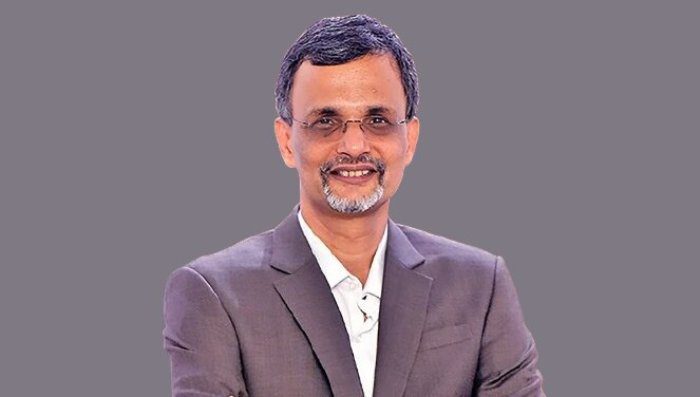
”We are now USD 3.3 trillion, it is not such a difficult target to reach. Then if you simply assume 10 per cent nominal GDP growth in dollar terms, then you get to USD 10 trillion by 2033-34 and another doubling with the same rate, said Chief Economic Adviser (CEA) V Anantha Nageswaran
New Delhi:
Chief Economic Adviser (CEA) V Anantha Nageswaran on Tuesday said India would become a USD 5 trillion economy by 2026-27 and USD 10 trillion by 2033-34.
Addressing an event organised by UNDP India, Nageswaran said India is relatively better placed than other emerging economies.
”On the face of it, looks optimistic, even ambitious, but if we get to USD 5 trillion by 2026-27.
”We are now USD 3.3 trillion, it is not such a difficult target to reach. Then if you simply assume 10 per cent nominal GDP growth in dollar terms, then you get to USD 10 trillion by 2033-34 and another doubling with the same rate,” he said.
In 2019, Prime Minister Narendra Modi envisioned to make India a USD 5 trillion economy and global powerhouse by 2024-25.
The CEA said there is a need for climate tagging of the budget.
”GDP is the worst measure of economic activities but for all others. Because everything else you take, comes with their own limitations and serious subjectivity,” he noted.
The World Bank has cut India’s economic growth forecast for the current fiscal to 7.5 per cent as rising inflation, supply chain disruptions, and geopolitical tensions taper recovery.
India’s economy grew 8.7 per cent in the last fiscal (2021-22) against a 6.6 per cent contraction in the previous year.
In its third monetary policy of 2022-23, the Reserve Bank retained its GDP growth forecast at 7.2 per cent for the current fiscal but cautioned against negative spillovers of geopolitical tensions and a slowdown in the global economy.
Nageswaran said India will have to start investing in getting the right supply of metals and minerals required to fuel the energy transition.
Earlier, Nageswaran had said the country has shown exemplary resilience in recovery from the COVID-19 pandemic crisis.
“India has shown an exemplary resilience in recovering from a crisis due to the COVID-19 pandemic,” he said.
All major activities and parameters of the economy have crossed their pre-COVID levels, and it is now enjoying macroeconomic tailwinds, he added.
Quick and precise steps have been taken by the government at the policy level, which was supported by the Reserve Bank of India’s timely interventions, the advisor noted.
Compared to developing and developed countries, the Indian economy is firm and stable in terms of various fundamentals. The developed world is moving from low inflation to high inflation and it is in such times that we have managed to keep inflationary pressure under check, he said.
The CEA said he is hopeful that as per the projections of the International Monetary Fund, India is heading towards achieving a GDP size of USD five trillion by 2027.
“Today, we have a strong revival of private investment, and the country has comfortable forex reserves to withstand turbulence in the international currency market. The exponential growth of digital payments in India during the last few years is an indication enough of fast changes in the informal sector,” Nageswaran added.