
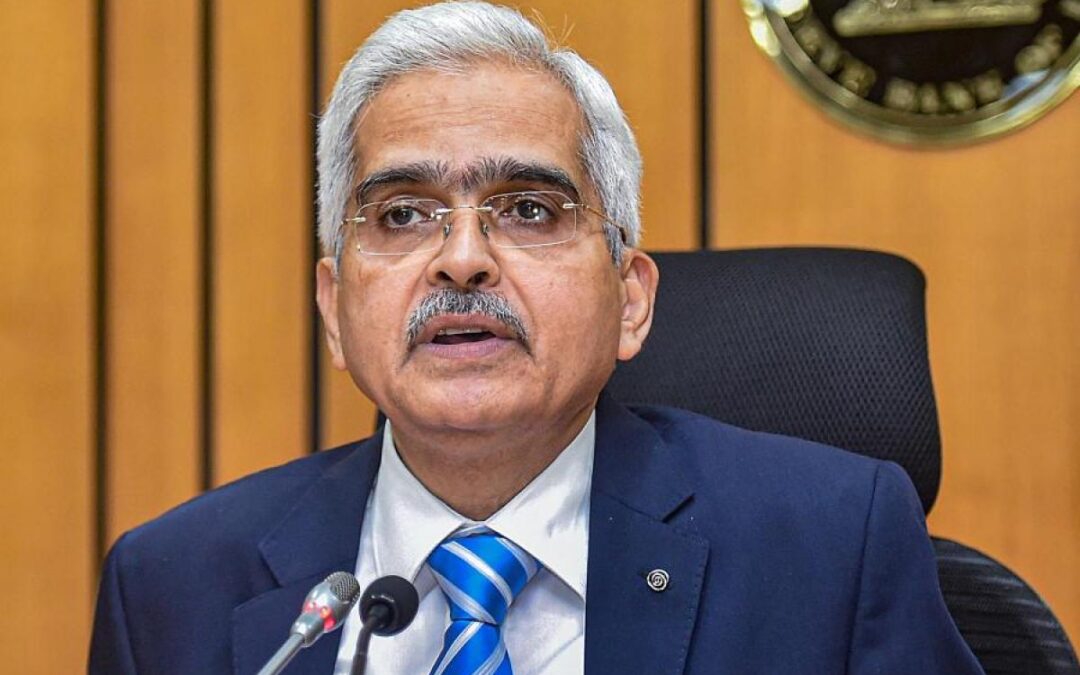
Shaktikanta Das,governor, Reserve Bank of India
The monetary policy committee (MPC) held the lending rate, or the repo rate, at 4%. The reverse repo rate, or the key borrowing rate, was kept unchanged at 3.35%
“Overall, taking into consideration the outlook for inflation and growth, in particular the comfort provided by improving inflation outlook, the uncertainties related to Omicron and global spillovers, the MPC was of the view that continued policy support is warranted for a durable and broadbased recovery,” RBI governor Shaktikanta Das said in his address
MUMBAI:
The Reserve Bank of India(RBI held its key lending rate steady at a record low, as expected, on Thursday, but surprised markets by also keeping its deposit rate unchanged as some economists had expected a hike to re-align it with short-term money market rates.
The monetary policy committee (MPC) held the lending rate, or the repo rate, at 4%. The reverse repo rate, or the key borrowing rate, was kept unchanged at 3.35%.
The MPC voted unanimously to maintain the status quo on the repo rate and by a majority of 5-1 to retain the accommodative policy stance.
“Overall, taking into consideration the outlook for inflation and growth, in particular the comfort provided by improving inflation outlook, the uncertainties related to Omicron and global spillovers, the MPC was of the view that continued policy support is warranted for a durable and broadbased recovery,” RBI governor Shaktikanta Das said in his address.
This is the 10 consecutive policy review when the RBI has decided to maintain a status quo on key policy rates. The central bank has not changed repo and reverse repo rates since May 2020.
Retail inflation accelerated to a five-month high of 5.59% in December from a year earlier, while wholesale price-based inflation, a proxy for producer prices, eased marginally to 13.56%, but remained in double-digits for nine straight months.
It has retained its inflation projection at 5.3 per cent for the current financial year.
The RBI said inflation based on consumer price index (CPI) is expected to come well below its upper tolerance level, at 4.5 per cent, in the next fiscal year beginning April 2022, helped by fresh crop arrivals, supply-side interventions, as well as prospects of a good monsoon.
However, the hardening of crude oil prices presents a major upside risk to the inflation outlook.
Growth projected at 7.8%
The central bank pegged the economic growth rate for 2022-23 at 7.8 per cent, down from 9.2 per cent expected in 2021-22, in view of uncertainties on account of the pandemic and elevated global commodity prices.
The RBI’s projection for next financial year is lower than 8-8.5 per cent projected by the Finance Ministry in the recent Economic Survey which was tabled in Parliament earlier in the month.
Das said, ”recovery in domestic economic activity is yet to be broad-based, as private consumption and contact-intensive services remain below pre-pandemic levels.”
He observed that the announcements in the Union Budget 2022-23 on boosting public infrastructure through enhanced capital expenditure are expected to augment growth and crowd in private investment through large multiplier effects.
”Global financial market volatility, elevated international commodity prices, especially crude oil, and continuing global supply-side disruptions pose downside risks to the outlook,” he added.
Overall, he said, there is some loss of the momentum of near-term growth while global factors are turning adverse.
“RBI Digital Rupee will be launched in the year 2022-23. We can’t predict a timeline for its release yet. There’ll be no difference between Digital Rupee & the normal rupee. Cryptocurrency is privately created and it is a threat to financial stability,” said Das.
India’s 10-year benchmark bond yield fell 4 basis points to 6.7610 after the RBI policy decision, while rupee weakened against the dollar to 75.0275.
The NSE Nifty 50 index rose 0.27% to 17,511, in morning trade, while the S&P BSE Sensex was up 0.27% at 58,622.30.
The central bank has slashed the repo rate by a total of 115 basis points (bps) since March 2020 to soften the blow from the coronavirus pandemic and tough containment measures. The rate is now 250 bps below its level at the beginning of 2019, when the easing cycle began.