
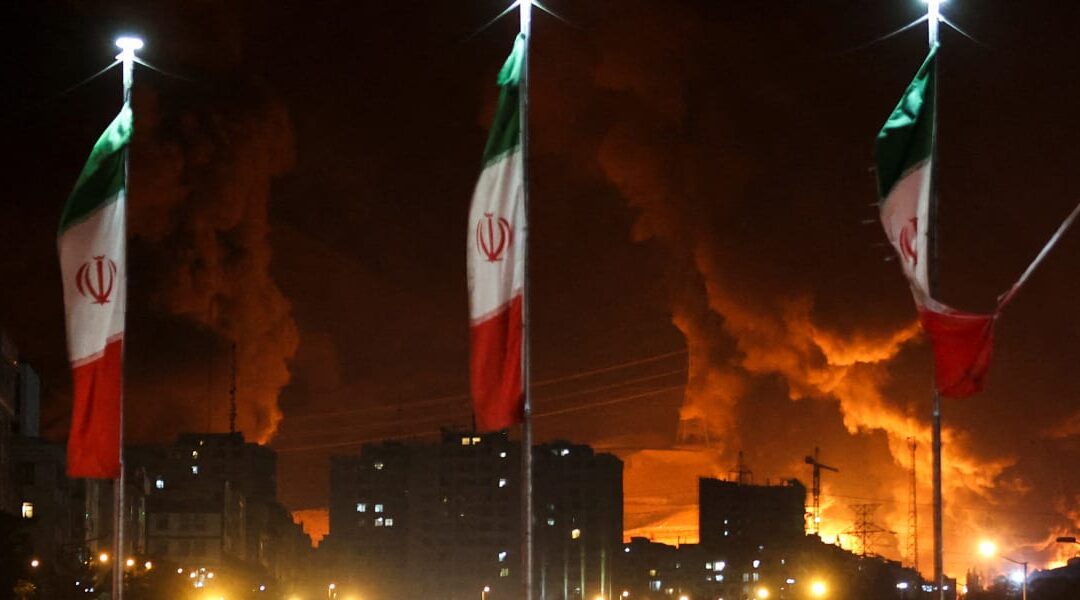
For insurers and reinsurers, the key issue is not only the probability of attacks but also how losses may accumulate across multiple insurance lines. Terrorism and political violence incidents can trigger claims simultaneously in property, marine, aviation, and business interruption policies.cautions international credit ratings agency Morningstar DBRS
Hostilities in the Middle East will likely increase underwriting uncertainty in the global terrorism and political violence insurance markets.
We believe that the insurance and reinsurance industry remains well positioned to absorb moderate terrorism and political violence losses because of its strong
capitalization and diversified underwriting portfolios.
Nevertheless, prolonged global geopolitical and military tensions may increase underwriting volatility, tighten reinsurance terms, and lead to more selective underwriting of politically exposed risks.
For insurers and reinsurers, the key issue is not only the probability of attacks but also how losses may accumulate across multiple insurance lines. Terrorism and political violence incidents can trigger claims simultaneously in property, marine, aviation, and business interruption policies.
In addition,distinguishing between terrorism, sabotage, cyber incidents, and acts of war may become more difficult,increasing the potential for insurance coverage disputes.
Demand for terrorism and political violence insurance typically increases during periods of geopolitical tension as businesses reassess their exposure to politically motivated disruptions.
Organizations with assets in politically sensitive regions or high-profile urban areas may seek broader coverage to protect against the consequences of terrorism, civil unrest, or sabotage. The terrorism and political violence insurance market remains relatively specialized but well supported by international insurers and reinsurers. Nonetheless, geopolitical tensions are increasing underwriting complexity and accumulation concerns for these insurers.
Potential Spillover of Political Violence Risk
Major conflicts have historically increased the risk of retaliatory or politically motivated violence outside the immediate conflict zone. In the current context of the Middle East conflict, potential targets may include diplomatic facilities, critical infrastructure, commercial buildings, and locations associated with Western or Israeli interests. North America and Western Europe are likely to remain the most exposed regions outside the Middle East because of their concentration of high-value insured assets and symbolic targets.
Although catastrophic attacks remain relatively rare, even smaller incidents can result in substantial insured losses if they occur in densely populated urban areas or involve high-value assets. Hotels,shopping centers, entertainment venues, and transportation hubs are particularly relevant exposures for insurers because they combine significant insured values with high public visibility.
However,catastrophic attacks can be extremely expensive for the insurance industry. According to the Federal Insurance Office of the U.S. Department of Treasury, the events of September 11, 2001, resulted in approximately $59 billion of insured losses in 2024-adjusted dollars, about two-thirds of which were absorbed by reinsurers.
Critical infrastructure assets may also face increased risks. Ports, airports, pipelines, data centers, and logistics hubs may become targets for sabotage or politically motivated attacks given their economic importance and symbolic value.
The interconnected nature of global supply chains amplifies these risks.
Disruption to a single infrastructure asset or transportation hub can result in insured losses across multiple lines, including property damage, contingent business interruption, and marine cargo claims.
Insurance Market Implications and Reinsurers’ Response
The global market for terrorism and political violence insurance is relatively specialized and concentrated among a limited number of insurers and managing agents. Coverage is frequently written through Lloyd’s of London’s syndicates and specialty insurers.
Political violence policies typically provide broader protection than stand-alone terrorism insurance, covering risks such as sabotage, riots,civil commotion, insurrection, and politically motivated strikes.
Coverage limits and large commercial risks often reach several hundred million dollars through layered placements involving several insurers.
Demand for such policies usually increases during periods of geopolitical tension and social unrest.
Businesses with internationally exposed operations, including multinational corporations, airlines,logistics operators, infrastructure owners, and hospitality groups, may re-evaluate risk management strategies and seek broader coverage.
The market has experienced competitive conditions in recent years as additional underwriting capacity entered the political violence sector. However, a sustained geopolitical crisis could lead insurers to reexamine pricing and coverage terms. For instance, assets considered politically sensitive may face higher premiums or lower available limits.
The reinsurance market will play a central role in shaping the availability and cost of terrorism and political violence insurance.
Reinsurers such as Munich Re, Swiss Re, Hannover Re, and SCOR SE provide significant capital support to specialty insurance markets. Their underwriting appetite directly
influences the capacity available to primary insurers writing political violence risks.
If geopolitical tensions persist or escalate, reinsurers may respond by tightening underwriting standards, raising attachment points, or limiting capacity for certain high-risk exposures. This would increase retention levels among primary insurers and likely lead to higher premiums for policyholders.
Reinsurance may also re-assess their accumulation exposure across multiple insurance lines and geographic regions. Managing accumulation is a key focus for reinsurers during periods of geopolitical instability.
Role of Government Terrorism Backstops
Government-backed terrorism insurance programs provide an additional layer of resilience to insurance markets in several major economies. Many of these government backstops were implemented after the September 11 attacks, when the dislocation of the private terrorism insurance market basically ceased to provide coverage for these risks at any price.
Although private players came back to the terrorism insurance market, many governments still provide backstops and guarantees for terrorism risks.
In the United States, the Terrorism Risk Insurance Program (TRIP) provides a federal backstop for insured losses arising from certified acts of terrorism and is currently authorized through 2027.
The program shares losses between insurers and the U.S. federal government once certain thresholds are met, helping uphold market capacity. In the United Kingdom, Pool Reinsurance Company Limited (Pool Re) provides reinsurance coverage for terrorism losses affecting commercial property and is backed by an unlimited guarantee from His Majesty’s Treasury. Pool Re has expanded its coverage in recent years to include risks such as cyber-triggered terrorism. Similar programs operate in several European
countries.
For example, GAREAT in France and Extremus in Germany provide government-supported reinsurance capacity for terrorism-related losses.
These mechanisms help reduce the likelihood that insurers will withdraw from terrorism markets following large losses. However, such programs typically apply only to certified acts of terrorism and may not respond to events categorized as war or certain forms of political violence.
Aggregation Risk Across Multiple Lines
Marine and aviation insurers are often among the first to experience the effects of geopolitical escalation because shipping routes and airspace may be disrupted by regional conflicts. Property insurers may also face losses if attacks occur in major urban centers or involve commercial infrastructure. Cyber risk also increasingly intersects with political violence exposures as well.
Statelinked cyber operations targeting infrastructure or logistics networks may result in losses difficult to categorize within traditional insurance frameworks.
Since many global insurers operate across multiple specialty lines, geopolitical shocks, such as war in the Middle East and the closure of the Strait of Hormuz, can lead to correlated losses across their underwriting portfolios.
The principal concern for insurers in a protracted geopolitical conflict is loss aggregation rather than frequency of attacks.
Credit Implications for Insurers
Most large global insurers and reinsurers remain resilient amid heightened geopolitical risks. The sector generally maintains strong capital buffers and diversified underwriting portfolios that help absorb localized shocks.
However, the effect on credit profiles from the ongoing conflict in the Middle East may
vary depending on insurers’ exposures to specialty insurance lines and politically sensitive regions.
Insurers with concentrated exposure to marine war risk, aviation, or political violence insurance may experience greater earnings volatility than diversified carriers.
Reinsurance protection also acts as a key mitigating factor for direct carriers. Insurers with solid reinsurance programs and conservative retention levels are typically better positioned to manage large or correlated losses arising from geopolitical events. This is particularly important for insurance companies providing terrorism and political violence sublimits as part of their “all-risk” commercial policies.
Investment portfolios may also experience indirect effects. Geopolitical instability is already causing financial market volatility and may affect insurers’ capital positions and investment income. Although such impacts are usually secondary to underwriting exposures, they can still influence credit metrics during periods of market stress.
Overall, we believe that the global insurance sector’s strong capitalization and diversified underwriting base should help absorb the immediate impact of the geopolitical tensions, including a potential increase in terrorism and political violence insurance losses.
Nevertheless, prolonged hostilities could increase underwriting volatility and lead to tighter conditions in certain specialty insurance markets,particularly for assets perceived as politically or strategically sensitive.
Source-Morningstar DBRS