
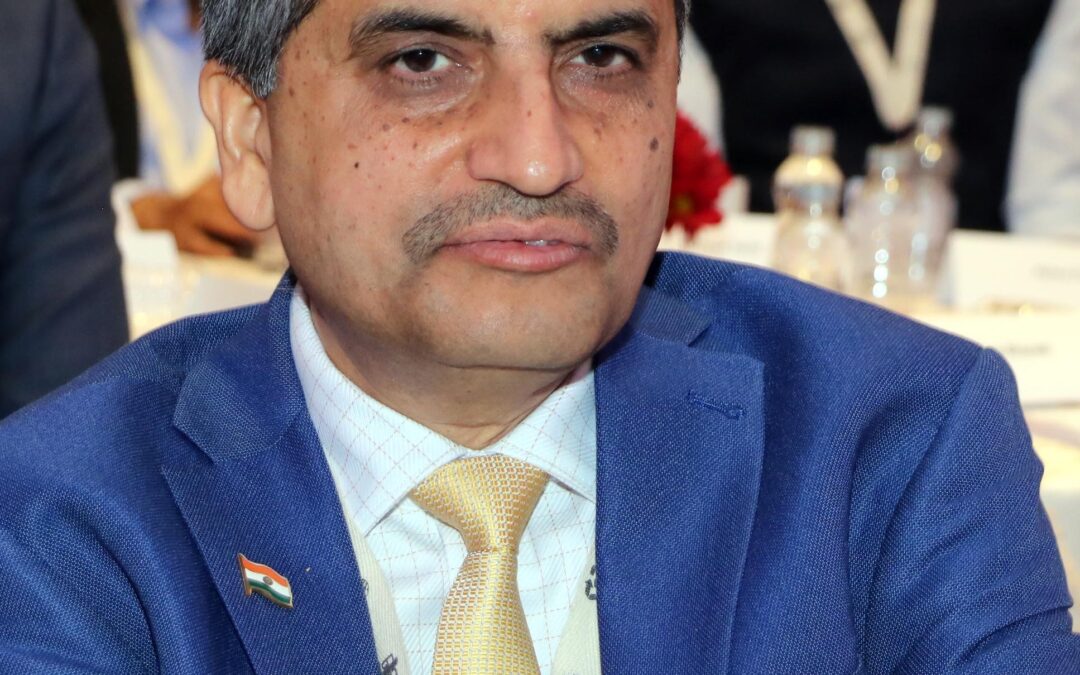
Ajay Seth, chairman, IRDAI
In the last three years, health insurance premiums have been going up by about 10 to 12 per cent, whereas inflation is about five –six per cent. If it increases by another three to four percentage points more than inflation, it becomes unaffordable, Ajay Seth, chairman, IRDAI.
Hyderabad:Intensifying its efforts that would help larger enrollements of hospitals in the common empanelment system of insurers, the insurance regulator IRDAI has convened its next meeting of insurers and hospitals on Mar 17 in New Delhi to arrive at a consensus among them about standard treatment procejures and rates.
“To try to get both payers(insurers) and healthcate provider(hospitals) together, we have been working with the industry and trade body Confederation of Indian Industry (CII) and we had two separate rounds of meetings, first with the payers, then with the providers. Now, March 17, we are going to have a combined meeting on how to get issues resolved. We will focus on the real sector challenges, where the shoe pinches whom, so that the insurance industry can move forward,’’ said Ajay Seth, chairman, IRDAI.
“We are planning to conduct a series of meetings with insurers and hospitals to arrive at some outcome,’’ he added.
Out of roughly over 70,000 hospitals in the country, till now General Insurance Counncil(GI Coumncil), the official representative body of all general insurers, have managed to empanel around 1000 hospitals out of 10,000 hospitals which have already applied for such empanelment through the GI Council’s portal.
In the common empanelment system the hospitals have to provide a standard rates across the treatments for all the insurers and can’t charge discriminatory rates for different insurers which is the case now.
Earlier, while addressing NHCX Innovation Meet (Finale) on March 7 at IIT-Hyderabad, Seth said in the last three years, health insurance premiums have been going up by about 10 to 12 per cent, whereas inflation is about five –six per cent. If it increases by another three to four percentage points more than inflation, it becomes unaffordable
“Health insurance is a very critical aspect of the insurance sector and the need and potential for any health insurance product today is to be in a position wherein it is has to be affordable for most of the Indians,” pointed out Seth.
At the moment, healthcare is a fragmented market. There are hospitals which offer tertiary care, corporate-run versus five-bed, ten-bed, single doctor-run hospitals, each providing services according to their ability, observed Seth.
“We have to get the state governments involved in a much bigger manner. They are a very integral part of the solution developed by the National Health Claims Exchange (NHCX) from two perspectives- one, a number of them are running their own schemes and second, they want to provide coverage to a much wider population.
The NHCX is a digital health infrastructure initiative by India’s National Health Authority (NHA) under the Ayushman Bharat Digital Mission(ABDM), designed to standardize and streamline health insurance claim processing. It acts as a secure, interoperable gateway for exchanging claim data between providers (hospitals) and payers (insurers/TPAs), reducing delays and paper usage.
`Sitting in Delhi or sitting in Hyderabad as a regulator, the hospitals will have to be brought on board with the active participation of state governments. So, we have to sit down with state governments to offer better health services for the people in that state.
“The health sector by and large is an unregulated sector, nothing wrong with it, it is not possible to regulate that sector. What is required is efforts to ensure regulation under the Clinical Establishment Act and bringing in more transparency. But who is the regulator there? The state government,” outlined Seth.
Also, there is a challenge of information asymmetry between the policy holder and insurers, he said.