
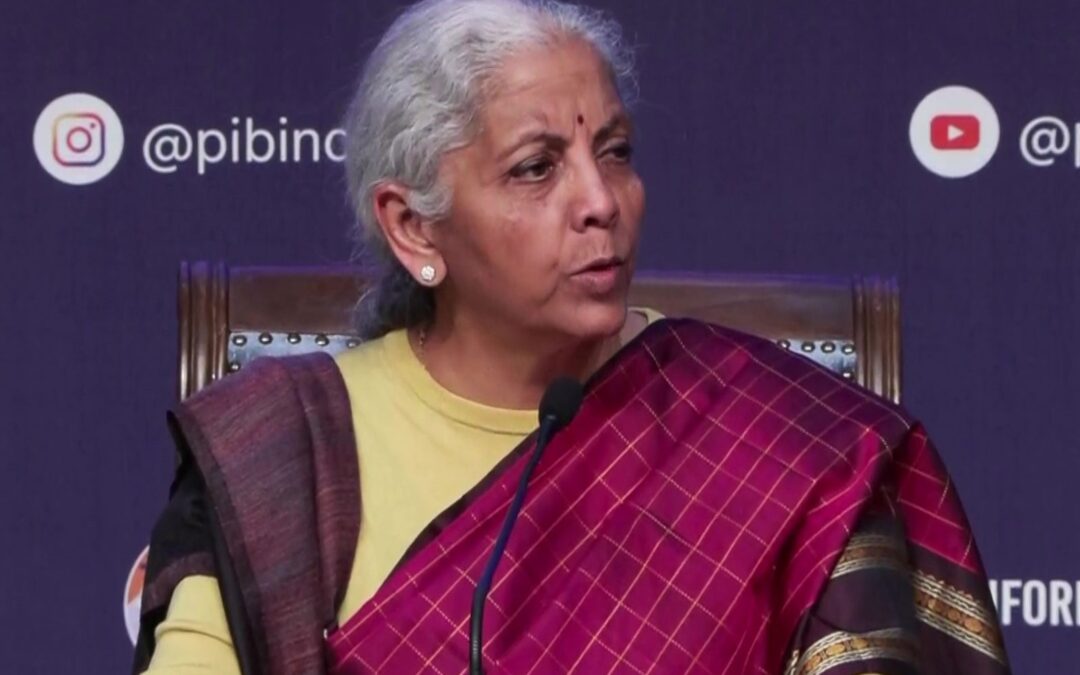
Nirmala Sitharaman,Finance minister
Allied Health Professional Institutes in 10 key disciplines will be set up and upgraded to create nearly one lakh skilled professionals over the next five years, through public and private sector participation. Additionally, a focused programme will train 1.5 lakh geriatric caregivers, addressing the rapidly rising long-term care needs of India’s elderly population. These measures will enhance diagnostics, preventive, rehabilitative, and public health services while positioning India as a global hub for skilled allied healthcare professionals.
New Delhi: The Union Budget 2026–27 provides significant scheme-wise enhancements across key flagship programmes of the Ministry of Health & Family Welfare, reflecting the Government’s sustained focus on strengthening healthcare access, infrastructure, service delivery, and human resource capacity.
The allocation for the Pradhan Mantri Jan Arogya Yojana (PM-JAY) in Budget- 2026–27 has been increased to ₹ 9,500 crore, registering an increase of ₹ 500 crore, representing a 5.56% rise over the revised estimates of FY 2025–26, aimed at expanding beneficiary coverage, improving service quality, and strengthening hospital networks.
Presenting Budget-26-27,Nirmala Sitharaman,Finance minister, said that the government is inspired by 3 Kartavyas: (1) to accelerate and sustain economic growth; (2) to fulfill aspirations and build the capacity of the population; (3) to ensure that every family, community, region and sector has access to resources. Health emerges as an important component of all the three Kartavyas in the Union Budget.
Recognising the growing healthcare demands arising from an ageing population, the rising burden of non-communicable diseases, and increasing global demand for skilled healthcare professionals, the Government has proposed a phased plan outlay of ₹ 980 crore over three years for the expansion and strengthening of allied and healthcare professionals’ education.
Under this initiative, Allied Health Professional Institutes in 10 key disciplines will be set up and upgraded to create nearly one lakh skilled professionals over the next five years, through public and private sector participation. Additionally, a focused programme will train 1.5 lakh geriatric caregivers, addressing the rapidly rising long-term care needs of India’s elderly population. These measures will enhance diagnostics, preventive, rehabilitative, and public health services while positioning India as a global hub for skilled allied healthcare professionals.
A major thrust has also been accorded to healthcare infrastructure development under the Pradhan Mantri Ayushman Bharat Health Infrastructure Mission (PM-ABHIM), with an allocation of ₹ 4,770 crore in Budget2026–27, comprising ₹ 570 crore under the Central Sector component and ₹ 4,200 crore under the Centrally Sponsored Scheme component as capital expenditure.
This represents an increase of ₹ 1925 crore, registering a 67.66% rise over the revised estimates of FY 2025–26 amounting to ₹ 2845 crore, aimed at expanding critical care blocks, integrated public health laboratories, district and sub-district hospitals, and other health infrastructure facilities.
The Union Budget 2026–27 accords strong priority to the upgradation and expansion of healthcare infrastructure and medical education.
Major investments have been proposed for the modernisation and expansion of existing healthcare facilities, including establishment and strengthening of Cancer Centres, expansion of Trauma and Emergency Care Services, development of Super Specialty Blocks, Transplant Units, Robotic Surgery Centres, and AI-enabled Centres in medical institutions.
The Budget also provides for a substantial increase in MBBS, postgraduate, super-specialty, and nursing seats, aimed at strengthening teaching, learning, and clinical training capacities, while promoting cutting-edge research and innovation in advanced biomedical fields, including artificial intelligence.
Furthermore, under the Pradhan Mantri Swasthya Suraksha Yojana (PMSSY), including establishment expenses of new AIIMS, the total allocation for FY 2026–27 stands at ₹ 11307 crore, covering both PMSSY under the Central Sector Scheme and Establishment Expenses of New AIIMS under Other Central Expenditure, marking an increase of ₹ 407 crore, representing a 3.73% rise over the Revised Estimates of FY 2025–26 of ₹ 10,900 crore.
This enhanced allocation will support the construction of new AIIMS, operationalisation of existing institutions, and the upgradation of Government Medical Colleges.
In the area of disease control and public health programmes, the allocation for the National AIDS and STD Control Programme has been increased to ₹ 3,477 crore in Budget 2026–27, reflecting an enhancement of ₹ 815.50 crore, representing a 30.64% rise over the Revised Estimates of FY 2025–26 of ₹ 2,661.50 crore. This includes strengthened support for Blood Transfusion Services, with a provision of ₹ 275 crore, marking an increase of ₹ 75 crore, registering a 37.50% rise over the Revised Estimates of FY 2025–26 of ₹ 200 crore, aimed at improving blood safety, availability, and quality standards nationwide.
Similarly, the allocation for the National Health Mission (NHM) has been enhanced to ₹ 39,390.00 crore, reflecting an increase of ₹ 2,289.93 crore, marking a 6.17% rise over the Revised Estimates of FY 2025–26 of ₹ 37,100.07 crore, to further strengthen primary healthcare delivery, maternal and child health services, and disease control interventions across States and Union Territories.
The Union Budget 2026–27 has accorded paramount importance to the health sector, with enhanced budgetary allocations and focused policy interventions for the Ministry of Health & Family Welfare (MoHFW), aimed at accelerating the comprehensive transformation of India’s healthcare ecosystem.
Presenting the Union Budget in Parliament, the Finance Minister outlined a comprehensive roadmap for healthcare reforms, reinforcing the Government’s commitment to universal health coverage and inclusive growth
The Union Budget 2026–27 marks a significant milestone in the Government’s ongoing efforts to strengthen India’s healthcare system, with a substantial enhancement in the allocation for the Ministry of Health & Family Welfare to ₹ 1,06,530.42 crores, reflecting an increase of nearly 10% over the revised estimates of FY 2025–26.
This enhanced allocation, including strengthened financial support for the Department of Health Research (DHR) amounting to ₹ 4,821.21 crore, represents a cumulative increase of over 194 %, translating into an additional ₹ 70,349.75 crore compared to the health budget of FY 2014–15.
The sustained rise in public expenditure underscores the Government’s unwavering commitment to expanding healthcare access, strengthening infrastructure, promoting medical research and innovation, and ensuring affordable and quality healthcare for all citizens.
To reduce treatment costs, especially for cancer and rare disease patients, the Budget proposes full exemption of basic customs duty on 17 life-saving drugs and extends import duty exemptions to additional rare diseases.
Mental healthcare has also been prioritised, with proposals to upgrade premier mental health institutions and establish a NIMHANS in North India. Emergency and trauma care centres are proposed in every district hospital to ensure round-the-clock access to critical medical services.
Five hubs for medical tourism and a Rs 10,000-crore
The FM also proposed to set up five hubs for medical tourism and a Rs 10,000-crore outlay for Biopharma Shakti programme over the next five years.
She said, “I propose to launch a scheme to support states in establishing five regional medical hubs.”
She said these hubs will serve as integrated healthcare complexes that combine medical, educational and research facilities.
She said, “I propose the Biopharma Shakti with an outlay of Rs 10,000 crore over the next five years, this will build the ecosystem for domestic production of biologics and biosimilars.”
The strategy will include a biopharma-focused network with three new National Institutes of Pharmaceutical Education and Research, popularly known as NIPERS, and upgrading seven existing ones, she added.
1,000 accredited Indian clinical trial sites
Sitharaman said the government will create a network of over 1,000 accredited Indian clinical trial sites.
Major clinical trial sites in the country are currently located in big cities like Mumbai, Delhi, Bengaluru, Chennai, and Hyderabad.
Presenting the Union Budget, she said, “I propose to launch a scheme to support states in establishing five regional medical hubs.”
She said these hubs will serve as integrated healthcare complexes that combine medical, educational and research facilities.
She said, “I propose the Biopharma Shakti with an outlay of Rs 10,000 crore over the next five years, this will build the ecosystem for domestic production of biologics and biosimilars.”
The strategy will include a biopharma-focused network with three new National Institutes of Pharmaceutical Education and Research, popularly known as NIPERS, and upgrading seven existing ones, she added.
“It will also create a network of 1,000 accredited India clinical trials sites. We propose to strengthen the central drug standard control organisation to meet global standards and approve timeframes, through an approval time frames through a dedicated scientific review cadre, and specialists,” Sitharaman said.