

Nick Leppard,Head of Property Direct & Facultative at Atrium, says: “Semiconductor companies have a huge amount of capital tied up in highly specialised facilities, so any damage to these facilities can result in dramatic financial losses.There have been several accidents in recent years that have resulted in major losses, so semiconductor companies have started to pay more attention to managing these risks.the rapid expansion of stock and facilities can leave chipmakers underinsured if their insurance cover is not updated accordingly.”
London:The world’s 20 largest semiconductor companies have increased the value of their property, plant and equipment by 12% to $411 billion, up from $368 billion the previous year, leaving those businesses at risk of being underinsured if those assets are damaged, says the leading speciality insurer at Lloyd’s, Atrium.
The value of their inventories rose by 14% to $118 billion in 2026, up from $104 billion.
Over the last 10 years, the value of property, plant and equipment of the world’s largest semiconductor companies has increased by 284% from $107 billion, and the value of their inventories has risen by 338% from $27 billion.
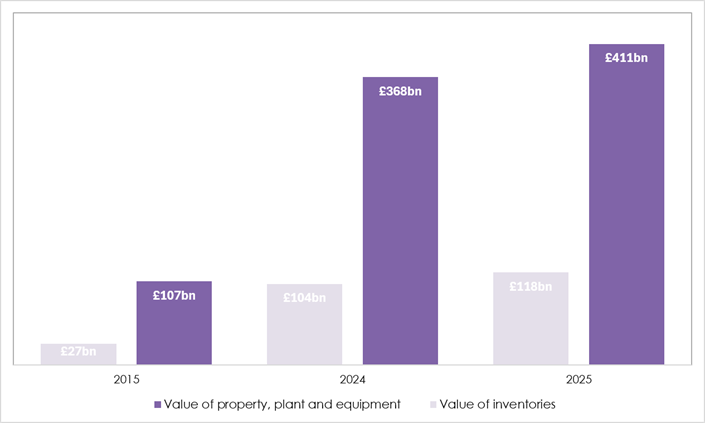
The research covered the largest 20 semiconductor companies by market capitalisation as of June 30 2026
Chipmakers have built up record levels of inventories and expanded production to meet booming demand, particularly from data centres and from other growth areas like electric vehicles. The high cost of developing and manufacturing advanced AI chips has driven up the value of their property assets to unprecedented levels.
Nick Leppard, Head of Property Direct & Facultative at Atrium, says the rapid expansion of stock and facilities can leave chipmakers underinsured if their insurance cover is not updated accordingly.
Nick Leppard says: “Semiconductor companies have a huge amount of capital tied up in highly specialised facilities, so any damage to these facilities can result in dramatic financial losses.”
“There have been several accidents in recent years that have resulted in major losses, so semiconductor companies have started to pay more attention to managing these risks.”
In 2025, an earthquake produced vibrations that destabilised chips being manufactured by a large Taiwanese semiconductor company, resulting in a loss of $161 million net of insurance claims. In 2013, a fire caused a large Korean chipmaker around $860 million in losses after smoke and soot damaged their facilities.
Nick Leppard says: “Semiconductor facilities face serious natural catastrophe risks, particularly from earthquakes, and the consequences can be severe. The sophisticated technology at the heart of their operations is not easily replaced, creating substantial challenges when restarting production after damage.”
Semiconductor facilities also face property damage risks from environmental hazards like typhoons.
Nick Leppard says: “The production of semiconductors requires an extremely high level of precision, which can be easily disrupted by typhoons or other Natural Disasters.”
“To protect their operations, semiconductor companies need a clear understanding of these exposures and an insurance programme that reflects the complexity of their risk profile. Securing the right combination of cover can help minimise financial impact and support a faster recovery when disruptions occur.”