
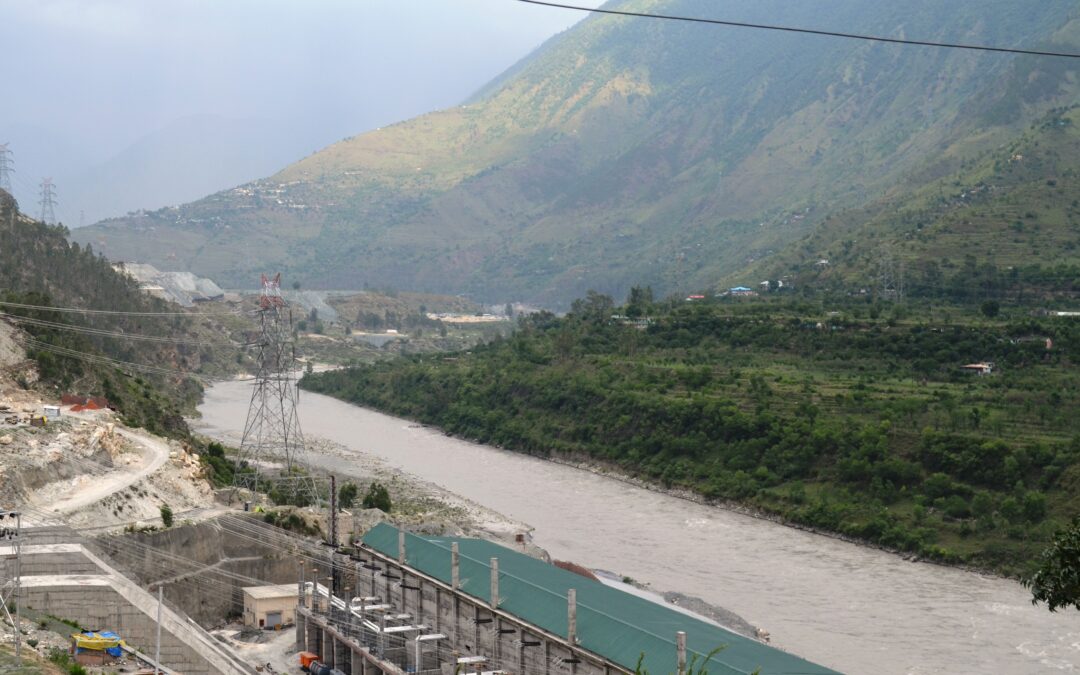
From an insurance perspective, events such as recent floods in South Asia reinforce the need for a forward-looking approach to risk assessment. Historical loss data remains important, but should be complemented by climate science, catastrophe modelling, engineering analysis and asset-specific exposure assessments.For hydropower assets, this may include evaluating extreme rainfall, flood accumulation, landslide exposure, access constraints, transmission infrastructure damage and the potential for prolonged outage.

Alex Davies, Director, Natural Resources, Asia, Aon
The recent floods in South Asia highlight the complex risks facing hydropower, infrastructure and construction projects globally. While it remains too early to estimate the insured impact of this event, it highlights the importance of understanding how natural catastrophe risks can affect critical infrastructure assets and the communities and economies that depend on them.
Hydropower projects are often complex developments that depend on an interconnected network of assets, including dams, tunnels, transmission infrastructure, access roads and supporting facilities.
As recent events have demonstrated, damage to one element of that network can have wider consequences for project operations, supply chains and recovery timelines. Insurers increasingly consider these broader interdependencies when evaluating risk and resilience across major infrastructure projects.
The broader risk context is also shifting. Aon’s 2026 Climate and Catastrophe Insight found that global economic losses from natural disasters reached US$260 billion in 2025, while insured losses reached US$127 billion, 27%above the 21st-century average. The report also highlighted a 51%global protection gap, meaning more than half of economic losses remained uninsured.
For hydropower and other infrastructure assets, this reinforces a critical point: resilience is not only about physical protection, but also about financial preparedness and recovery capacity.
From an insurance perspective, events such as these reinforce the need for a forward-looking approach to risk assessment. Historical loss data remains important, but should be complemented by climate science, catastrophe modelling, engineering analysis and asset-specific exposure assessments.
For hydropower assets, this may include evaluating extreme rainfall, flood accumulation, landslide exposure, access constraints, transmission infrastructure damage and the potential for prolonged outage.
Data, modelling, scenario analysis and stress testing can help organisations better understand physical climate vulnerabilities across assets and investment portfolios, supporting more informed decisions on site selection, design standards, project financing and risk transfer.
The insurance market continues to support energy and infrastructure development, including
hydropower projects.
However, insurers are placing greater emphasis on how risks are identified, mitigated and managed throughout a project’s lifecycle. Capacity remains available, though insurers are placing greater emphasis on how risks are identified, mitigated and managed throughout a project’s lifecycle.
Strong risk governance can also support project bankability and long-term viability. This is particularly important for large-scale infrastructure developments where lenders, investors, contractors and insurers each play a role in strengthening resilience and enabling sustainable growth.
The event also highlights a broader challenge across many markets: the gap between economic losses and insured losses following natural catastrophes. While major commercial and infrastructure assets often carry dedicated insurance programmes, significant losses can still be borne by public entities, local businesses and communities.
Improving risk awareness and access to appropriate risk transfer solutions can support long-term resilience across critical infrastructure.Insurability is increasingly shaped before a project reaches the insurance market.
Decisions made during feasibility, site selection, engineering design, procurement and construction planning can influence loss outcomes, lender confidence and future insurance market appetite.
Integrating risk engineering, climate analytics and insurance advisory early can help shift the conversation beyond price and capacity toward long-term resilience and project confidence.
As infrastructure investment continues to grow, organisations will need to balance opportunities linked to energy transition and economic development with a changing risk landscape.
Embedding risk management, engineering expertise, climate analytics and insurance considerations from the outset can help strengthen resilience and support more informed investment decisions over the long term.