
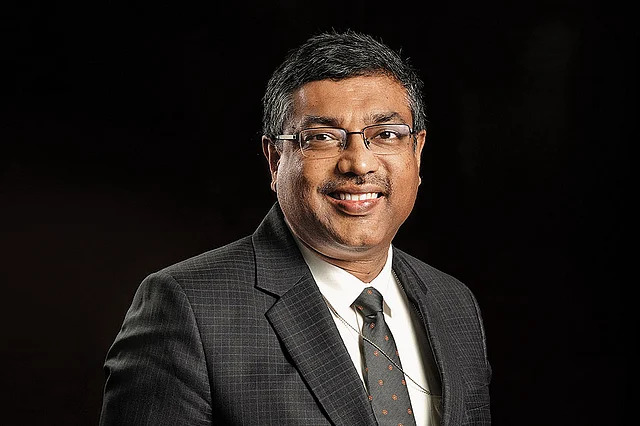
“It will be much more economical if you go closer to where the power itself is generating,” Electronics and IT Secretary S Krishnan said, adding that the government would continue to facilitate faster approvals to meet the requirements of both the country and the world.
New Delhi: Ministry of Electronics and Information Technology (MeitY) Secretary S Krishnan on Monday urged Microsoft to consider locating its future data centre capacity closer to power generation centres, saying this could reduce the cost of transporting electricity over long distances and make such infrastructure more economical.
Speaking at the Microsoft AI Infrastructure Summit India, Krishnan said data centre capacity should increasingly move closer to locations where power is generated rather than being concentrated only around cable landing stations.
“My request to Microsoft would be that eventually you’ll have to go and install capacity closer to where the power itself is generated so that we don’t have to wheel it all across. There are costs involved there,” Krishnan said.
“It’ll be from a cost perspective for India, for the ecosystem and for you also. It’ll be much more economical if you go closer to where the power itself is generated,” he added.
Krishnan said India’s large electricity grid and renewable energy capacity should be effectively utilised as the country expands its data centre and artificial intelligence infrastructure.
He also said the policy environment in India had made it easier to build data centres and connect them to supporting infrastructure, pointing to taxation policies, ease of doing business measures and changes under the new telecom law.
“It’s much easier today in India to actually build a data center and connect it to the grid and bring it on stream than it is in many countries even in Europe,” he said.
Krishnan added that electricity permissions and access to other resources had also become easier.
Referring to Microsoft’s infrastructure expansion in the country, the MeitY Secretary said the buildout was running ahead of schedule and described the requirement for such infrastructure as not only an Indian need but a global one.
He also underlined the need to ensure efficient use of power and water at data centres, saying sustainability should remain an important consideration as capacity expands.
Krishnan said investments in such infrastructure would initially create employment through construction and related activities, while bringing more research and development to India could lead to higher-quality jobs.
“Eventually, when you bring in more research and when you bring in more development, there will be far better quality jobs which will get created in India’s economy,” he said.
Krishnan said the government would continue to facilitate Microsoft’s infrastructure expansion and help the company build faster to meet requirements in India as well as globally.
Microsoft on Monday formally launched its fourth India cloud region, in Hyderabad, as part of its USD 20.5 billion investment commitment to the country’s digital and AI infrastructure.
The India South Central region, which became generally available on August 6, joins the company’s existing regions in Pune, Chennai and Mumbai.
Krishnan called the launch significant for strengthening India’s data centre and AI infrastructure, and said the country needs to simultaneously access the best global technology and build domestic, sovereign computing capacity.
He said India’s scale of 1.4 billion people, along with its growing digital public infrastructure, generates large volumes of data that form a “treasure house” for AI applications, giving the country the potential to become “the application powerhouse of the world”.
Krishnan said India’s tax policies, ease of doing business, and the new telecom law permitting easier interconnection of facilities had made it simpler to build and connect a data centre to the grid in India than in many other countries.